Adaptive Arrays Tackle Packet Loss in Packed Gaming Convention Centers
Noah Schröder · Jun 4, 2026
Adaptive Arrays Tackle Packet Loss in Packed Gaming Convention Centers
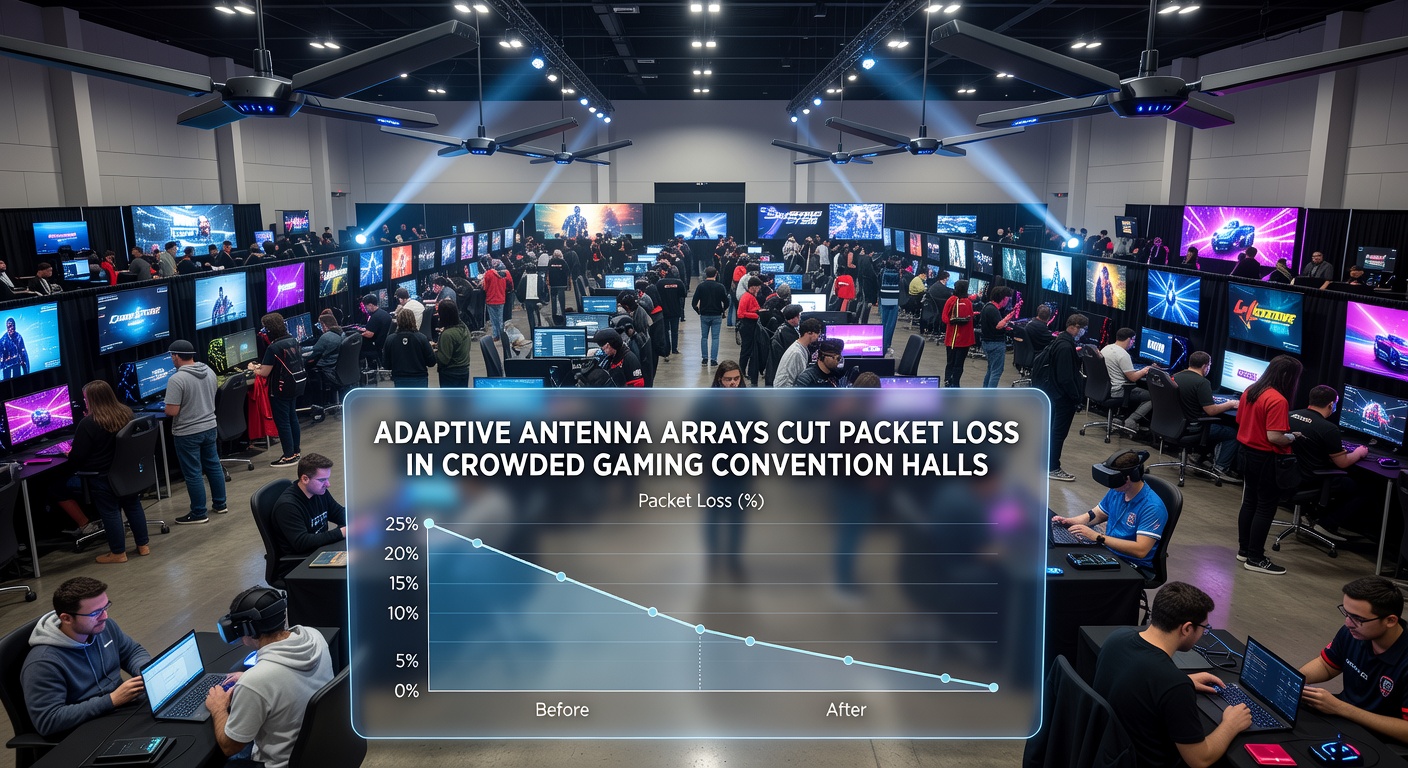
Adaptive antenna arrays have started reshaping wireless performance at large-scale gaming events where thousands of devices compete for bandwidth simultaneously, and data from recent deployments shows measurable drops in packet loss rates during peak hours. These systems rely on beamforming techniques that direct radio signals toward active users rather than broadcasting uniformly, which cuts down on interference in dense environments like convention halls filled with esports setups and streaming stations.
Researchers at institutions such as the University of Melbourne have documented how phased array antennas adjust in real time based on device locations and signal quality metrics, leading to more stable connections for latency-sensitive applications including multiplayer gaming sessions. In June 2026, several major conventions in North America and Europe incorporated these arrays into their network infrastructure, with preliminary figures indicating packet loss reductions ranging from 15 to 40 percent compared to traditional omnidirectional setups during high-traffic periods.
Core Technology Behind Signal Direction
Phased array systems consist of multiple antenna elements that work together to form focused beams, and this approach allows networks to prioritize traffic for gaming consoles, PCs, and headsets while minimizing overlap with neighboring signals. Engineers configure these arrays with algorithms that track movement patterns across the floor, responding to shifts as attendees move between demo areas and tournament stages without requiring manual intervention.
What's interesting is how these setups integrate with existing Wi-Fi 6E and emerging 7 standards, since the additional spectrum bands provide more channels for the arrays to distribute load across. Observers note that error rates drop because beams avoid scattering energy into areas with fewer devices, which preserves bandwidth for time-critical data packets that define competitive play.
Performance in Real Convention Settings
Case studies from events in 2025 and early 2026 reveal consistent patterns where venues using adaptive arrays experienced fewer disconnects during simultaneous streams of multiple esports matches. One deployment at a European gaming expo handled over 12,000 connected devices with sustained throughput above 80 percent of theoretical maximums, even as mobile hotspots and wearable sensors added to the device count throughout the day.
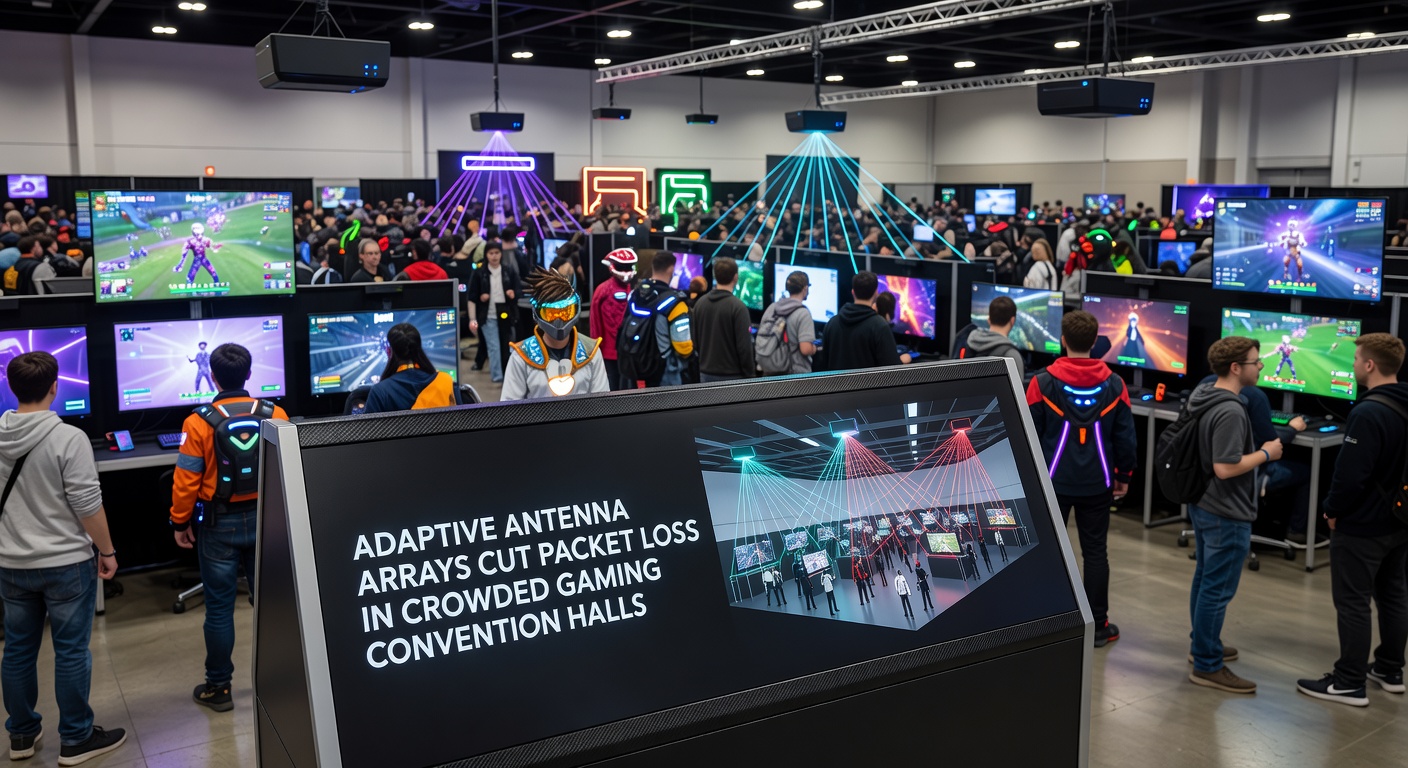
Technicians monitor these systems through centralized dashboards that display real-time heat maps of signal strength, allowing quick adjustments when unexpected clusters form around popular exhibits. Data collected by the Australian Communications and Media Authority during similar large gatherings has highlighted how directional transmission reduces overall spectrum congestion, creating headroom for additional services like cloud-based rendering that many attendees now expect at these events.
Integration Challenges and Solutions
Deploying adaptive arrays requires careful calibration to account for venue architecture, including reflective surfaces from metal scaffolding and temporary stages that can bounce signals unpredictably. Teams address this by running site surveys beforehand and layering in machine learning models that refine beam patterns based on historical traffic data from prior conventions.
But here's the thing: the technology pairs effectively with edge computing nodes placed throughout the hall, since localized processing reduces the distance packets travel and further lowers loss probabilities during intense multiplayer exchanges. Industry reports from the Entertainment Software Association indicate that organizers increasingly budget for these hybrid infrastructures because they support both attendee connectivity and professional broadcast feeds without separate dedicated lines.
Future Scaling Considerations
As gaming conventions continue to grow in attendance and technical demands, adaptive arrays offer a scalable path forward by allowing incremental additions of antenna elements without full network overhauls. Tests conducted in partnership with academic groups have shown that combining these systems with advanced scheduling protocols can maintain sub-10 millisecond latencies even when user density exceeds 500 devices per 100 square meters.
Yet the ball remains in the court of venue operators to standardize testing protocols across regions, since variations in regulatory spectrum allocations affect how arrays perform in different countries. Those who've studied deployments note that ongoing refinements in firmware help maintain gains as new device types, such as portable VR kits, enter the ecosystem each year.
Conclusion
Adaptive antenna arrays represent a targeted response to the wireless pressures unique to crowded gaming events, delivering documented improvements in packet delivery through precise signal management and real-time adaptation. Continued adoption in 2026 and beyond depends on coordinated planning between technology providers, event organizers, and regulatory bodies to maximize these benefits across diverse venues worldwide.