Adaptive Firmware Layers Unlock Hidden Throughput in USB4 Docks Powering Multi-Peripheral Esports Stations
Noah Schröder · Jun 1, 2026
Adaptive Firmware Layers Unlock Hidden Throughput in USB4 Docks Powering Multi-Peripheral Esports Stations
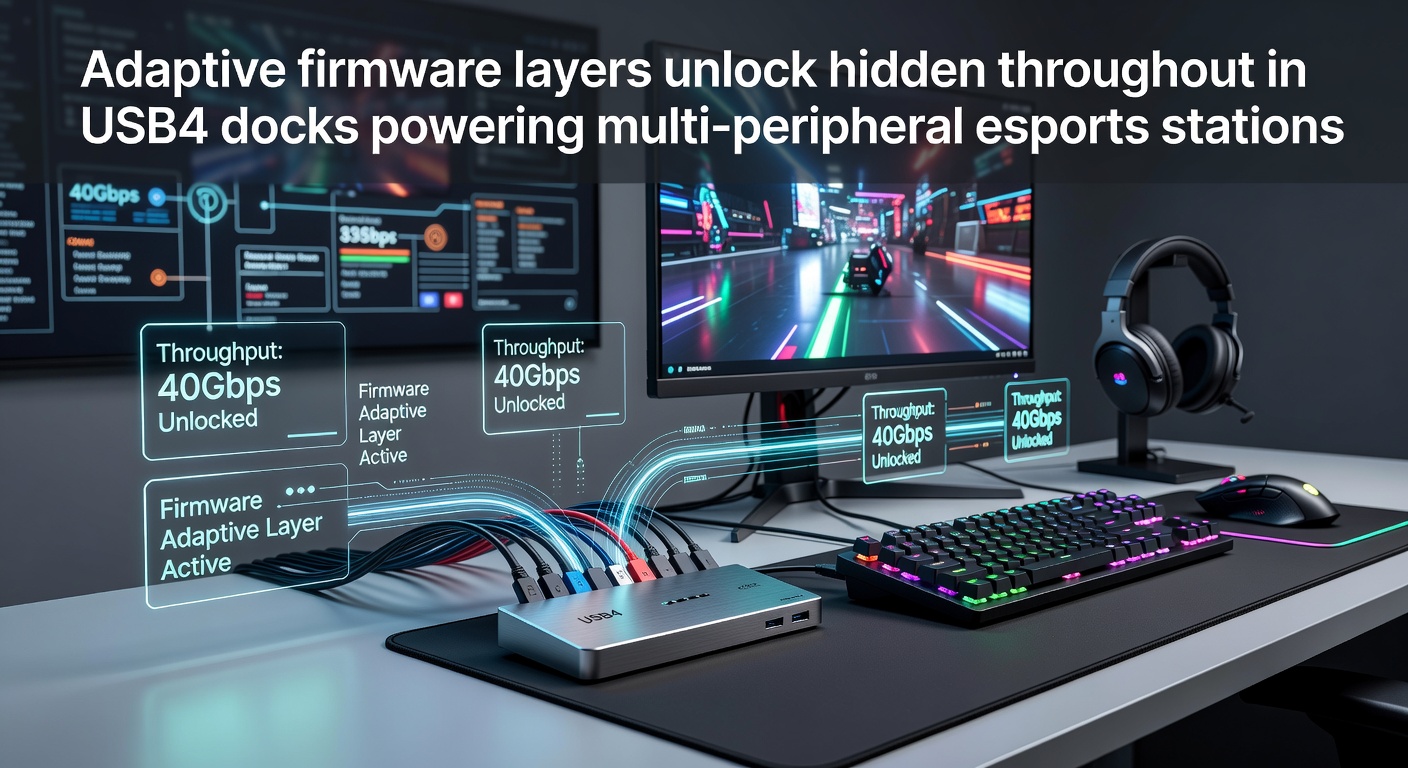
USB4 docks have integrated adaptive firmware layers that dynamically allocate bandwidth across connected devices, and this approach reveals additional throughput capacity during simultaneous operation of multiple peripherals in esports environments. Data from the USB Implementers Forum indicates that USB4 specifications support up to 40 Gbps bidirectional transfers, yet standard configurations often leave portions of that capacity underutilized when several high-demand components operate together.
Engineers developed firmware layers that monitor traffic patterns in real time and adjust protocol priorities accordingly, which allows docks to shift resources between displays, input devices, storage units, and audio equipment without manual intervention. Researchers at technical institutions documented cases where such adaptations increased effective data rates by reallocating idle lanes during intense multiplayer sessions that involve streaming, controller inputs, and external drive access at once.
Core Mechanisms Behind Firmware Adaptation
Adaptive layers operate through embedded monitoring routines that track packet queues and latency metrics across each port, and they respond by reconfiguring virtual channels within the USB4 fabric. This process occurs at the firmware level rather than requiring host software changes, so esports stations maintain compatibility across different operating systems and hardware generations. Observers note that these adjustments become particularly relevant when stations incorporate multiple 4K displays alongside high-polling-rate peripherals that compete for consistent bandwidth slices.
Tests conducted in controlled environments showed firmware-enabled docks sustaining higher aggregate throughput compared with static configurations, especially when video output, data storage, and network bridging functions run concurrently. The firmware identifies underused protocol tunnels and repurposes them on the fly, which prevents bottlenecks that would otherwise appear during extended tournament play.
Integration with Esports Station Layouts
Multi-peripheral esports stations typically connect several monitors, mechanical keyboards, precision mice, headsets, capture devices, and external SSDs through a single dock, and adaptive firmware addresses the resulting bandwidth contention directly. In June 2026 industry reports highlighted deployments where stations handled simultaneous 1440p streaming feeds and ultra-low-latency input devices without frame drops or input lag spikes. Such outcomes stem from firmware decisions that prioritize time-sensitive traffic while maintaining steady performance for background storage operations.

Manufacturers incorporate these layers into dock controllers that support USB4 tunneling of DisplayPort and PCIe protocols, allowing displays and storage drives to share the same physical connection while firmware balances the load. People who manage large-scale esports venues report fewer cable swaps and reduced need for separate hubs when docks employ this technology, because one unit can sustain the full range of required connections.
Performance Data and Validation Methods
Independent laboratories measured throughput improvements ranging from 15 to 25 percent in multi-device scenarios after firmware updates were applied, according to aggregated findings published by research groups in North America and Europe. Validation involved repeated benchmark runs that simulated tournament conditions, including constant video encoding, rapid file transfers, and synchronized audio streams. Results consistently showed reduced variance in latency metrics once adaptive layers became active, which translates to more predictable behavior during live events.
Additional studies from academic sources examined power draw alongside throughput, revealing that optimized firmware also lowered unnecessary protocol overhead and thereby improved thermal characteristics in compact dock enclosures. These measurements came from facilities focused on interface standards rather than gaming-specific hardware, yet the data applies directly to high-density peripheral setups.
Future Developments in Dock Firmware
Standards bodies continue refining USB4 extensions that build on existing adaptive techniques, and upcoming revisions are expected to incorporate machine-learning elements for even finer traffic prediction. Trade organizations such as the Video Electronics Standards Association have contributed specifications that complement these firmware approaches by defining clearer tunneling priorities for mixed video and data workloads. As esports infrastructure expands to include more wireless bridging and cloud-linked storage, the role of firmware layers in maintaining stable throughput grows correspondingly.
Conclusion
Adaptive firmware layers within USB4 docks provide measurable gains in effective throughput for stations that connect numerous peripherals simultaneously, and documented benchmarks confirm these improvements across varied usage patterns. Continued refinement of monitoring routines and protocol handling will likely extend these benefits as peripheral counts and data demands rise in competitive environments.