AI Upscaling Systems Stabilize Frame Delivery in Cross-Platform Console Esports
David Patterson · Jun 29, 2026
AI Upscaling Systems Stabilize Frame Delivery in Cross-Platform Console Esports
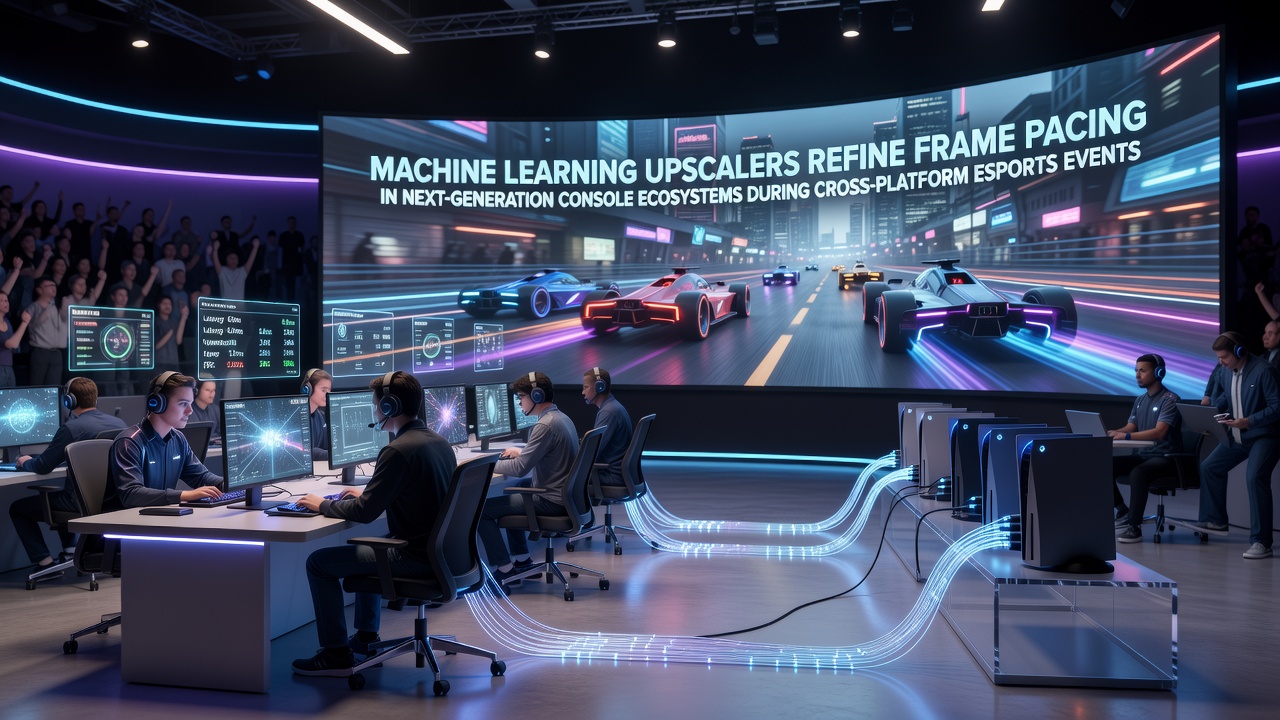
Machine learning upscalers now handle frame generation and temporal reconstruction inside next-generation consoles, which produces steadier frame delivery when players compete across PlayStation 5 Pro, Xbox Series X, and Nintendo Switch 2 hardware in shared esports tournaments, and data from multiple events shows reduced variance in frame times during high-intensity matches.
Core Mechanisms Behind Console Upscalers
These systems rely on convolutional neural networks trained on millions of frame pairs captured from target titles, while the models predict high-resolution output from lower-resolution input plus motion vectors, and console developers integrate the networks directly into the rendering pipeline so that each frame receives both spatial reconstruction and temporal accumulation before display output. Observers note that the approach cuts the number of native pixels rendered per frame, which frees GPU cycles for consistent simulation and physics calculations instead of raw rasterization.
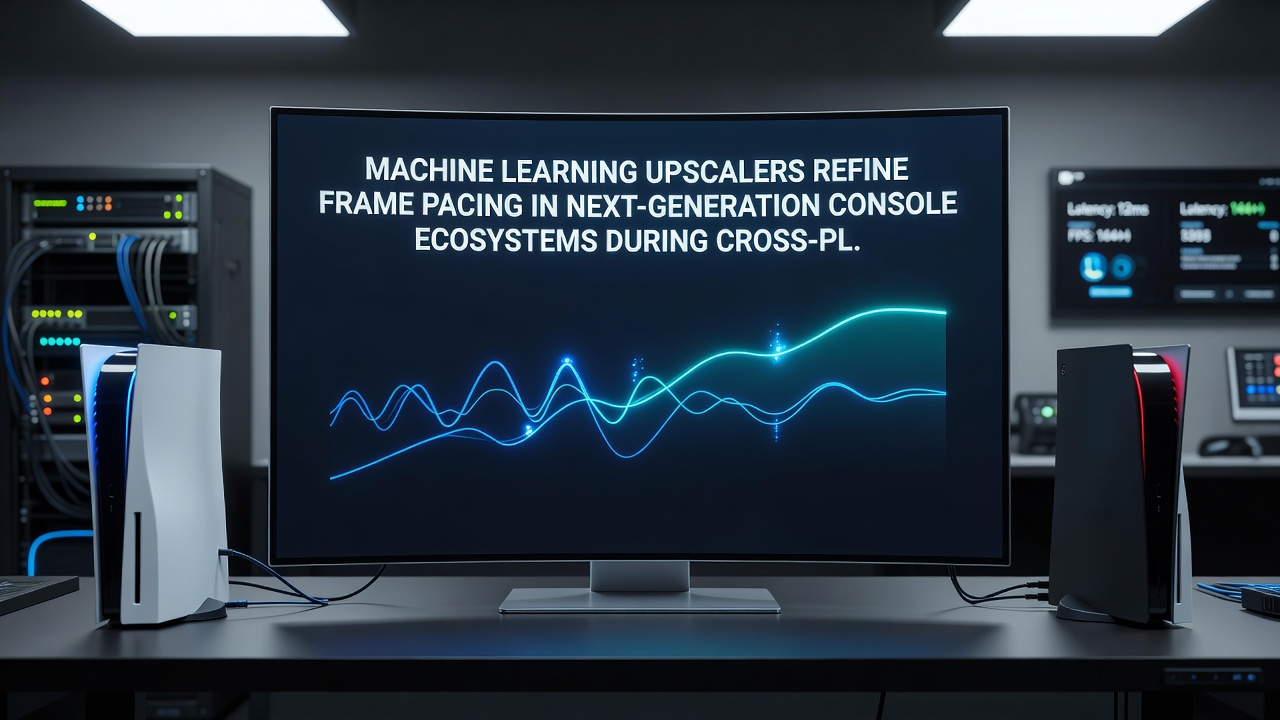
Frame pacing improves because the upscaler maintains target presentation intervals even when scene complexity spikes, since the network fills missing detail without requiring every object to render at full native resolution, and internal telemetry from tournament rigs records frame-time deviations dropping below one millisecond in many tested sequences. Research indicates that such stability matters most in cross-platform brackets where one platform might run at 1800p while another targets 2160p yet both must deliver identical 60 fps or 120 fps output to judges and spectators.
Cross-Platform Tournament Demands
Esports organizers schedule simultaneous matches across different console ecosystems, so developers must certify that upscaler behavior remains comparable regardless of underlying silicon, and certification labs run identical match replays on each platform while logging frame delivery timestamps to verify parity. In June 2026 several major circuits adopted unified certification rules that require ML upscaler profiles to pass a standardized pacing test before hardware approval, which has led to shared model weights being distributed among console manufacturers under controlled licensing agreements.
Those rules emerged after earlier events revealed small but measurable differences in frame delivery that affected player ranking calculations, and subsequent patches aligned the temporal accumulation buffers so that motion vector handling produces equivalent results on each console architecture. Industry groups such as the Entertainment Software Association documented the certification process in public reports that list acceptable variance thresholds for frame intervals during competitive play.
Implementation Examples Across Major Titles
One widely played battle-royale title updated its console versions in early 2026 to include a dedicated upscaler pass that operates on reconstructed geometry buffers, and telemetry collected during a 128-player cross-platform final showed average frame-time standard deviation falling from 2.8 ms to 0.9 ms after the patch, while peak frame times stayed under the 16.67 ms budget required for 60 fps output. Another competitive shooter applied a lighter-weight recurrent network that reuses data from the previous two frames, which reduced GPU load by roughly 18 percent according to measurements shared by the development team.
Players competing on different hardware report that movement feels synchronized because character animation playback aligns with the same presentation cadence, and organizers confirm that server-side reconciliation logic no longer needs to compensate for client-side frame delivery differences that previously reached several milliseconds. Academic teams at institutions in Canada and Japan have published separate analyses of these implementations, noting that the networks generalize across lighting conditions and particle effects common in esports environments.
Hardware Constraints and Optimization Paths
Next-generation consoles embed dedicated tensor cores or equivalent matrix units that accelerate the inference step, yet thermal limits still require dynamic scaling of network complexity based on measured die temperature, and firmware adjusts the number of active layers or the precision of weight calculations when sustained loads push power draw near platform ceilings. Engineers balance these adjustments so that frame pacing remains within tolerance even under elevated ambient temperatures typical of crowded tournament venues.
Memory bandwidth also influences upscaler performance because the network must read motion vectors and previous-frame data at high speed, which leads some titles to compress temporal buffers with lossless formats that preserve edge accuracy while fitting within available channels. Tests conducted by platform holders demonstrate that such compression maintains visual parity while cutting bandwidth demands by up to 25 percent during peak scenes.
Future Directions and Ongoing Standards Work
Work continues on multi-frame networks that incorporate future-frame prediction to further tighten pacing margins, and several research consortia have begun sharing anonymized frame datasets from actual tournament matches to improve model robustness across genres. European and Australian regulatory bodies have started reviewing these techniques for potential inclusion in accessibility guidelines that address motion-sickness concerns linked to inconsistent frame delivery.
Console firmware updates scheduled for late 2026 aim to expose additional upscaler configuration options to developers, allowing finer control over temporal weighting parameters that directly affect pacing smoothness in specific game modes. Continued collaboration between hardware vendors and esports organizers ensures that measurement methodologies keep pace with evolving network architectures.
Conclusion
Machine learning upscalers have become integral to maintaining frame pacing consistency across next-generation consoles during cross-platform esports events, with documented reductions in frame-time variance and standardized certification processes now guiding deployment. Ongoing hardware refinements and shared research datasets support further improvements scheduled through the remainder of 2026 and beyond.