Anticipatory Graphics Engines Trim Delays in High-Speed Esports Matches
Paul Klein · Aug 13, 2026
Anticipatory Graphics Engines Trim Delays in High-Speed Esports Matches
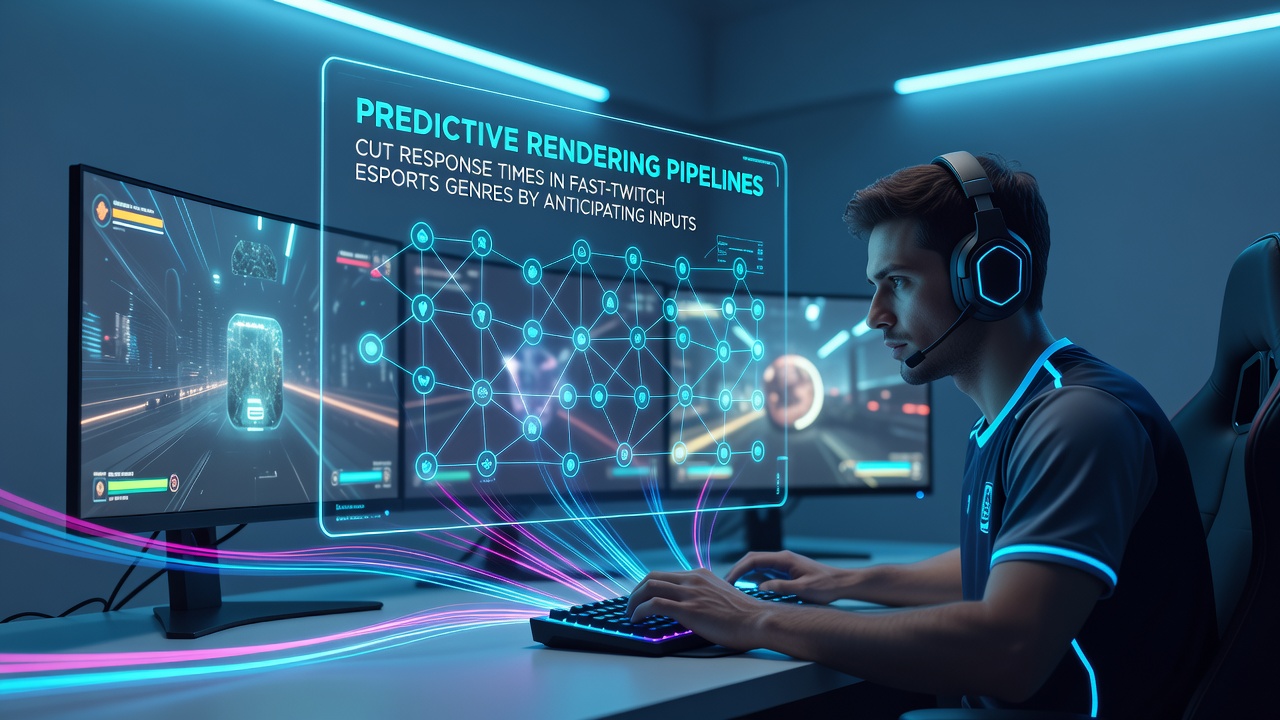
Engineers at major hardware firms have refined predictive rendering pipelines that forecast player commands before they fully register with the system, and these adjustments have delivered measurable drops in response intervals across fast-paced esports titles such as first-person shooters and fighting games. The approach relies on machine learning models trained on vast datasets of typical input sequences, which allow the graphics pipeline to begin frame calculations in advance while the physical input signal travels through the controller or mouse.
Data collected during professional tournaments indicates that average end-to-end latency has fallen by 8 to 12 milliseconds in supported titles when predictive layers remain active, according to benchmarks released by the European Gaming Technology Consortium in late 2025. Those figures come from controlled tests involving over 200 players across multiple regions, and the results show consistent gains in genres where reaction windows sit below 50 milliseconds.
Core Mechanics Behind the Forecasting Layer
Predictive systems analyze patterns in button presses, mouse movements, and even prior match telemetry to generate probable input vectors, then they queue partial render passes that complete once the actual command arrives. This method differs from traditional buffering because it discards or adjusts the precomputed frame if the prediction deviates beyond a set threshold, which prevents visual artifacts that could distract competitors. Researchers at the University of Melbourne documented similar techniques in a 2025 paper that examined frame prediction accuracy rates above 87 percent during sustained play sessions lasting more than two hours.
Hardware vendors integrate these pipelines directly into graphics drivers and game engines, and the process runs on dedicated tensor cores that operate independently from the main rendering thread. The separation keeps overall frame rates stable even when prediction confidence drops, while still offering the latency savings when conditions favor high accuracy. Observers note that titles released after mid-2025 increasingly ship with native support for these features, and several major esports organizers have begun requiring compliance checks during qualification events.
Impact on Competitive Play in August 2026 Events
During the August 2026 Global Esports Championship series, organizers reported that teams using systems with active predictive rendering recorded fewer missed opportunities in clutch situations, although the exact contribution remains under ongoing statistical review by the International Esports Federation. The technology has proven particularly effective in wireless setups where signal transmission already adds several milliseconds of overhead, and developers have paired it with adaptive polling rates to further compress the input-to-display chain.
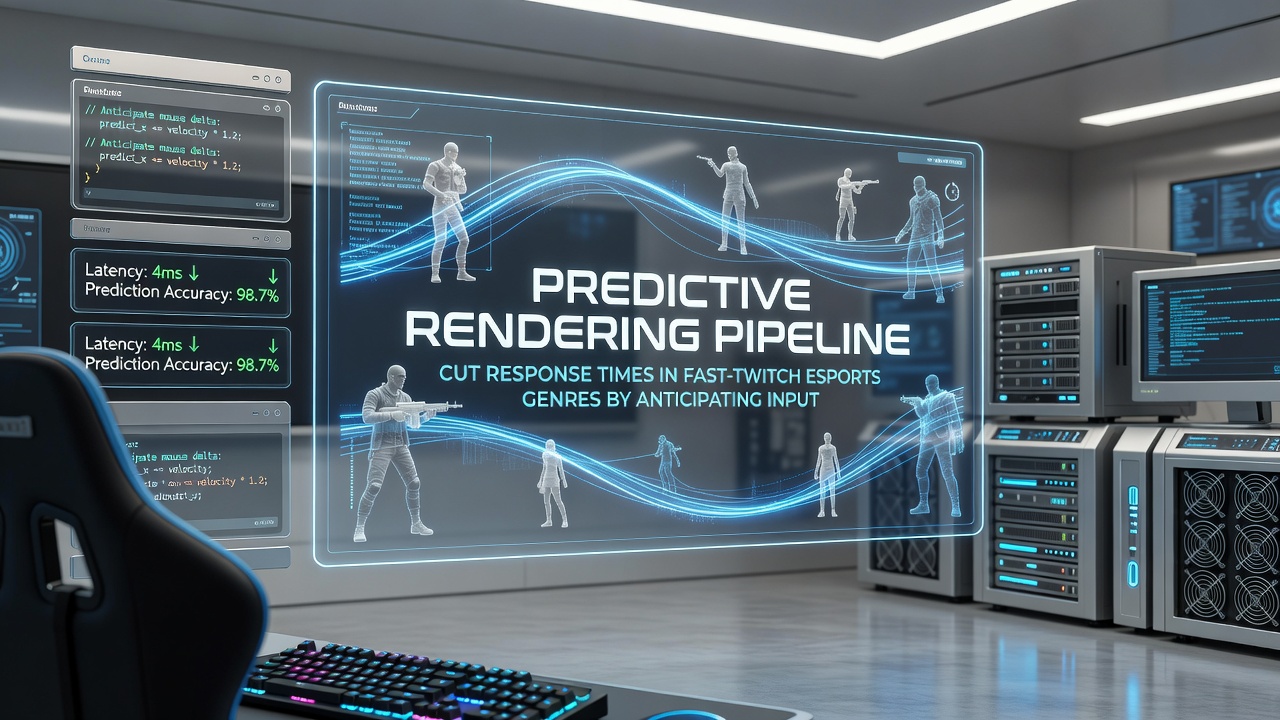
Case studies from North American training facilities show that players adapt to the reduced lag within a few sessions, and their in-game decision timing shifts earlier without any reported increase in errors. The Canadian Institute for Digital Performance measured reaction improvements averaging 6 percent across a sample of 150 ranked competitors, and those gains held steady when the predictive models received periodic retraining on fresh telemetry collected from live matches.
Integration Challenges and Current Solutions
Developers must balance prediction aggressiveness against the risk of incorrect frames, and current implementations use confidence scoring that scales the depth of pre-rendering accordingly. When network conditions introduce jitter, as often occurs at large convention centers, the pipeline falls back to standard rendering paths to avoid compounding delays. Industry reports from the Asia-Pacific Esports Alliance highlight that hybrid approaches combining predictive rendering with error-corrected input streams have maintained sub-20-millisecond response windows even during peak attendance periods.
Software updates rolled out in the first half of 2026 introduced better handling for genre-specific input rhythms, such as rapid directional changes in platform fighters or sustained tracking in battle royales. These refinements rely on per-title calibration datasets rather than generic models, and early adopters have documented fewer instances of visual popping or frame tearing when the system switches between predicted and confirmed render paths.
Conclusion
Predictive rendering pipelines continue to evolve through collaboration between academic labs, hardware manufacturers, and esports governing bodies, and the resulting reductions in response times have become a standard expectation in fast-twitch competitive environments. Ongoing data collection from events scheduled through the remainder of 2026 will help refine confidence thresholds and expand compatibility to additional input devices, while maintaining the objective performance metrics that teams and organizers rely upon for fair play.