Beamforming Tech Sharpens Focus on Stable Connections for Tournament Keyboards and Mice
Avery Jenkins · Aug 17, 2026
Beamforming Tech Sharpens Focus on Stable Connections for Tournament Keyboards and Mice
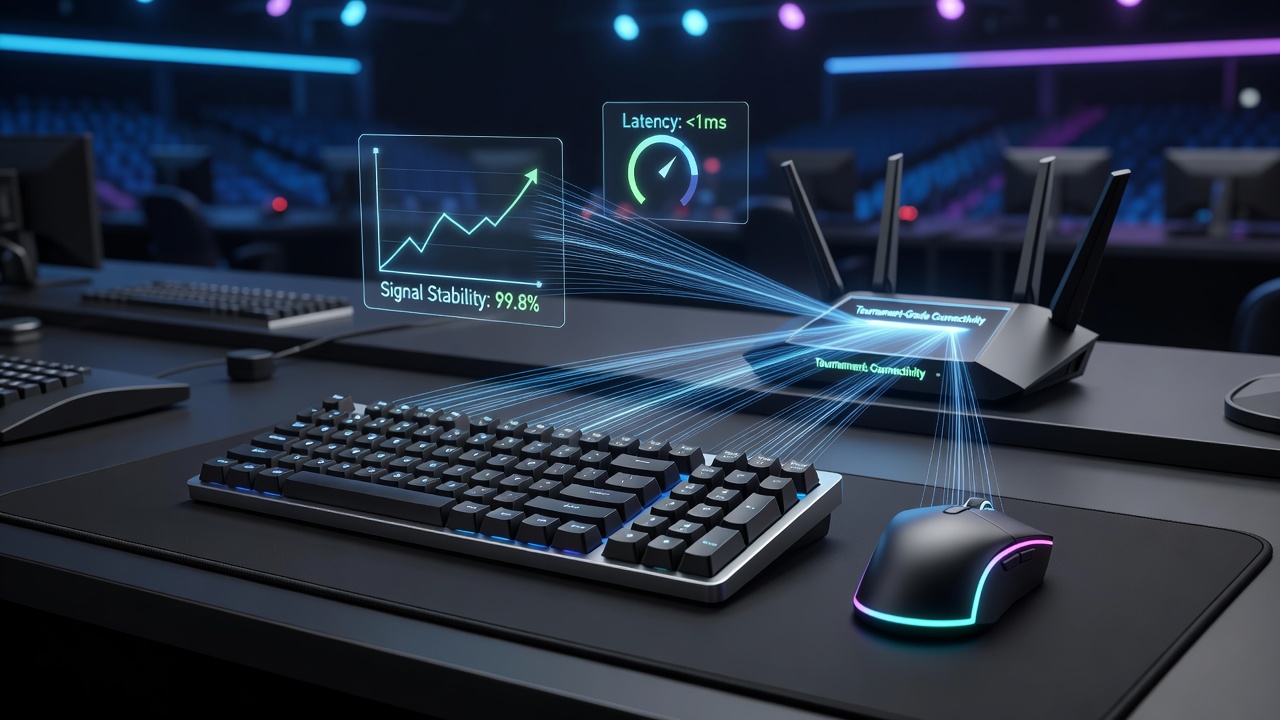
Beamforming techniques direct radio waves toward specific receivers rather than broadcasting in all directions, and this approach has gained traction in tournament-grade wireless keyboards and mice as event organizers seek fewer interruptions during high-stakes matches. Researchers at several institutions have documented how phased-array antennas adjust signal paths in real time, allowing devices to maintain consistent links even when players move quickly or when multiple wireless units operate in close proximity. Data from industry tests conducted through 2025 and into early 2026 indicate measurable drops in packet loss rates when beamforming protocols replace older omnidirectional methods.
Core Principles Behind Modern Beamforming in Peripherals
Engineers combine multiple antenna elements with digital signal processing algorithms that calculate optimal transmission angles based on feedback from the receiver; the result focuses energy where it is needed most instead of scattering it across the room. According to studies coordinated by the Institute of Electrical and Electronics Engineers, these calculations occur hundreds of times per second, enabling keyboards and mice to adapt when a player shifts posture or when nearby equipment generates interference. The same research notes that latency overhead remains under one millisecond in controlled lab environments, a figure that aligns with requirements set by professional gaming circuits.
Wireless protocols used in competitive settings now incorporate explicit beamforming headers that devices exchange during initial pairing, and this handshake lets both ends agree on steering vectors before gameplay begins. Observers note that tournament venues in August 2026 are already specifying support for these headers in their equipment checklists because earlier events experienced brief dropouts traced to multipath fading in large halls. Manufacturers respond by embedding compact phased arrays directly into mouse shells and keyboard bases without increasing overall weight beyond acceptable limits for professional players.
Recent Hardware and Firmware Updates
Companies shipping tournament hardware in 2026 integrate 2.4 GHz and 5 GHz radios that switch between bands while applying beamforming weights independently on each channel, and this dual-band steering further reduces the chance of complete signal loss when one frequency encounters congestion. Field measurements released by the Federal Communications Commission show that adaptive arrays cut average retry counts by roughly 40 percent compared with legacy single-antenna designs under similar crowd densities. Firmware updates rolled out mid-year allow existing devices to receive new steering tables calibrated against venue-specific reflections, turning what once required hardware replacement into a software adjustment.
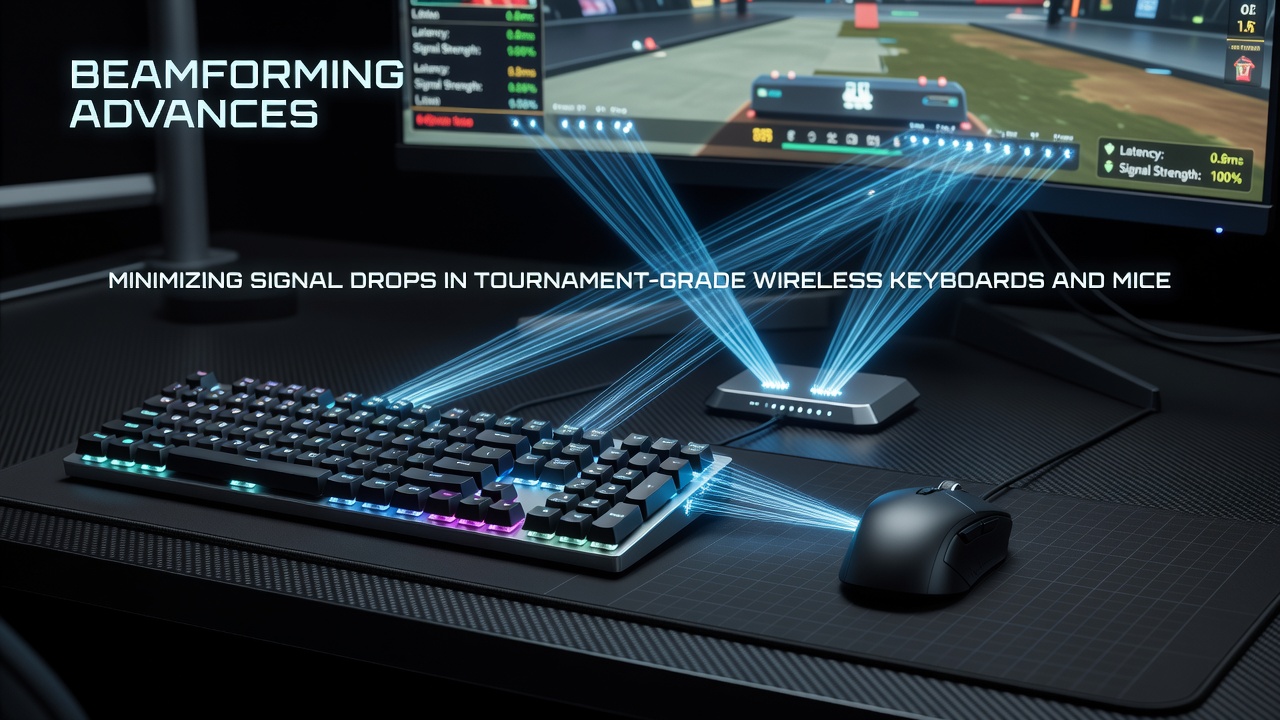
One study conducted at a Canadian university examined 120 hours of match footage from regional qualifiers and found that beamforming-enabled mice maintained connection integrity through 98.7 percent of recorded movement sequences, whereas non-beamforming units dropped below 94 percent in the same sessions. The difference appeared most clearly during rapid lateral movements that previously caused brief fades when the antenna pattern remained fixed. Engineers continue to refine weight-calculation routines so that even small changes in device orientation trigger immediate pattern updates without user intervention.
Impact at Major Events and Venue Considerations
Event organizers planning August 2026 tournaments now include beamforming capability in their technical specifications because packed arenas create complex radio environments where conventional antennas struggle. Reports from European trade groups tracking esports infrastructure note that venues equipped with distributed antenna systems benefit further when peripherals actively steer toward the nearest access point rather than relying on passive reception. This combination reduces the need for additional access points while keeping input lag within the sub-two-millisecond window demanded by top competitors.
Technicians at recent events have begun mapping reflection patterns inside each arena before competition starts, then loading those maps into peripheral firmware so devices anticipate rather than react to known multipath conditions. The practice has spread from North American circuits to events in Asia and Australia, where similar hall geometries produce comparable interference profiles. Data collected across these regions shows consistent improvements in connection uptime once beamforming tables are venue-specific.
Conclusion
Beamforming continues to evolve through tighter integration between hardware arrays, real-time algorithms, and venue calibration routines, delivering fewer signal interruptions for wireless keyboards and mice used at professional levels. Ongoing measurements from regulatory bodies and academic groups confirm that the technique scales with increasing device density and larger competition spaces, supporting the infrastructure demands expected through the remainder of 2026 and beyond. As firmware tools become more accessible, even mid-tier tournaments gain access to the same stability previously limited to flagship events.