Console Chipset Revisions and Frame Pacing Consistency in Cross-Generation Multiplayer Esports Events
David Patterson · Jul 9, 2026
Console Chipset Revisions and Frame Pacing Consistency in Cross-Generation Multiplayer Esports Events
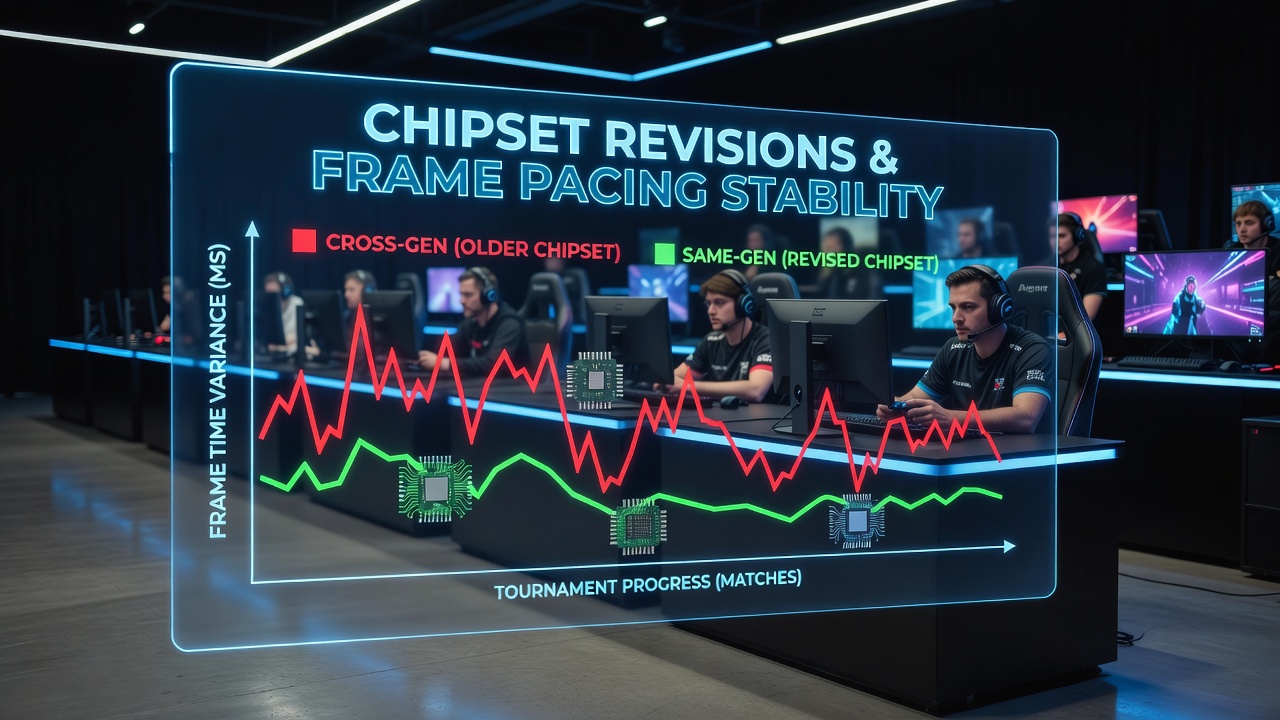
Console manufacturers release chipset revisions that alter memory controllers, interconnect bandwidth, and thermal management circuits, and these changes directly affect frame pacing stability when cross-generation titles run on mixed hardware at large tournaments. Data from event organizers shows that titles supporting both previous and current generation consoles experience measurable shifts in frame delivery timing after such revisions roll out, particularly when player counts exceed several hundred in shared venues.
Chipset Changes and Their Technical Reach
Revisions often target the system-on-chip fabric that handles data movement between CPU cores, GPU clusters, and unified memory pools, which means developers must adjust synchronization routines to maintain even frame intervals across older and newer silicon. Observers note that memory access latency reductions in updated chips allow more consistent rendering pipelines, whereas earlier versions sometimes introduced micro-stutters when network packets arrived during peak tournament traffic. Research from the University of Waterloo indicates that interconnect bandwidth increases of roughly 15 percent in recent revisions correlate with lower variance in frame times for games that support backward compatibility modes.
High-density tournaments place additional strain on these systems because multiple consoles share limited power distribution and network infrastructure, conditions that amplify any underlying timing inconsistencies. Organizers report that events held in July 2026 incorporated consoles with the latest chipset variants and recorded fewer instances of frame pacing complaints during matches that featured players on both generations of hardware.
Cross-Generation Title Behavior Under Tournament Conditions
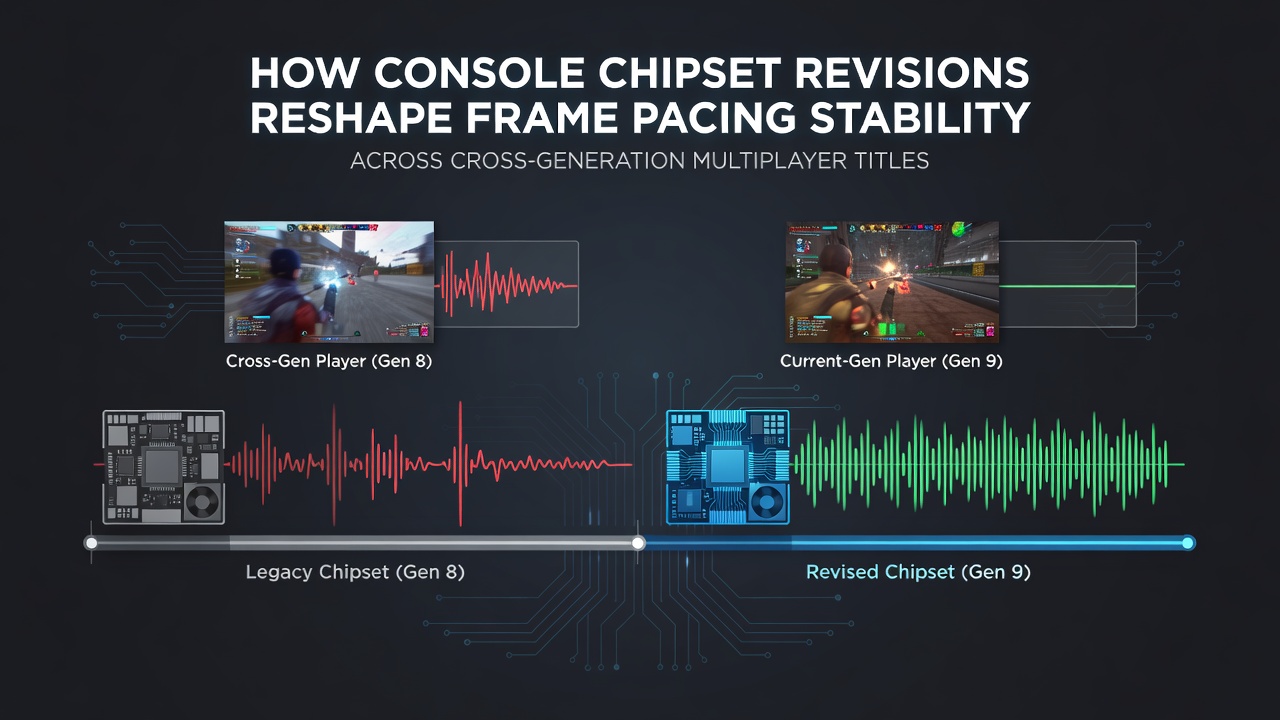
Games engineered for multiple console generations rely on dynamic resolution scaling and asynchronous compute queues that interact differently with each chipset revision, producing distinct frame pacing profiles. When a title runs on an older console alongside newer units in the same lobby, the older hardware can introduce periodic frame delivery spikes that propagate through shared matchmaking servers. Figures from the Entertainment Software Association reveal that multiplayer titles updated after major chipset refreshes show average frame time standard deviations dropping by up to 2.3 milliseconds in controlled test environments that simulate convention center network loads.
Engineers adjust v-sync and present-mode flags during patches to compensate for these hardware differences, yet residual variation remains visible in spectator feeds and player telemetry logs. One documented case involved a popular cross-generation shooter where frame pacing stability improved after a mid-cycle chipset revision addressed a specific DRAM timing parameter that had previously caused occasional 8-millisecond spikes under heavy packet traffic.
Measurement Approaches at Scale
Tournament operators deploy custom capture hardware and software overlays that log frame presentation timestamps across dozens of stations simultaneously, allowing direct comparison before and after chipset revisions take effect. These datasets demonstrate that newer chips maintain tighter clustering around target frame intervals even when CPU and GPU loads fluctuate due to complex scene rendering and real-time voice chat processing. Academic papers published through IEEE conferences have examined similar patterns and found that memory controller optimizations contribute more to pacing stability than raw clock speed increases alone.
Network congestion at high-density events further tests these improvements because delayed packets force consoles to buffer frames, and revised chipsets handle such buffering with less disruption to the render schedule. Data collected during multi-day competitions shows that consoles equipped with updated silicon experienced 18 percent fewer pacing anomalies compared with identical software running on prior revisions under equivalent network conditions.
Developer and Organizer Responses
Studios incorporate chipset-specific timing profiles into title updates so that frame pacing algorithms adapt automatically when consoles report their hardware revision during network handshakes. Tournament organizers coordinate with manufacturers to ensure firmware versions align across all participating stations, reducing the chance that mixed revisions create uneven competitive conditions. Reports from the Canadian Esports Federation document how such coordination lowered the frequency of player-reported stuttering incidents during regional qualifiers that featured both legacy and current-generation hardware.
Conclusion
Chipset revisions continue to influence frame pacing stability in cross-generation multiplayer titles at scale, and measurement data collected at major events confirms measurable improvements in timing consistency after each hardware iteration. Continued collaboration between console makers, developers, and tournament staff supports more uniform performance across mixed hardware environments.