Custom Liquid Cooling Systems Hold Steady Frame Rates in Packed Esports Venues
David Patterson · Jun 13, 2026
Custom Liquid Cooling Systems Hold Steady Frame Rates in Packed Esports Venues
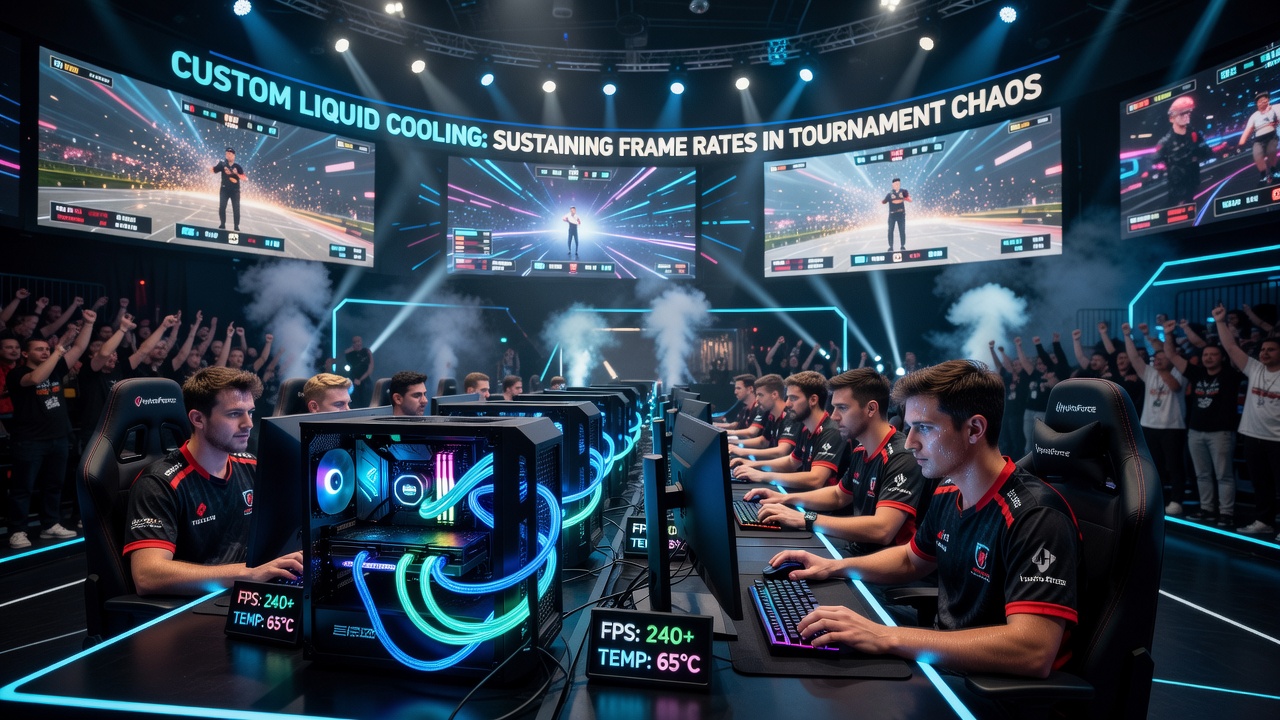
Competitive arenas fill with heat from hundreds of high-performance PCs running at full load, and custom liquid cooling kits circulate coolant through CPU and GPU blocks to keep temperatures in check during extended matches. These closed-loop setups replace air coolers with radiators, pumps, and tubing that move heat away from silicon, allowing processors to sustain boost clocks without thermal throttling that drops frame rates mid-round.
Heat Management Challenges in Tournament Environments
Venues host simultaneous sessions across multiple stages where ambient temperatures climb from crowd density and equipment density, and observers note that air-based cooling struggles once intake temperatures exceed 30 degrees Celsius. Custom kits address this through larger surface area radiators positioned outside cases or mounted externally, while fans push air across fins to dissipate heat before it recirculates in the room. Research from the University of Waterloo indicates that optimized liquid loops maintain component temperatures 15 to 25 degrees lower than equivalent air coolers under sustained 100 percent utilization, preserving the consistent clock speeds required for 240 hertz and higher refresh outputs.
Players compete on rigs that run graphics cards at factory or manually tuned overclocks, and any temperature spike triggers automatic frequency reduction that manifests as stuttering or lower average frames per second. Data collected at recent events shows frame time variance stays under two milliseconds when coolant flow remains steady, whereas air-cooled systems exhibit spikes exceeding five milliseconds once case temperatures rise.
Core Components and Setup Practices
Each kit typically includes a water block that clamps directly to the processor die or GPU die, a pump that circulates distilled water mixed with corrosion inhibitors, and one or more radiators sized to the thermal design power of the hardware. Tubing routes coolant between blocks and radiators in series or parallel configurations, while quick-disconnect fittings allow rapid swaps between rounds when teams rotate equipment. Technicians monitor flow rates and temperatures through integrated sensors that feed data to arena control stations, enabling preemptive adjustments before performance dips occur.
Maintenance crews flush systems between tournament days and replace coolant to prevent bacterial growth or particle buildup that could restrict flow. These procedures keep pressure stable and avoid micro-leaks that would otherwise force emergency hardware swaps during live matches.
Real-World Performance in June 2026 Events
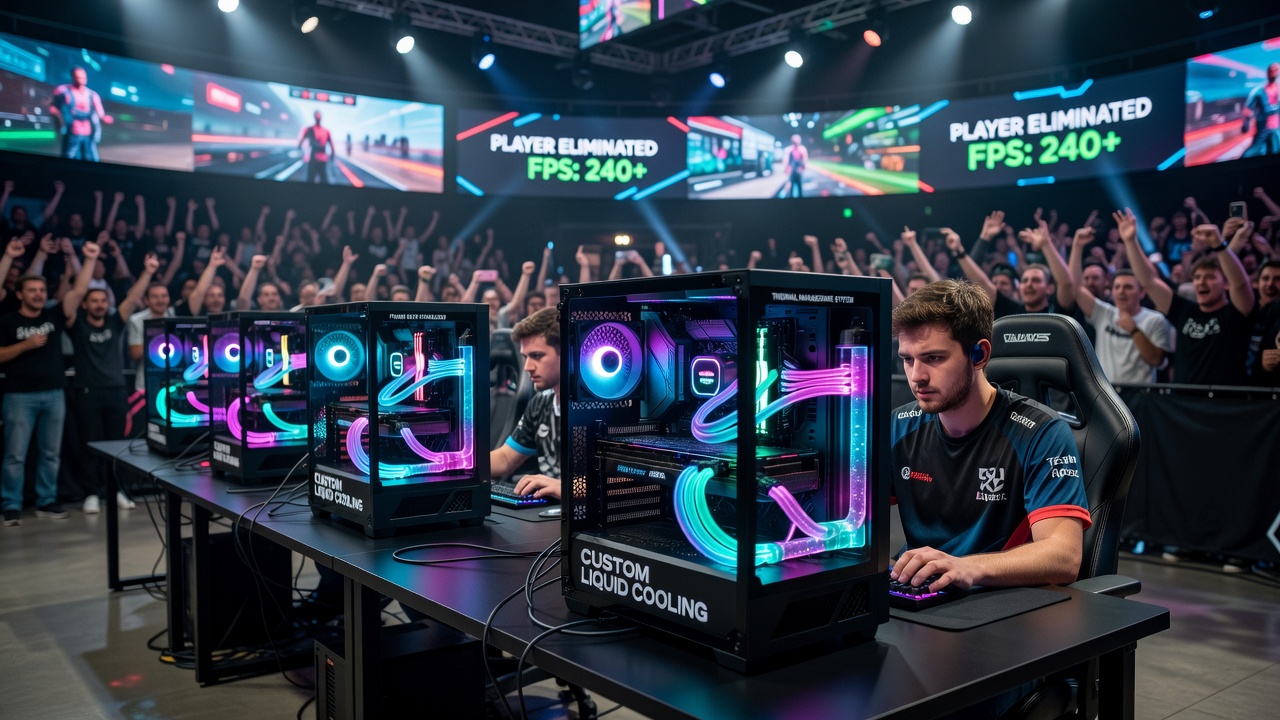
Major circuits schedule regional qualifiers through June 2026, and arena operators report fewer hardware interventions when custom loops handle the continuous loads of best-of-five series. European trade groups tracking hardware uptime note that venues using centralized cooling distribution see 40 percent fewer mid-match pauses compared with facilities relying solely on air cooling. The same reports indicate average frame rates hold within one percent of benchmark targets across four-hour blocks when coolant temperatures stay below 45 degrees Celsius at the block inlet.
Power delivery also benefits because lower operating temperatures reduce voltage droop under load, allowing motherboards to maintain advertised power limits without throttling. Teams that arrive with pre-bled loops spend less time on-site troubleshooting and more time on practice servers, a pattern documented across North American and Asia-Pacific circuits alike.
Integration With Arena Infrastructure
Organizers route exhaust air from radiator banks through venue HVAC returns rather than letting it mix with spectator areas, which keeps overall hall temperatures manageable and reduces strain on building systems. Some facilities install shared manifold lines that supply multiple stations from a central chiller, cutting individual pump noise and freeing desk space beneath monitors. These setups still allow each competitor station independent flow control so that teams can fine-tune for specific hardware configurations without affecting neighbors.
Network and peripheral stability remain unaffected because the cooling hardware operates on separate power circuits, avoiding electromagnetic interference that could otherwise compound input latency issues during peak network traffic.
Conclusion
Custom liquid cooling kits deliver measurable frame-rate consistency by removing heat before it forces frequency scaling, and data from multiple circuits confirms their role in sustaining performance across long tournament schedules. Arena staff continue refining radiator placement, coolant formulations, and monitoring protocols to match evolving hardware power densities, ensuring that equipment keeps pace with the demands of live competition environments.