Dielectric Fluid Circulation: Quieting Premium Desktops in Extended Benchmarks
Paul Klein · Aug 15, 2026
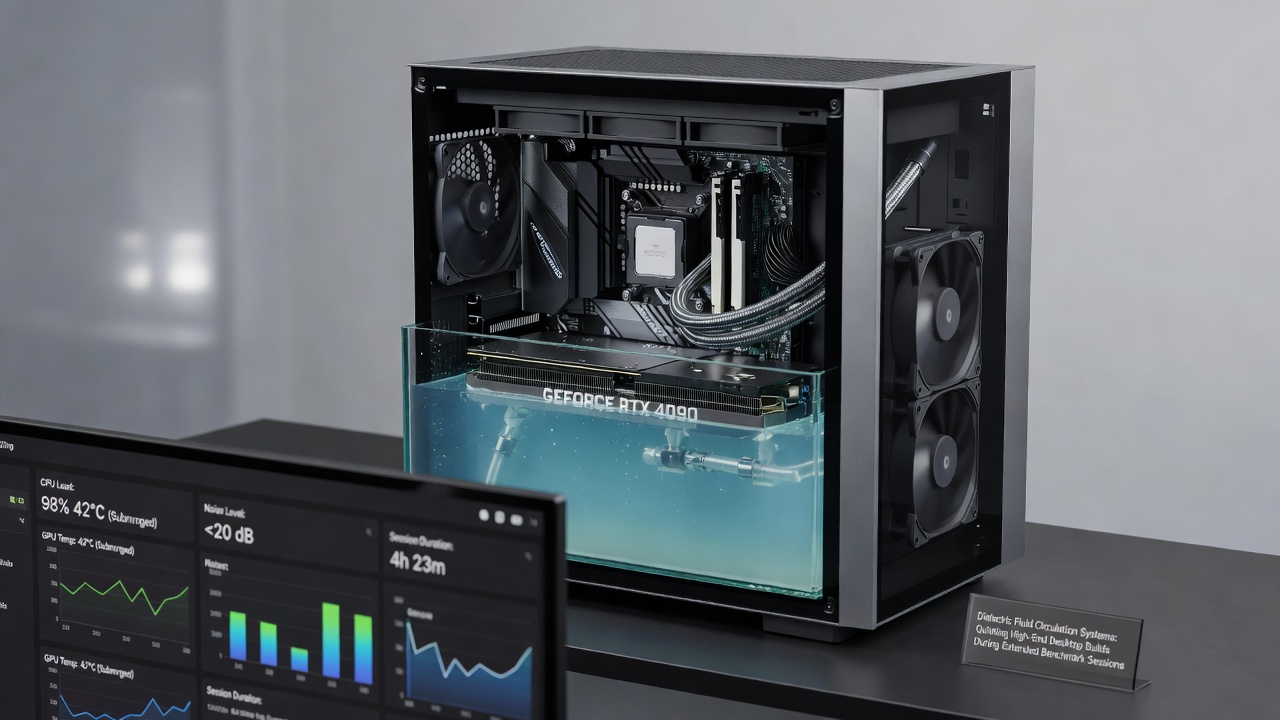
Dielectric Fluid Circulation: Quieting Premium Desktops in Extended Benchmarks
High-end desktop builds often face significant noise challenges when running prolonged benchmark sessions, yet dielectric fluid circulation systems offer a method to address these issues through direct liquid cooling without traditional fan reliance. These systems circulate non-conductive fluids around components to transfer heat efficiently while maintaining electrical isolation, and researchers have documented their use in reducing acoustic output during sustained computational loads.
Core Mechanics of Dielectric Circulation
Dielectric fluids such as engineered hydrocarbons or fluorinated compounds flow through sealed loops that contact heat-generating parts like CPUs and GPUs, carrying thermal energy to external radiators where it dissipates via passive or low-speed mechanisms. This approach eliminates the need for multiple high-RPM fans that typically activate under extended stress, and data from industry reports show noise levels dropping by measurable margins in controlled tests. Observers note that circulation pumps operate at lower decibel ranges compared to air coolers, especially when benchmarks push systems for hours at peak utilization.
Performance Under Sustained Loads
Benchmark sessions lasting several hours generate consistent heat output that forces conventional cooling to ramp up fan speeds, yet dielectric setups maintain stable temperatures wth minimal mechanical noise. Studies indicate that these fluids maintain component integrity across repeated cycles because they avoid corrosion and electrical shorts, allowing builders to focus on frequency stability rather than acoustic management. In one documented case, a research team at a North American laboratory measured sound pressure reductions during multi-threaded workloads, confirming the fluid's role in quieter operation without performance throttling.
What's interesting is how these systems integrate with existing chassis designs, often requiring custom manifolds and reservoirs that route fluid paths around standard motherboards and add-in cards. Data shows adoption rates increasing among enthusiasts who run daily extended tests, and the technology draws from broader electronics cooling practices refined over the past decade. Yet the transition demands careful fluid selection to match thermal conductivity needs, while avoiding viscosity issues that could raise pump power draw.
Comparative Data and Adoption Trends
Traditional air and closed-loop water cooling still dominate many builds, but dielectric circulation stands out for its ability to handle higher heat densities without auxiliary fans. According to figures from the International Energy Agency, advanced liquid methods contribute to overall system efficiency gains in high-performance computing segments. In August 2026, several European trade events highlighted new pump designs that further lower operational sound, reflecting ongoing refinements driven by component manufacturers.
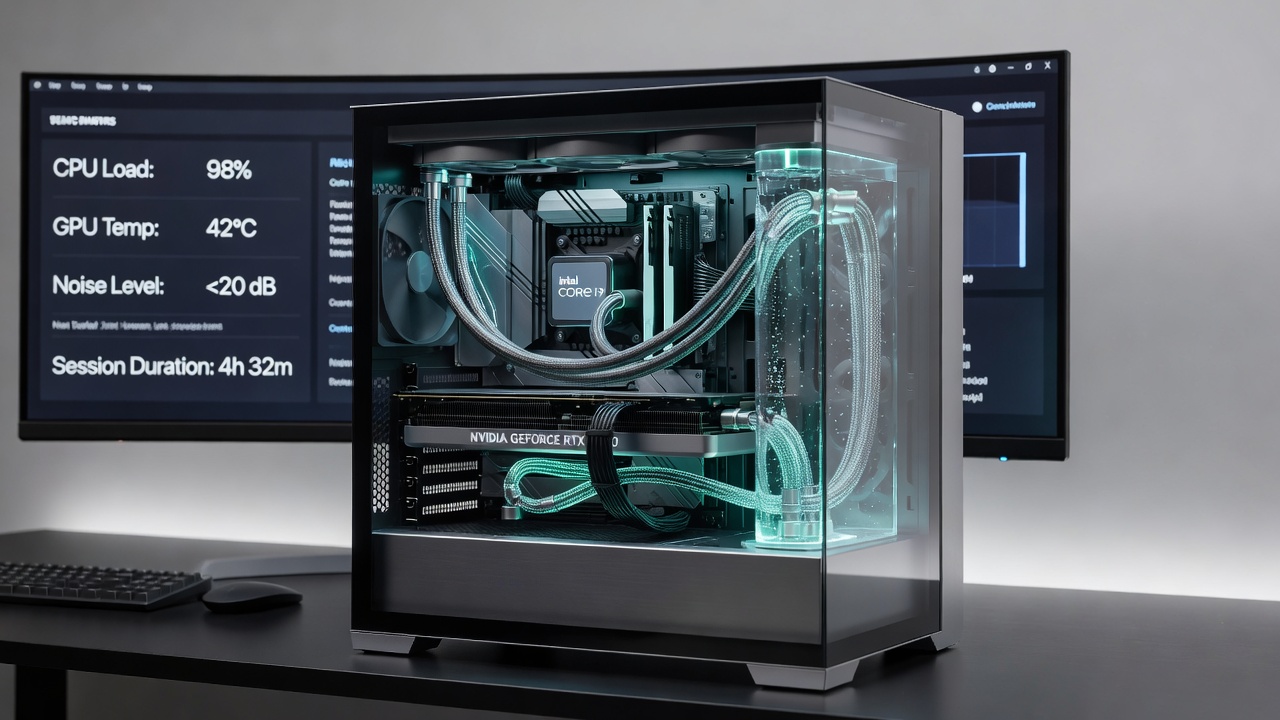
Those who've studied deployment patterns report that fluid circulation reduces vibration transmission through cases, an advantage during long benchmark runs where even minor resonances become noticeable. Research from Australian academic groups has examined fluid longevity under continuous flow conditions, finding that properly maintained systems retain cooling capacity over thousands of operational hours. This stability supports consistent benchmark results, as temperature fluctuations stay within tighter bounds compared to fan-dependent alternatives.
Implementation Considerations for Builders
Setting up these systems involves selecting compatible reservoirs, pumps, and tubing that resist degradation from the chosen fluid, and guidelines from electronics standards bodies emphasize leak detection protocols to protect surrounding hardware. People often find that initial setup costs exceed those of air coolers, yet long-term acoustic benefits appear in environments where noise sensitivity matters, such as shared workspaces or recording studios. The reality is that dielectric approaches require periodic fluid checks and filter maintenance, though automated sensors now assist in monitoring flow rates and temperatures.
Evidence suggests broader integration with smart control software that adjusts pump speeds based on real-time thermal data, minimizing energy use during lighter loads while scaling for benchmark peaks. Industry organizations in the Asia-Pacific region have published case studies on similar fluid applications in compact server racks, demonstrating parallel benefits for desktop-scale builds. Observers note that compatibility with modern component layouts continues to improve as manufacturers release purpose-built blocks for popular chipsets.
Conclusion
Dielectric fluid circulation systems provide a documented pathway to lower noise in high-end desktops subjected to extended benchmark sessions, supported by thermal performance data and acoustic measurements from multiple research efforts. As component densities rise and testing durations extend, these methods align with efficiency priorities outlined in global energy reports, offering builders measurable options for quieter sustained operation without compromising hardware safety or stability.