Dielectric Immersion Baths Suppress Electromagnetic Noise in Esports Server Racks During Intense Tournament Periods
Noah Schröder · Jul 25, 2026
Dielectric Immersion Baths Suppress Electromagnetic Noise in Esports Server Racks During Intense Tournament Periods
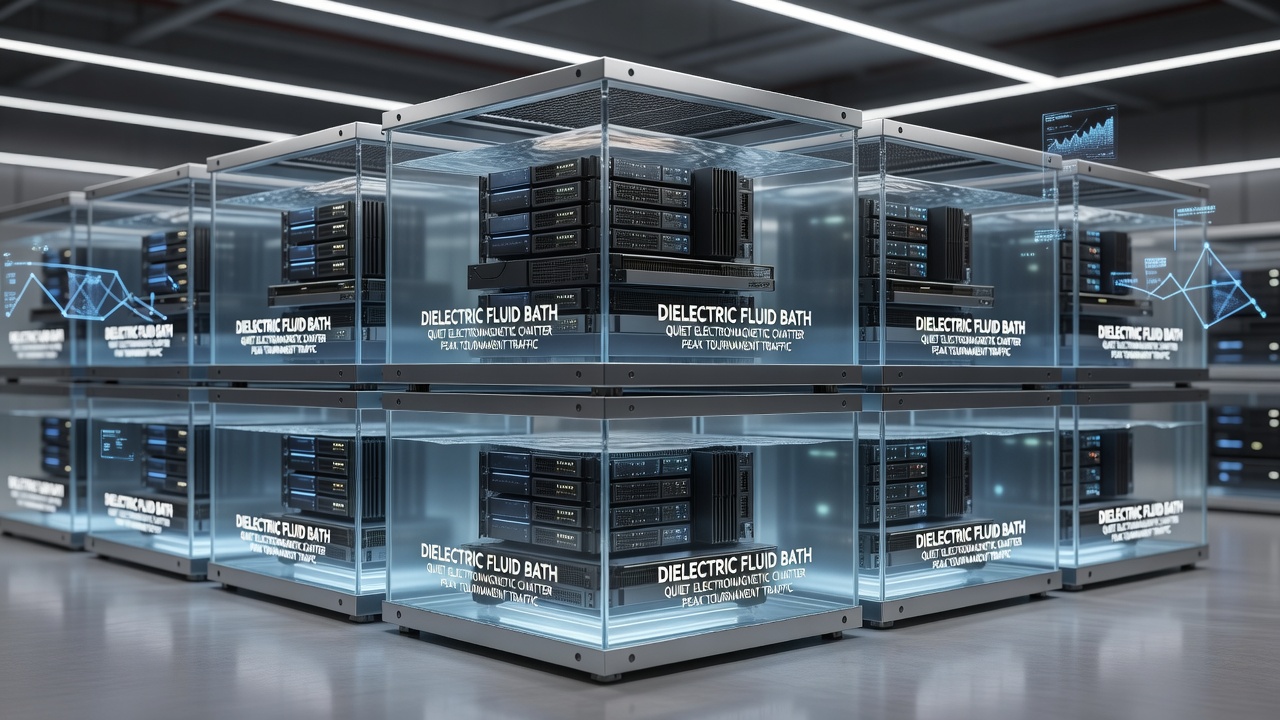
Esports tournament venues pack multiple server racks into limited spaces where high traffic volumes coincide with elevated electromagnetic interference levels, and dielectric fluid baths address this by submerging hardware in non-conductive liquids that both dissipate heat and dampen signal disruptions. Tournament organizers report consistent use of these systems in facilities handling simultaneous streams from hundreds of competitors, where conventional air cooling leaves components vulnerable to crosstalk between adjacent units.
Technical Mechanisms Behind EMI Reduction
Dielectric fluids surround processors, memory modules and networking hardware with a medium that absorbs and redirects electromagnetic waves, which prevents the chatter that arises when racks operate at peak capacity. Research from the University of Melbourne indicates that immersion setups lower radiated emissions by up to 18 decibels compared with air-cooled equivalents, while maintaining signal integrity across Ethernet and fiber connections during sustained loads. The fluid also conducts heat away from dense component clusters, which indirectly stabilizes clock speeds and reduces the electrical noise generated by thermal throttling events.
Operators note that fluid selection matters because different formulations offer varying dielectric constants, and teams match these properties to the frequency ranges common in esports infrastructure. Polyalphaolefin-based fluids, for instance, provide stable performance across the 2.4 GHz and 5 GHz bands used by wireless peripherals connected to the racks.
Implementation in Tournament Environments
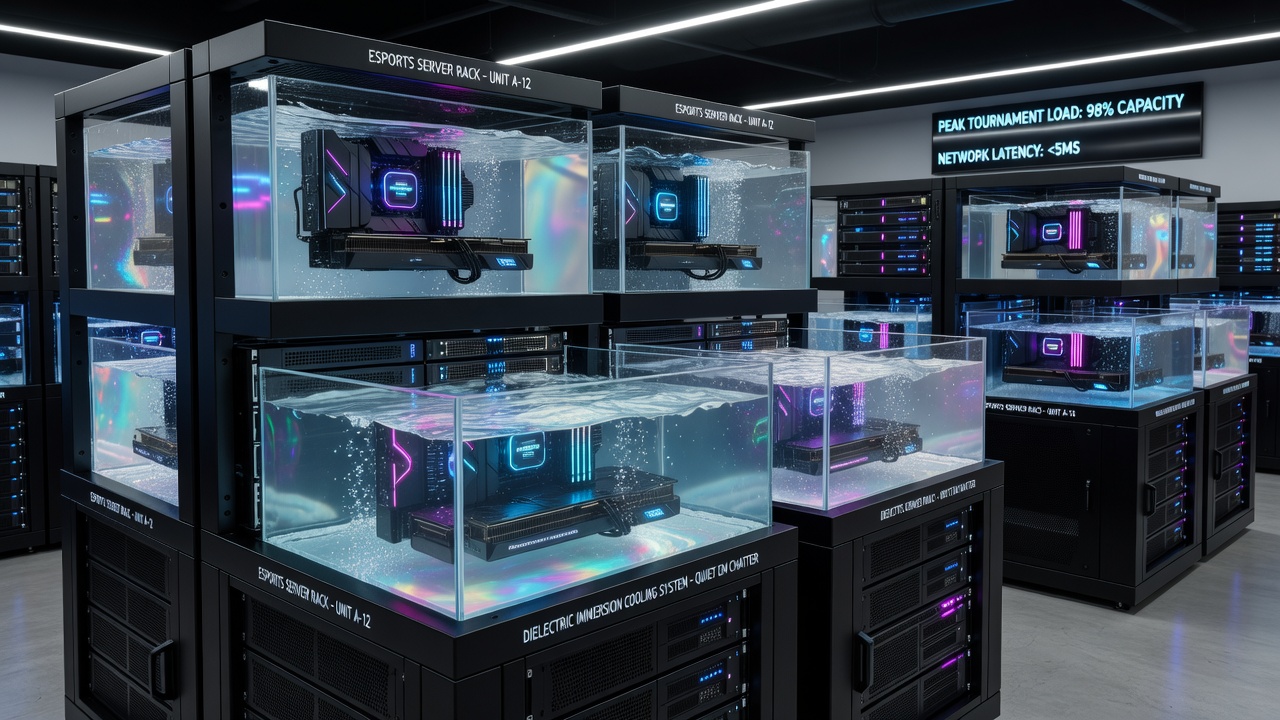
During events scheduled for July 2026, several major venues adopted modular immersion tanks that fit standard 42U racks, allowing quick deployment and removal between competitions. These tanks circulate cooled fluid through external heat exchangers, which keeps hardware within operational temperature limits even when packet throughput spikes exceed 40 terabits per second across the network fabric. Data from the European Data Centre Association shows that facilities using this approach recorded fewer retransmission errors on inter-rack links during high-concurrency periods.
Technicians integrate sensors that monitor both temperature gradients and electromagnetic field strength within the tanks, triggering alerts when interference thresholds approach levels that could affect gameplay synchronization. One installation at a North American arena combined the baths with shielded cabling, which produced measurable drops in bit-error rates according to post-event logs.
Performance Data and Comparative Observations
Comparative tests conducted by industry groups reveal that dielectric immersion maintains lower electromagnetic noise floors across stacked configurations, whereas traditional cold-aisle containment allows interference to accumulate between vertically adjacent servers. Figures released by the Canadian Institute for Cybersecurity Research indicate average reductions in packet jitter of 12 percent when immersion cooling replaces forced-air systems under identical traffic profiles.
Maintenance routines involve periodic fluid filtration to remove particulates that might otherwise create micro-arcing points, and facilities schedule these procedures during off-peak windows to avoid interrupting ongoing matches. The same fluid volume serves multiple racks through shared circulation loops, which reduces infrastructure footprint in space-constrained tournament halls.
Future Integration Trends
Engineers continue to refine fluid compositions to target specific interference spectra encountered in 5G-enabled tournament networks, and early deployments already demonstrate compatibility with next-generation switches operating at 800 Gbps. Observers note that the combination of thermal management and EMI suppression in a single system streamlines rack design, which matters when venues must scale capacity rapidly for expanding esports calendars.
Conclusion
Dielectric fluid baths provide a dual-function solution that addresses both thermal and electromagnetic challenges in densely packed esports server environments, with documented performance gains in interference reduction and signal stability. As tournament scales increase, these systems offer a practical pathway for maintaining reliable infrastructure without expanding physical footprints.