Dielectric Layers Shield Multi-GPU Setups From Crosstalk During 8K Tournament Captures
Avery Jenkins · Aug 27, 2026
Dielectric Layers Shield Multi-GPU Setups From Crosstalk During 8K Tournament Captures
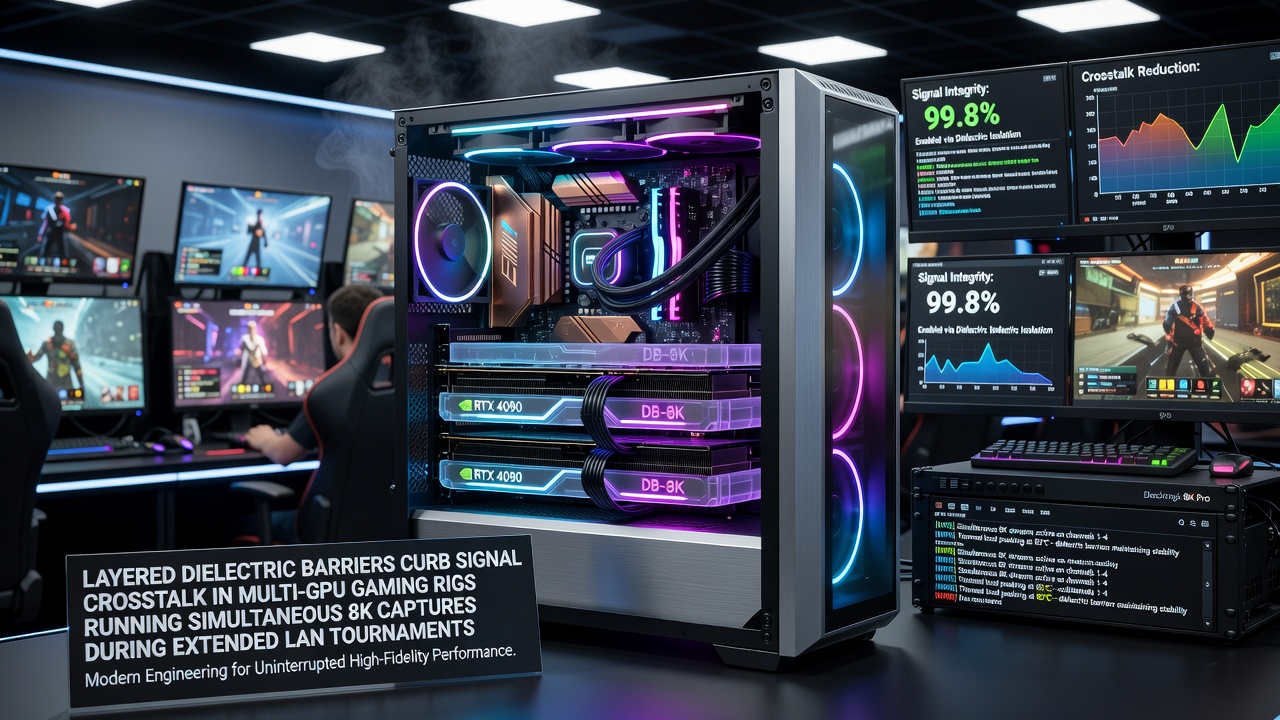
Multi-GPU configurations in gaming rigs face increasing signal interference as resolutions climb to 8K and capture systems run simultaneously, yet layered dielectric barriers offer a targeted solution that separates conductive paths and reduces electromagnetic coupling between components. Engineers design these barriers from materials with high permittivity values, which they stack in alternating patterns to create physical and electrical isolation zones inside dense chassis layouts.
Understanding Signal Crosstalk in High-Density GPU Arrays
Signal crosstalk occurs when electromagnetic fields from one GPU's high-speed data lines induce unwanted voltages in adjacent cards, especially during simultaneous 8K video encoding and real-time rendering tasks that push PCIe lanes and memory buses to peak loads. Researchers at institutions across North America and Europe have measured these effects in controlled test environments, noting that interference spikes often align with frame capture intervals in extended tournament sessions.
Layered dielectric barriers interrupt these fields by inserting non-conductive planes that absorb and redirect stray energy, and manufacturers integrate them directly onto motherboard risers or as inter-card shields. Data from hardware validation labs shows measurable drops in bit error rates when these layers reach specific thicknesses calibrated to the operating frequencies of modern GPUs.
Implementation in Extended LAN Tournament Environments
LAN events that stretch across multiple days require stable multi-GPU operation while systems handle continuous 8K captures for broadcast and replay purposes, and event organizers in August 2026 incorporated dielectric-enhanced rigs to maintain signal integrity across dozens of stations operating in close proximity. Technicians positioned the barriers between primary and secondary graphics cards, then verified performance through loopback tests that simulated peak tournament workloads.
Power distribution units and cooling arrays add further complexity because they generate their own electromagnetic noise, yet the dielectric stacks maintain separation even when fans and pumps operate at full speed. Observers note that teams using these configurations completed full tournament brackets without the frame drops or capture artifacts that plagued earlier setups lacking such isolation.
Material Choices and Performance Metrics
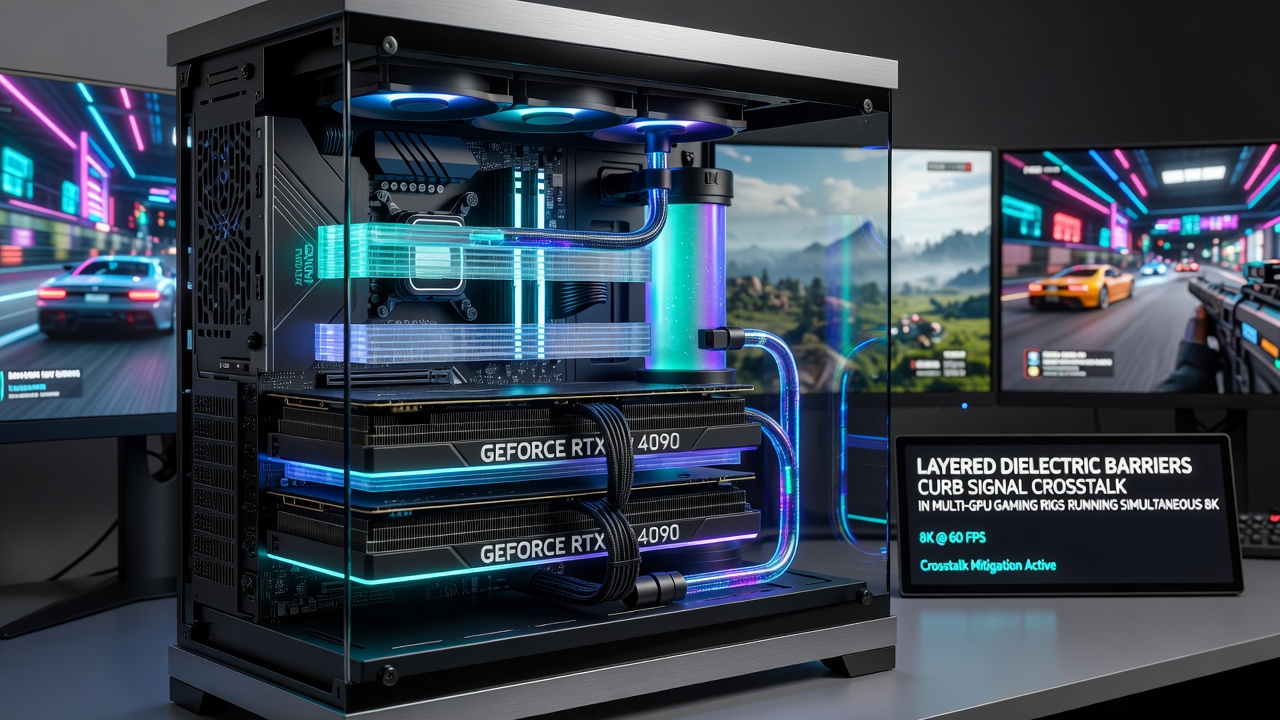
Common dielectric materials include specialized polymers and ceramic composites that combine high breakdown voltage with low dielectric loss, and engineers select layer counts based on the number of GPUs and the bandwidth demands of 8K streams. Tests conducted by academic groups in the United States and the European Union demonstrate that three-layer configurations often deliver optimal results for four-GPU arrays, while additional layers provide diminishing returns once crosstalk falls below acceptable thresholds.
Bandwidth retention stays consistent across long sessions because the barriers prevent cumulative heating effects that would otherwise degrade signal quality, and thermal imaging confirms that the added layers do not impede airflow when installed with proper spacing. Industry reports from hardware certification programs list these improvements as standard requirements for rigs intended for competitive play at scale.
Integration With Capture and Networking Hardware
Capture cards connected to multi-GPU systems must process uncompressed or lightly compressed 8K feeds without introducing additional latency, and dielectric barriers help by keeping GPU-to-capture interconnects free from external noise sources. Teams route high-speed cables through shielded channels that complement the inter-card barriers, creating a complete isolation strategy for the entire signal path.
Networking switches and fiber links at tournament venues carry aggregated streams to production servers, and clean signals from the source rigs reduce the need for extensive error correction downstream. Studies published through university research channels highlight how these hardware-level improvements translate directly into lower overall system jitter during multi-day events.
Conclusion
Layered dielectric barriers address a core hardware limitation in multi-GPU environments tasked with simultaneous 8K captures, delivering measurable reductions in crosstalk while supporting the demands of extended LAN tournaments. Continued refinement of material stacks and placement techniques supports reliable operation as resolutions and capture requirements continue to advance.