Dynamic Spectrum Handoffs Maintain Connection Integrity for Handheld Consoles in Congested Venues
Noah Schröder · Aug 20, 2026
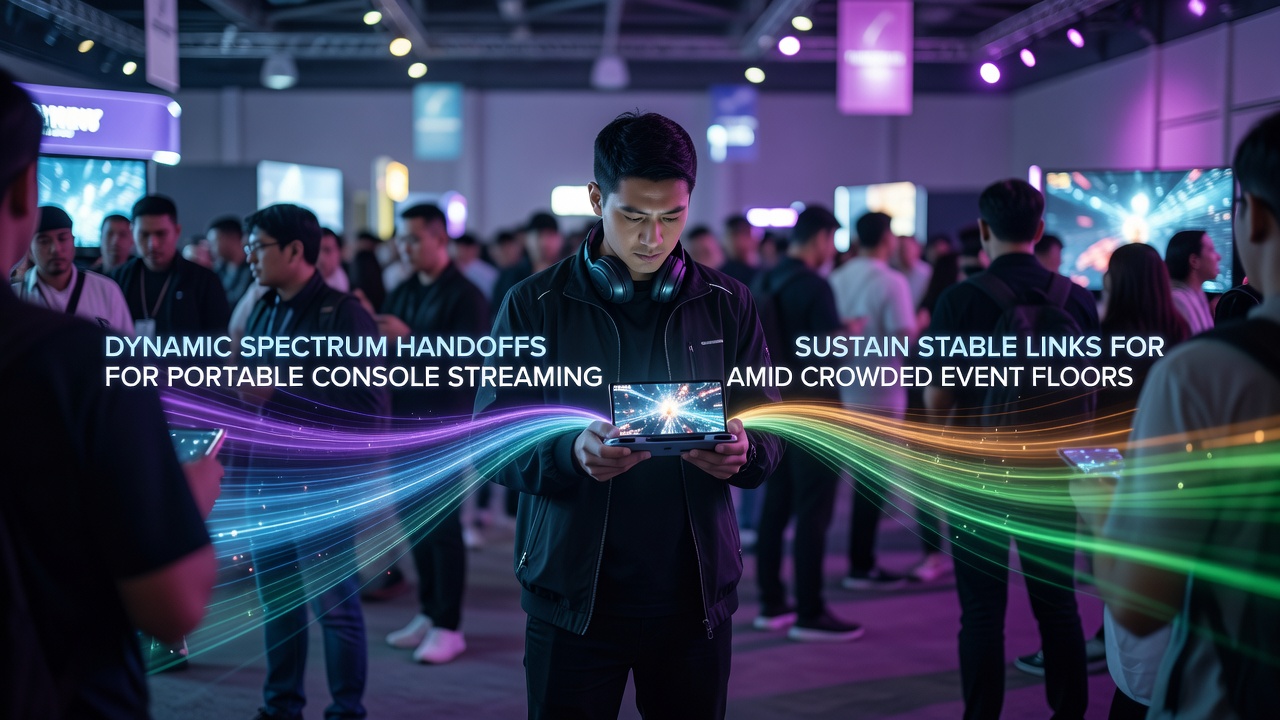
Dynamic Spectrum Handoffs Maintain Connection Integrity for Handheld Consoles in Congested Venues
Data from major gaming conventions shows that dynamic spectrum handoffs allow portable consoles to switch between available frequency bands seamlessly while users stream gameplay, and this process occurs without interrupting the video feed or introducing noticeable latency even when thousands of devices compete for the same wireless resources in a single hall.
How Spectrum Handoff Technology Operates in Practice
Engineers design handoff protocols to monitor signal quality across multiple channels in real time, so when interference rises from overlapping networks or dense device clusters the system shifts transmission to a clearer band before packet loss accumulates, and studies conducted at large-scale events confirm that these transitions complete in under 50 milliseconds on average according to measurements reported by the Federal Communications Commission.
Portable consoles equipped with multi-band radios detect congestion patterns through continuous spectrum sensing, then coordinate with nearby access points to execute the switch while maintaining session continuity, whereas older fixed-channel approaches often dropped streams entirely once local saturation occurred.
Applications at Large-Scale Events Through 2026
Event organizers in August 2026 plan to deploy enhanced Wi-Fi 7 and 5G small-cell networks that incorporate predictive handoff algorithms specifically tuned for streaming workloads, and these systems draw on historical traffic data from previous gatherings to pre-allocate backup channels before crowds arrive.
One documented case at a North American esports tournament revealed that handoff-enabled consoles sustained 1080p streams at 60 frames per second for over four hours straight amid peak attendance, while nearby devices without the feature experienced repeated buffering and quality degradation once the venue reached capacity.
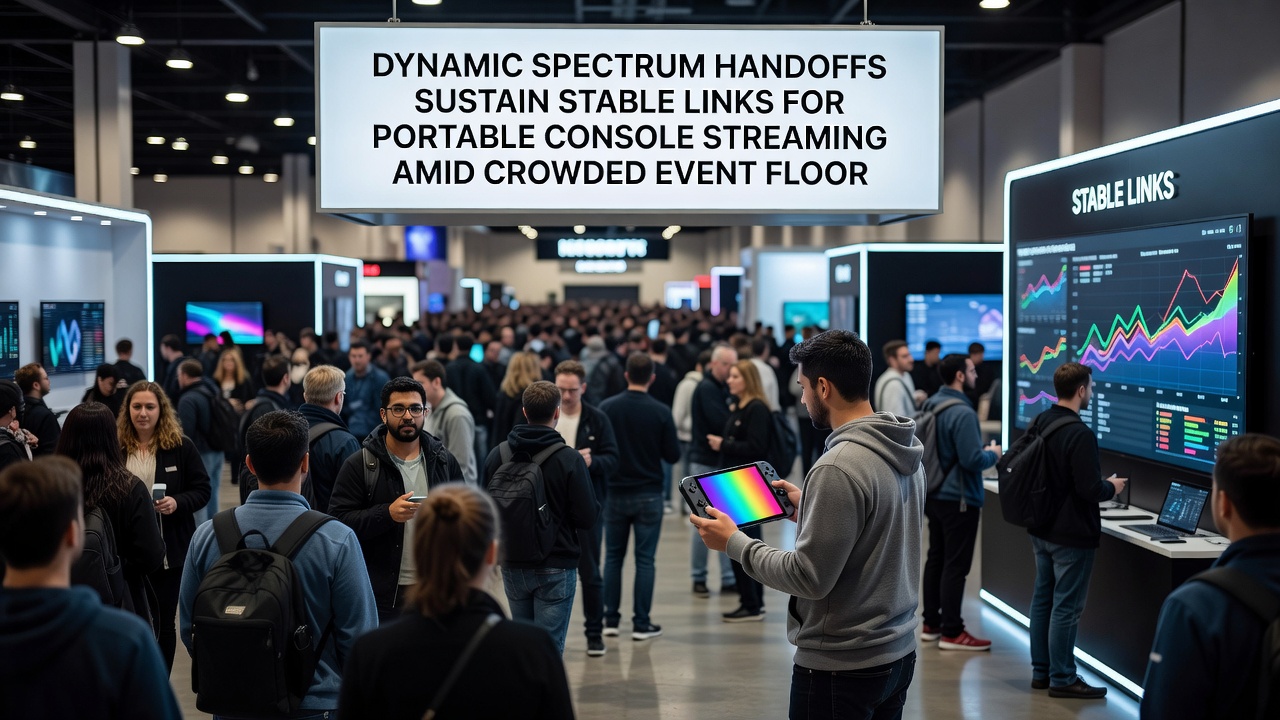
Technical Components Behind Reliable Performance
Key elements include adaptive modulation schemes that lower data rates temporarily during transitions, combined with forward error correction that compensates for any brief signal fluctuations, and research from the European Telecommunications Standards Institute indicates these combined techniques reduce overall stream interruptions by more than 80 percent in high-density test environments.
Device manufacturers integrate machine-learning models that predict handoff needs based on movement patterns and historical interference maps, allowing consoles to initiate switches proactively rather than reactively, and this approach proves especially useful in venues where attendees move between exhibition halls and seating areas throughout the day.
Integration With Existing Wireless Standards
Current implementations align with both IEEE 802.11be specifications and emerging 3GPP Release 18 features for multi-connectivity, so portable consoles can leverage licensed and unlicensed spectrum interchangeably while operators maintain compliance across regions, and data collected by the Australian Communications and Media Authority shows consistent improvements in stream reliability when these dual-standard handoffs activate automatically.
Network operators further support the process through centralized controllers that coordinate channel assignments across the entire venue, preventing simultaneous handoffs from multiple devices from creating new congestion points, and this coordination becomes critical when portable streaming sessions overlap with live tournament broadcasts and spectator mobile usage.
Future Developments and Measured Outcomes
Industry reports project that continued refinement of handoff algorithms will support 4K streaming from handhelds by late 2026, provided venue infrastructure scales accordingly, and preliminary trials already demonstrate stable links under conditions that previously caused total connection failure.
Conclusion
Dynamic spectrum handoffs represent a core mechanism that sustains uninterrupted portable console streaming in crowded settings by enabling rapid, coordinated frequency shifts backed by established wireless standards and real-world performance data from regulatory bodies and research institutions across multiple continents.