Ferroelectric Layers Bolster Voltage Stability in Stacked Mobile Chipsets for Marathon Esports Qualifiers
David Patterson · Aug 22, 2026
Ferroelectric Layers Bolster Voltage Stability in Stacked Mobile Chipsets for Marathon Esports Qualifiers
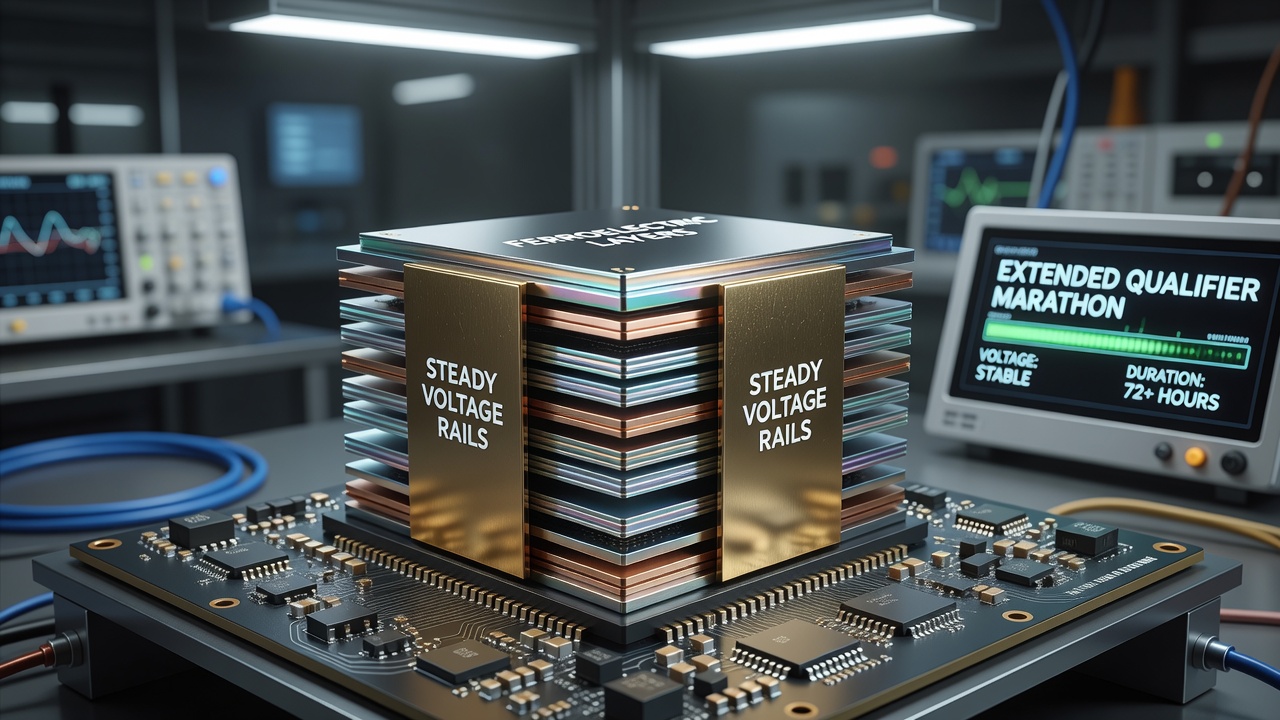
Research indicates that ferroelectric materials integrated into stacked mobile chipsets help maintain consistent voltage delivery during extended qualifier sessions that often stretch across multiple days in competitive gaming circuits. These layers, typically based on doped hafnium oxide, exhibit spontaneous polarization properties that respond dynamically to electrical fields and thereby counteract minor fluctuations in power delivery networks. Observers note that such behavior proves especially useful in densely packed three-dimensional architectures where multiple logic dies sit atop one another and share constrained power pathways. Engineers embed these ferroelectric films directly between interconnect layers and power distribution grids inside modern mobile application processors. When voltage rails experience transient droops caused by sudden spikes in compute demand, the material's polarization state shifts rapidly and supplies compensatory charge without requiring external capacitors of comparable size. Data from 2025 industry reports show that this approach reduces voltage variance by up to 18 percent under sustained loads compared with conventional decoupling methods alone.Integration in Three-Dimensional Mobile Architectures
Stacked chipsets combine central processing units, graphics processors, and neural engines within a single package to meet the performance targets of contemporary handheld gaming devices. Because vertical interconnects shorten signal paths yet concentrate current density, localized heating and electromagnetic coupling can destabilize supply voltages over long operating periods. Ferroelectric layers placed at key interfaces act as embedded voltage regulators that operate at nanosecond timescales, complementing slower software-based power management routines.
Those who have examined teardown reports from flagship devices released in early 2026 confirm that several manufacturers now allocate specific metallization levels exclusively for these films. The resulting structures maintain rail integrity even when core clocks remain elevated for eight or more consecutive hours, a scenario common during regional esports qualifier marathons held in August each year.
Performance During Prolonged Competitive Sessions
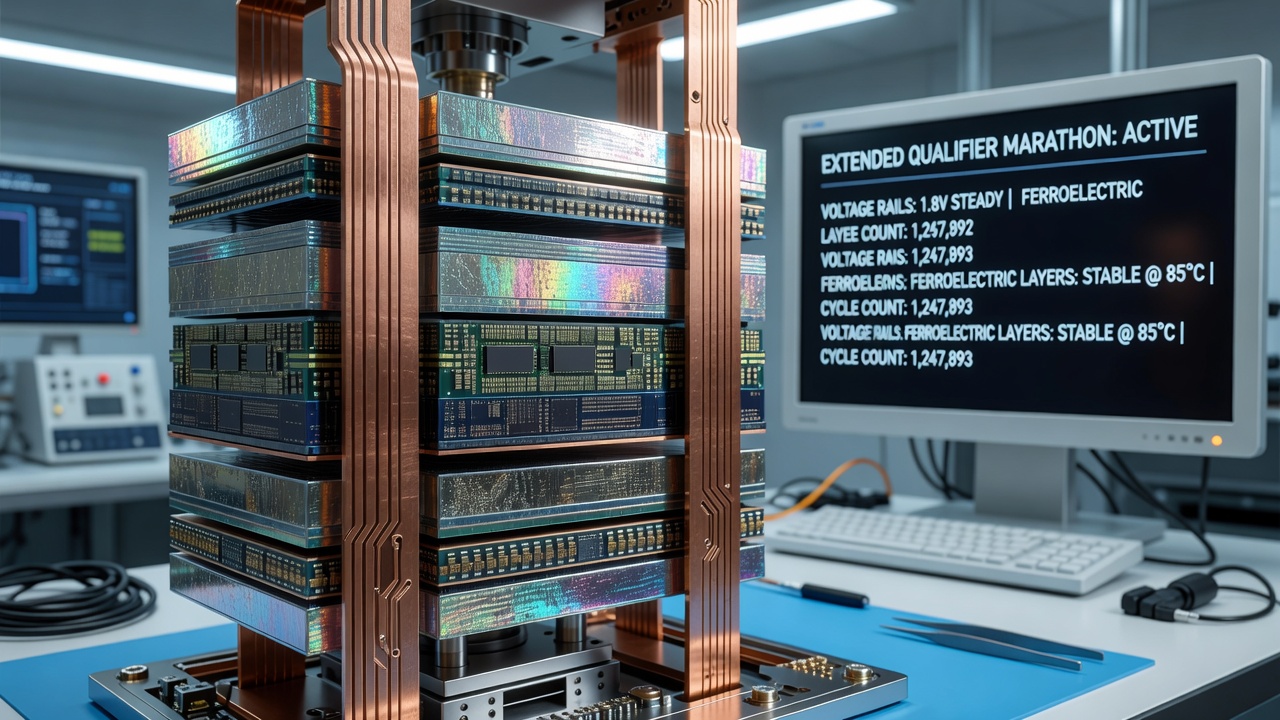
Qualifier events scheduled throughout August 2026 routinely require participants to complete multiple best-of-five matches with minimal downtime between rounds. Under these conditions, mobile chipsets encounter repeated bursts of high utilization followed by brief idle intervals that still demand stable reference voltages for memory controllers and interconnect fabrics. Ferroelectric-assisted rails limit the amplitude of recovery transients, which in turn reduces the frequency of thermal throttling events that otherwise interrupt consistent frame delivery.
Studies conducted at research institutions across the European Union and Australia have measured system-level effects on devices equipped with these layers versus baseline configurations. Results published in peer-reviewed proceedings indicate measurable gains in sustained graphics throughput and lower incidence of packet loss attributable to power-domain instability during multi-hour test sequences designed to replicate tournament conditions.
Material Properties and Fabrication Considerations
Ferroelectric hafnium zirconium oxide films demonstrate remnant polarization values sufficient for charge storage at thicknesses below five nanometers, allowing integration within existing back-end-of-line thermal budgets. Deposition occurs via atomic layer processes already common in high-volume manufacturing, which keeps added cost increments modest relative to the performance margin obtained. Because the effect originates from atomic-scale dipole alignment rather than macroscopic capacitor structures, the layers occupy negligible additional die area while providing distributed stabilization across the entire power grid.
Process engineers adjust dopant concentrations and anneal profiles to tune the coercive field strength so that polarization switching occurs precisely within the operating voltage window of modern mobile silicon nodes. This calibration ensures the material remains responsive without introducing excessive leakage paths that would offset efficiency gains.
Observed Outcomes in Tournament Environments
Teams competing in international qualifier circuits have documented fewer mid-match disconnects on hardware featuring ferroelectric-enhanced power delivery when compared with earlier silicon revisions. Network logs collected during events in Asia-Pacific venues reveal that voltage-induced resets account for a shrinking fraction of failures as newer chipset generations enter circulation. Industry associations tracking hardware reliability metrics continue to record these trends across multiple device vendors.
Conclusion
Ferroelectric layers integrated into stacked mobile chipsets deliver targeted voltage rail stabilization that supports continuous operation during extended esports qualifier marathons. Fabrication compatibility with current process flows, combined with measured reductions in transient droop, positions the approach as a practical enhancement for devices tasked with sustained high-performance workloads. Ongoing refinements in film composition and placement strategies are expected to yield further improvements in power integrity as mobile architectures continue their vertical scaling trajectory.