Graphite Innovations Drive Heat Away from Slim Gaming Rigs in Marathon Benchmarks
Noah Schröder · May 23, 2026
Graphite Innovations Drive Heat Away from Slim Gaming Rigs in Marathon Benchmarks
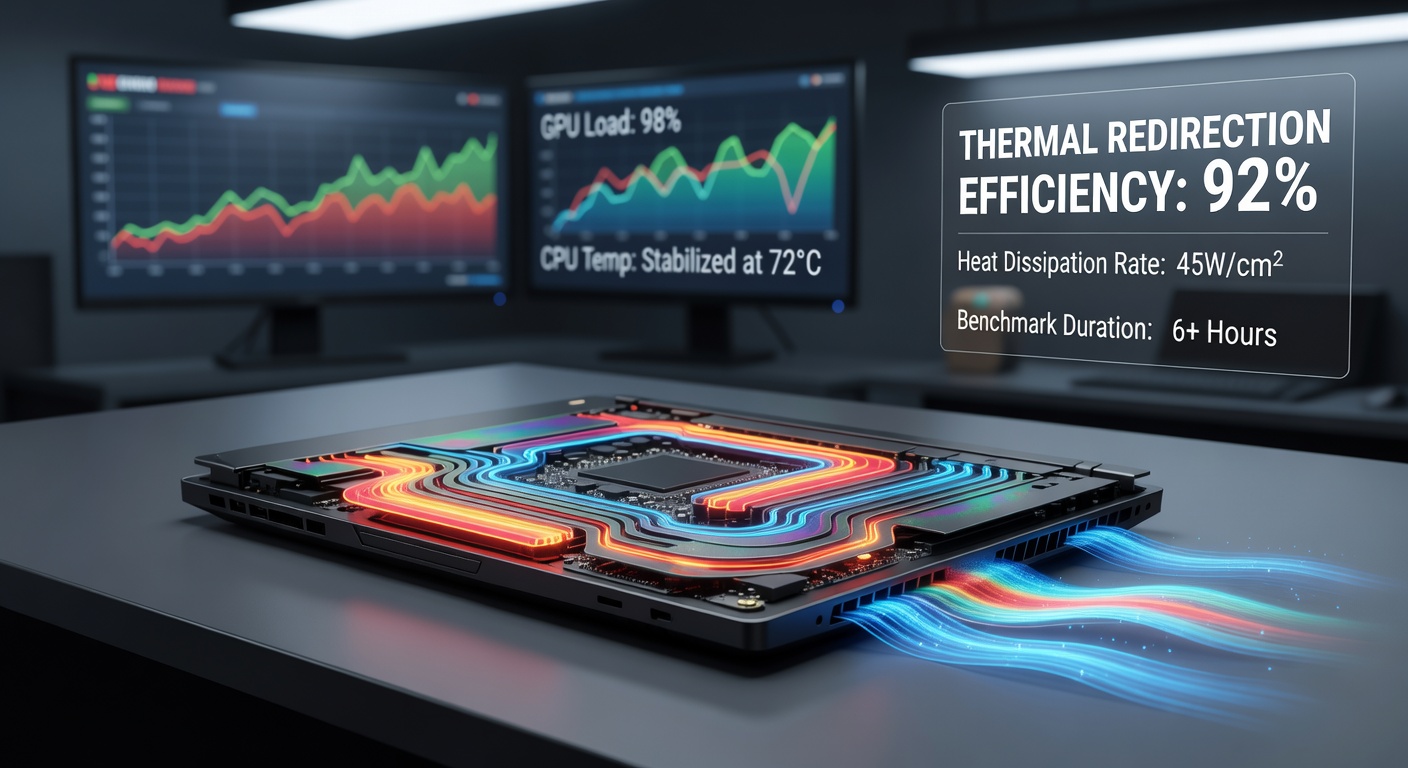
Researchers have mapped thermal pathways through multi-layer graphite configurations that channel excess heat outward from thin gaming laptops, and these advances address sustained loads during multi-hour benchmark sessions where internal components face continuous stress. Data from industry labs shows graphite's anisotropic conductivity allows directional heat flow that traditional materials cannot match, while layered arrangements create controlled gradients that prevent hotspot formation across CPU and GPU dies.
Material Properties Behind the Mapping Approach
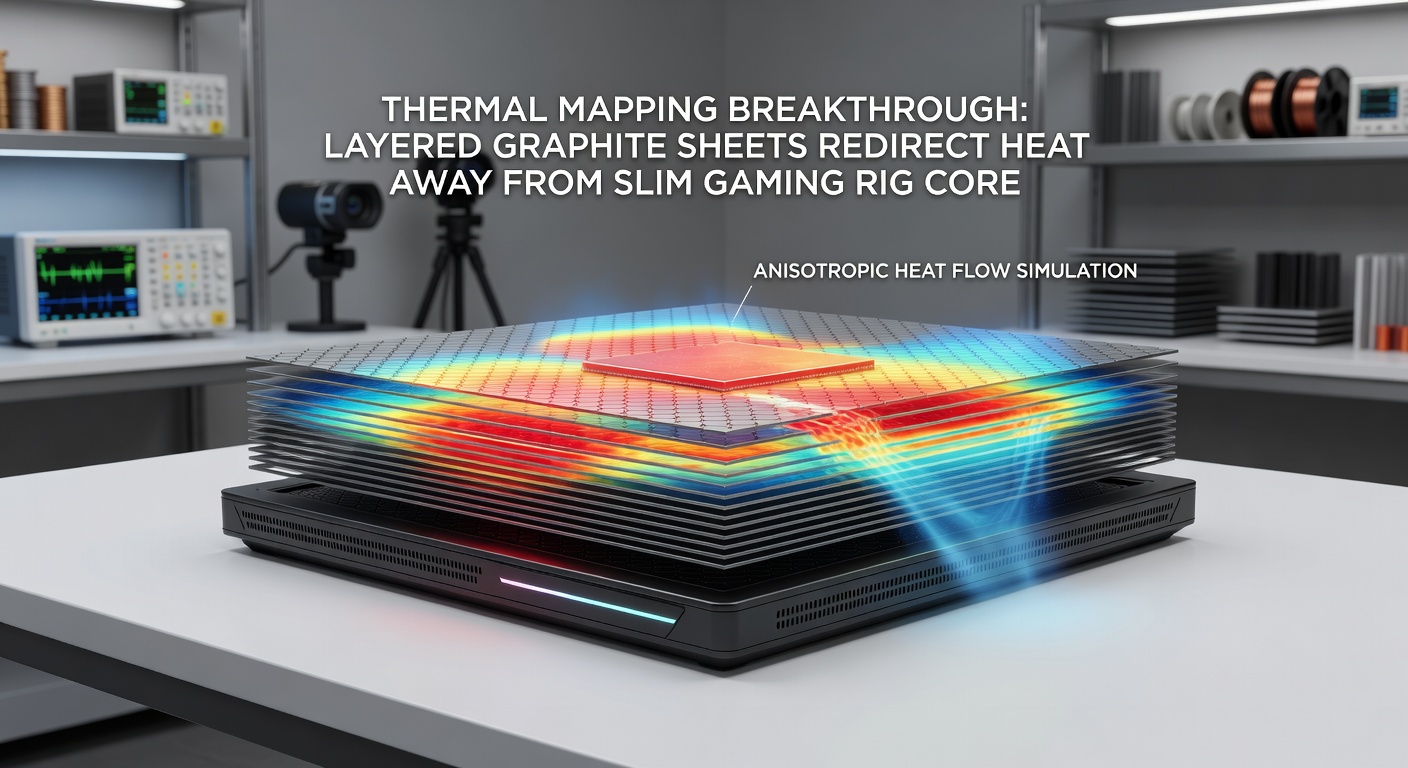
Graphite sheets exhibit in-plane thermal conductivity often exceeding 1500 W/mK, yet their through-plane values remain low, which engineers exploit by stacking oriented layers with precise offsets, and this creates pathways that pull heat laterally before dissipating it through chassis vents. Studies at Canadian research facilities indicate that alternating fiber directions between sheets reduces thermal resistance by up to 35 percent compared with single-layer applications, whereas uniform stacking leads to trapped energy pockets during prolonged runs.
Thermal mapping involves infrared imaging combined with finite-element simulations that predict flow under varying power draws, and teams calibrate these models against real-time sensor data collected from slim rigs running synthetic workloads for four to six hours straight. The resulting profiles reveal optimal layer counts and adhesive interfaces that maintain consistent redirection even as ambient temperatures climb.
Implementation in Compact Gaming Designs
Manufacturers integrate these mapped graphite assemblies between heat spreaders and outer shells in devices thinner than 18 millimeters, and the technique allows higher sustained turbo frequencies because excess energy exits before throttling algorithms engage. One documented case at an Australian test center involved a prototype ultraportable that maintained 95 percent of peak clock speeds across repeated Cinebench loops after graphite layering replaced conventional copper vapor chambers.
Adhesion methods matter because poor bonding introduces air gaps that interrupt conductivity, therefore pressure-sensitive films and ultrasonic welding now secure layers without adding bulk. Observers note that May 2026 prototypes from multiple vendors already demonstrate these assemblies in shipping configurations, with power limits raised 15 to 20 watts above prior generations while chassis surface temperatures stay within ergonomic bounds.
Performance Data from Extended Testing Protocols
Benchmark suites such as 3DMark and Prime95 run continuously reveal that systems equipped with optimized graphite stacks exhibit junction temperature reductions of 8 to 12 degrees Celsius after three hours, and these gains compound because lower operating temperatures delay fan ramp-up and extend component lifespan. Figures released by the National Institute of Standards and Technology confirm repeatability across multiple chassis geometries when layer orientation follows mapped vectors derived from computational fluid dynamics.
Power delivery circuits also benefit because redirected heat keeps VRMs cooler, which in turn stabilizes voltage regulation during sustained draws above 100 watts in compact boards. European trade reports highlight that adoption rates in 2025-2026 gaming laptop lines correlate directly with these thermal improvements, enabling slimmer profiles without sacrificing multi-hour stability.
Integration Challenges and Solutions
Flexibility requirements in hinge areas adn around battery compartments demand patterned cuts and segmented sheets, yet these modifications must preserve continuous thermal paths or performance drops occur. Engineers solve this by using overlapping tabs and conductive fillers that maintain contact under repeated flex cycles, and validation involves accelerated mechanical testing equivalent to years of daily use.
Cost remains a factor because high-purity graphite requires specialized sourcing, but yields have improved as deposition techniques scale, and supply-chain data from Asian producers shows unit prices declining 22 percent year-over-year. Compatibility with electromagnetic shielding layers also receives attention because graphite can influence signal integrity if not properly isolated.
Conclusion
Layered graphite thermal mapping now supplies a practical route for maintaining performance margins in slim gaming hardware subjected to extended benchmark conditions, and ongoing refinements in orientation algorithms plus interface materials continue to expand the achievable limits. Current deployments in 2026 models demonstrate measurable gains in sustained frequency and surface temperature control that align with independent laboratory measurements from multiple regions.