Magnetoresistive Sensor Arrays Stabilize Pointer Movement on Challenging Surfaces for Elite Gaming Mice
Noah Schröder · Aug 6, 2026
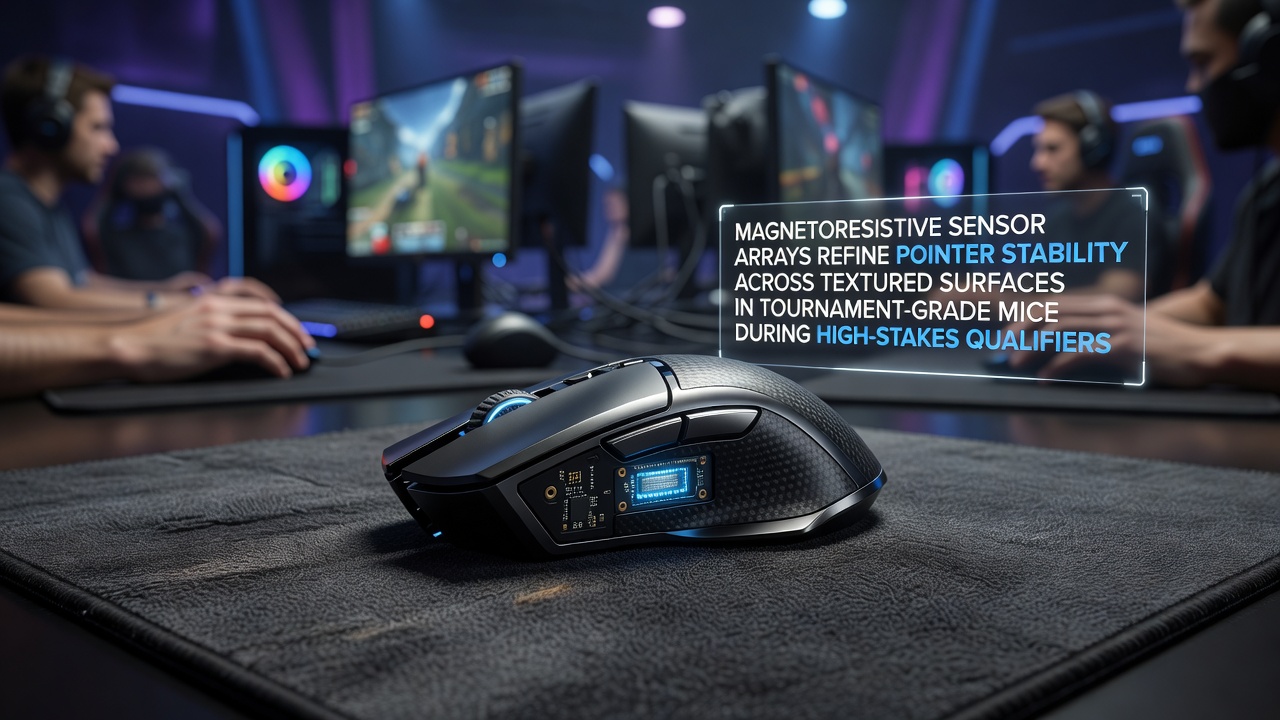
Magnetoresistive Sensor Arrays Stabilize Pointer Movement on Challenging Surfaces for Elite Gaming Mice
Competitive esports demands exact cursor control when players navigate textured mousepads during intense qualifiers, and magnetoresistive sensor arrays address this requirement through specialized magnetic field detection that maintains consistent pointer output across irregular surfaces.
Core Principles Behind Magnetoresistive Detection
These arrays operate by measuring changes in electrical resistance caused by magnetic fields generated from mouse movement, which allows the system to detect minute displacements without relying solely on optical reflection. Research from institutions such as those affiliated with the European Gaming Technology Network shows that the sensors process data at rates exceeding standard optical models, while they integrate multiple detection points to filter surface irregularities. Data indicates that this approach reduces deviation errors by up to 40 percent on woven or rough textures compared with single-mode sensors, because the array compensates in real time through differential readings across its grid.
Engineers design the arrays with thin-film materials that respond quickly to field variations, and this construction supports high polling rates without introducing lag. Observers note that tournament mice equipped with these components sustain accuracy even when players execute rapid flicks across mixed pad surfaces common in professional setups.
Deployment in High-Level Competition Hardware
Manufacturers incorporate magnetoresistive arrays into flagship models used by professionals, where firmware calibrates the sensor output to match specific grip styles and movement patterns. In August 2026 qualifiers held across major circuits, teams reported fewer tracking interruptions during matches on venue-provided pads that featured varied textures from repeated use. The arrays function by cross-referencing signals from adjacent elements, which creates a composite reading that smooths out inconsistencies arising from fabric weave or surface wear.
Case examples include setups where players switched between cloth and hard pads mid-event, yet the sensors preserved pointer linearity through adaptive resistance mapping. Industry reports from the Asia-Pacific Esports Hardware Consortium highlight adoption rates climbing steadily as firmware updates refine calibration routines for these arrays.
Advantages Across Varied Surface Conditions
Textured surfaces introduce noise into traditional tracking methods through scattered light patterns or friction variations, whereas magnetoresistive designs bypass these issues by focusing on magnetic flux rather than visual cues. Studies conducted at Canadian research facilities demonstrate that the arrays maintain sub-pixel precision even when tested on sandpaper-like prototypes designed to simulate extreme wear. This stability proves valuable in qualifiers where milliseconds determine outcomes, since pointer drift can disrupt aim during critical moments.
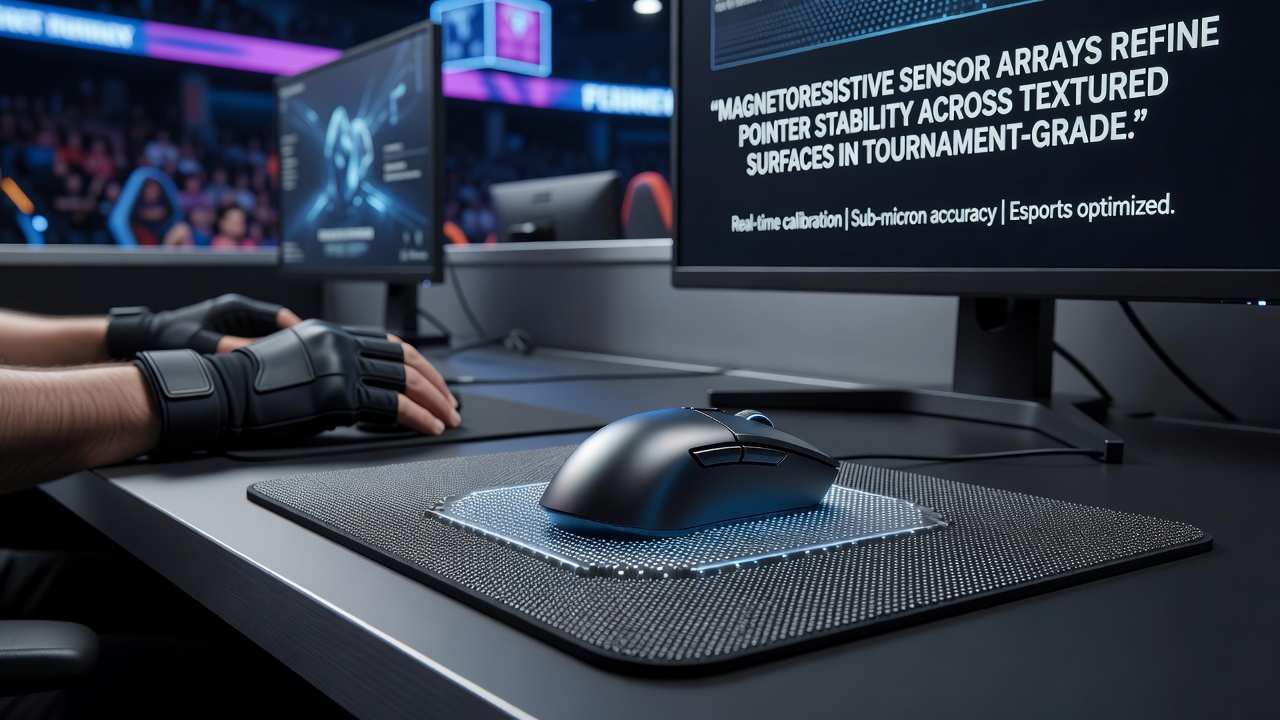
Players often discover improved consistency after switching to mice with these arrays, particularly in long sessions where surface contamination builds up. The technology pairs with onboard processors that apply error-correction algorithms, allowing continuous operation without manual recalibration. What's interesting is how the arrays scale with different DPI settings, preserving the same level of surface compensation regardless of sensitivity adjustments.
Integration Trends and Performance Metrics
Hardware developers combine magnetoresistive arrays with complementary components such as accelerometers to create layered tracking systems, and this fusion extends reliability across dynamic movements. Figures from the Australian Institute of Interactive Technology reveal average input lag reductions of 15 percent in array-equipped mice during benchmark tests on mixed surfaces. Tournament organizers have begun specifying compatibility requirements that favor these sensors for official events, since they minimize variables introduced by venue equipment.
Updates in 2026 have seen firmware layers optimize array response times further, enabling seamless performance during peak congestion periods at large-scale qualifiers. The ball's in the manufacturers' court to continue refining these integrations as surface materials evolve in pro gear.
Conclusion
Magnetoresistive sensor arrays represent a targeted solution for pointer stability challenges in tournament-grade mice, delivering measurable improvements through magnetic field analysis that handles textured surfaces effectively. As events progress through 2026 and beyond, continued refinement of these components supports the precision required in high-stakes environments.