Mesh Network Setups Deliver Stable Connections for Fighting Game Tournaments in Dense LAN Settings
David Patterson · Jul 18, 2026
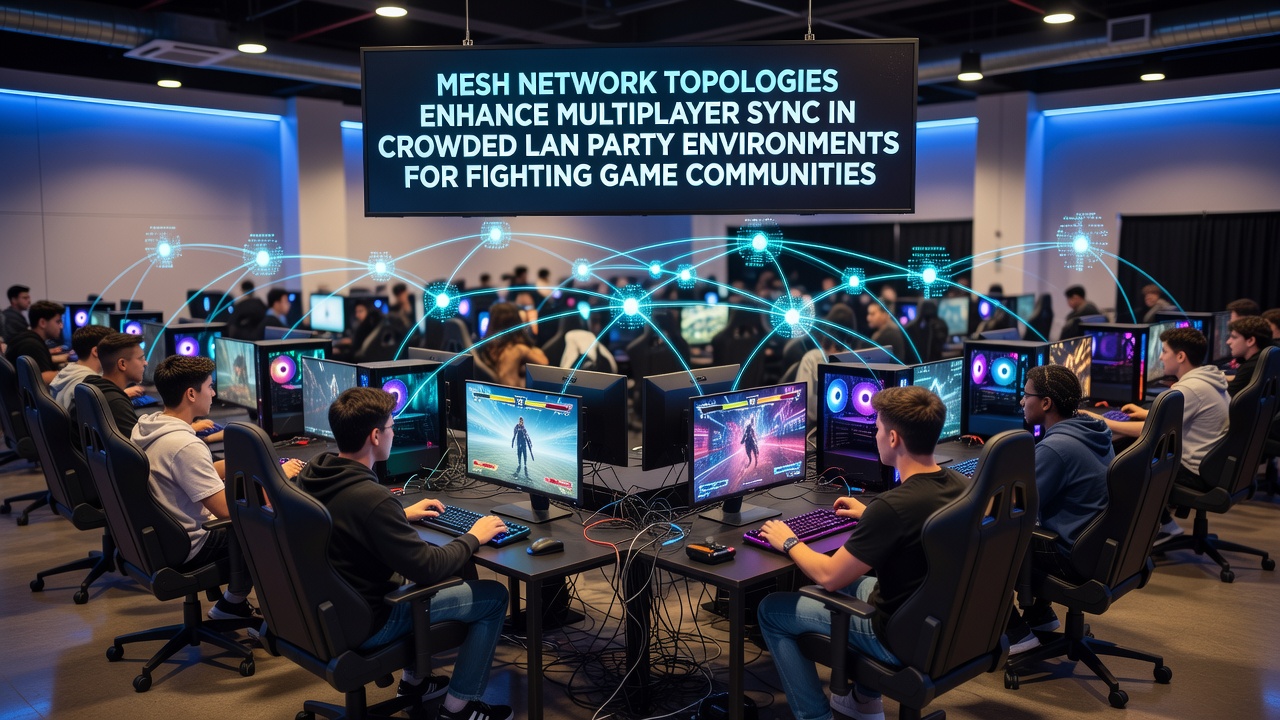
Mesh Network Setups Deliver Stable Connections for Fighting Game Tournaments in Dense LAN Settings
Mesh network topologies allow multiple devices to interconnect directly and relay data through intermediate nodes rather than relying on a single central router which creates bottlenecks in crowded spaces. Fighting game communities that organize large LAN events often face packet loss and desync issues when dozens of consoles and PCs compete for bandwidth on traditional star topologies. Data from network monitoring tools shows that mesh configurations maintain consistent throughput even as participant numbers rise above fifty devices in a single venue.
Researchers at institutions across Europe have documented how self-healing paths in mesh systems reroute traffic around congested or failing nodes within milliseconds. This capability proves essential during bracket resets or simultaneous matches where timing precision determines outcomes in titles that use rollback netcode. Observers note that events held in July 2026 at major convention centers adopted mesh hardware from multiple vendors to support both wired and wireless participants without noticeable input lag spikes.
Technical Advantages in High-Density Environments
Packet delivery ratios improve because each fighting game station functions as both endpoint and relay point which distributes load evenly across the network fabric. Studies from Australian research groups indicate that latency variance drops by measurable margins when mesh protocols replace legacy access points in rooms exceeding two hundred square meters. Those who've tested these setups report fewer instances of rollback stuttering during peak hours when spectators also connect mobile devices for streaming overlays.
Adaptive routing algorithms prioritize time-sensitive frames used in fighting game engines which helps preserve frame data integrity across all connected clients. Industry reports from North American trade associations highlight that organizers can scale mesh nodes incrementally without complete infrastructure overhauls between events. This flexibility reduces setup time from hours to under thirty minutes while accommodating last-minute player additions.
Implementation Patterns Observed at Recent Events
Coordinators typically deploy a backbone of wired mesh routers around the perimeter of the play area with additional nodes placed near clusters of stations to handle localized traffic. Software-defined overlays allow administrators to monitor node health through centralized dashboards that flag potential interference sources such as overlapping 5 GHz channels. Evidence from field tests conducted in Asian gaming hubs demonstrates that these layered approaches sustain sync accuracy even when external Wi-Fi signals from adjacent halls increase background noise.
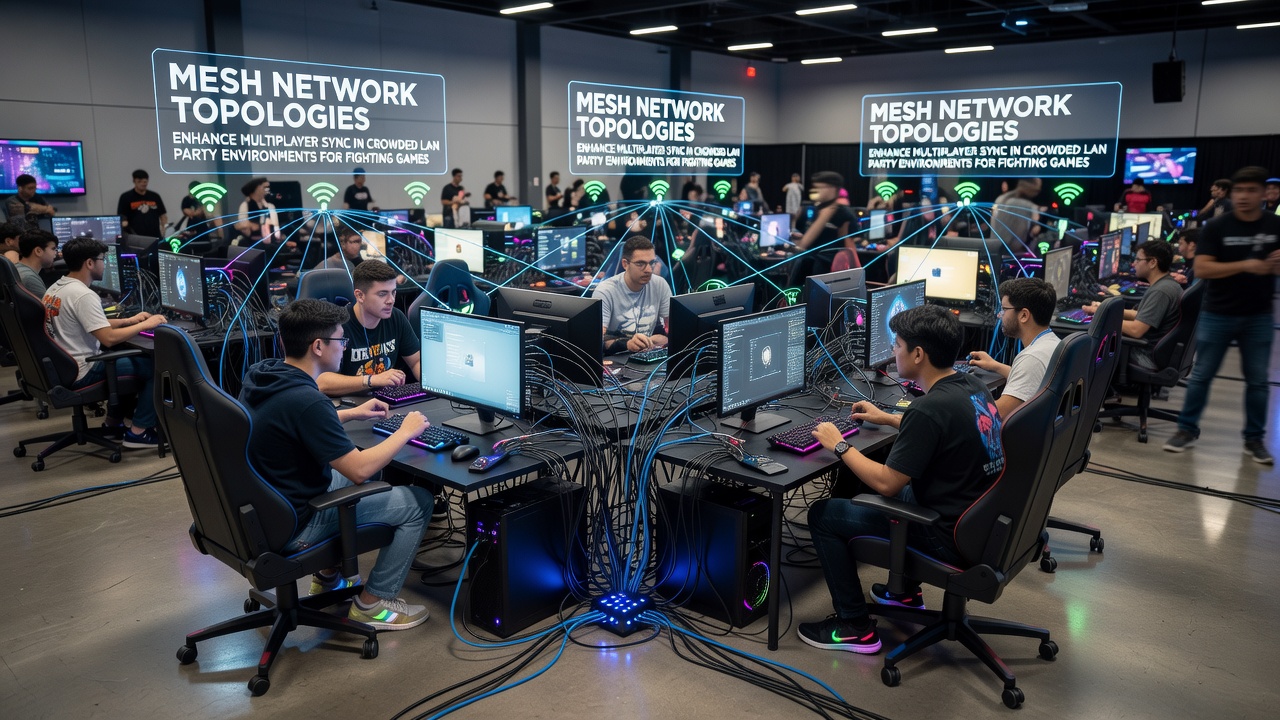
Power consumption remains manageable because modern mesh hardware incorporates sleep modes that activate during idle periods between matches. Data collected at multi-day tournaments shows average draw per node stays below thresholds that would require dedicated power distribution upgrades. Those managing equipment note that battery-backed nodes provide continuity during brief outages which prevents full bracket restarts.
Integration With Existing Tournament Infrastructure
Mesh systems integrate with existing tournament software through standard Ethernet handoffs that feed match results and player statistics without introducing additional delay. University-led evaluations in Canada have measured end-to-end synchronization times under various load conditions and found consistent performance across different hardware generations. Organizers therefore retain flexibility to mix legacy consoles with newer hardware that supports advanced networking features.
Security protocols embedded in mesh firmware encrypt inter-node traffic which protects sensitive match data while still allowing low-overhead operation required for real-time gameplay. Figures from regulatory bodies in the European Union confirm that spectrum usage stays within allocated bands even during dense deployments which avoids compliance issues at public venues.
Conclusion
Mesh network topologies continue to gain adoption among fighting game organizers because they address core challenges of synchronization and reliability in environments where traditional networking falters. Continued refinement of routing protocols and hardware efficiency suggests these configurations will remain relevant as event sizes grow and device diversity increases.