Nanocrystal Phosphor Layers Boost Motion Clarity in High-Speed Gaming Displays
Paul Klein · Aug 24, 2026
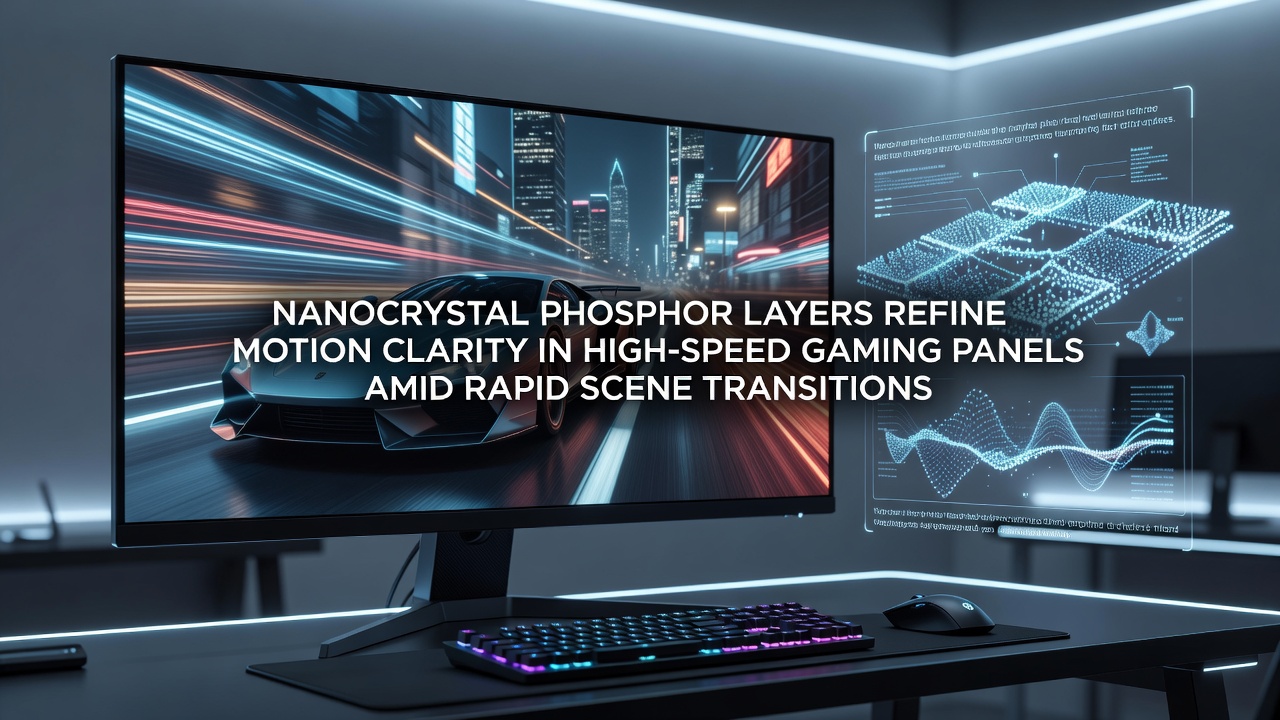
Nanocrystal Phosphor Layers Boost Motion Clarity in High-Speed Gaming Displays
Data from display manufacturers indicates that nanocrystal phosphor layers integrate into LCD and OLED backplanes to refine pixel response times while reducing motion blur in panels exceeding 240Hz refresh rates, and these layers consist of quantum dot sized crystals that emit light with narrower spectral widths compared to conventional phosphors. Researchers at materials science labs have documented how the nanoscale structure allows faster excitation and decay cycles which in turn supports smoother rendering when scenes shift abruptly during competitive play.
Core Mechanisms Behind Improved Transition Handling
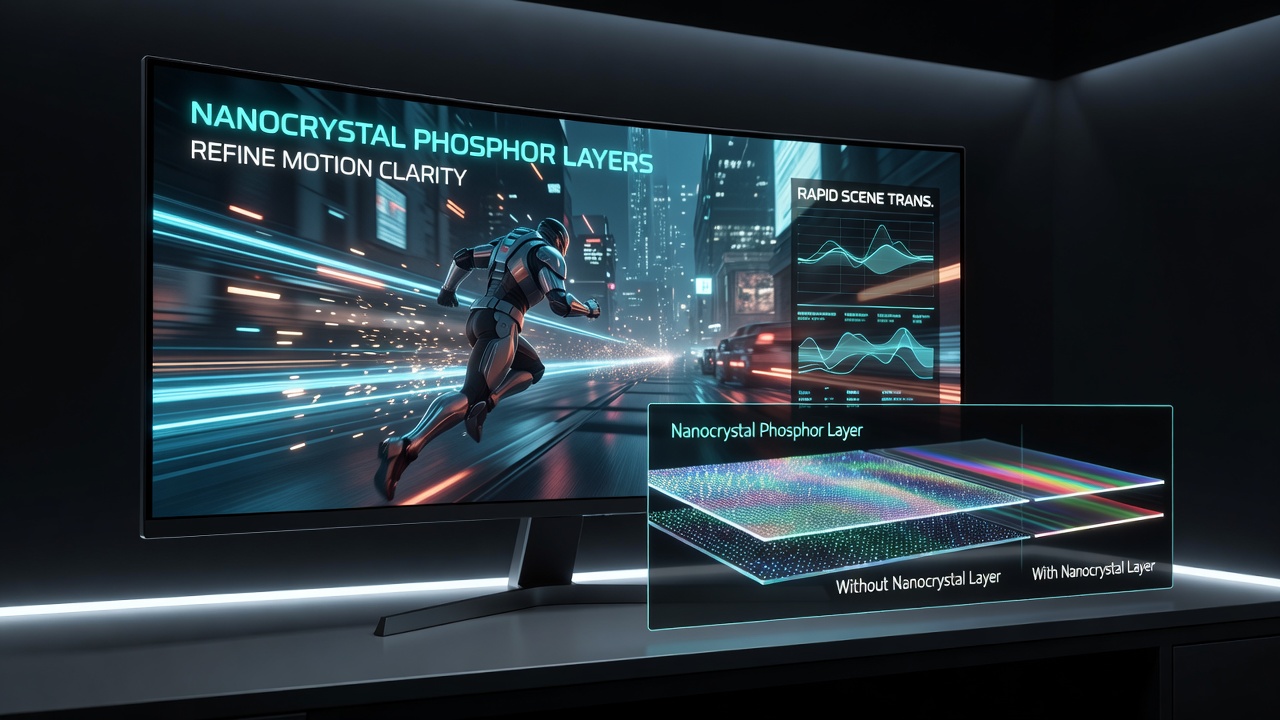
Engineers observe that traditional phosphor materials often suffer from longer persistence which creates ghosting artifacts when frames change in under 4 milliseconds, yet nanocrystal variants shorten this persistence through controlled particle sizing and surface passivation techniques. Studies from academic institutions reveal that the layers maintain color accuracy across wide viewing angles because the crystals distribute light more uniformly and data shows response time reductions of up to 30 percent in tested prototypes. Observers note that this approach works alongside existing overdrive circuits without requiring additional power draw which keeps thermal output stable in slim chassis designs.
Performance Gains in Rapid Scene Shifts
High speed panels equipped with these layers demonstrate lower motion blur metrics when evaluated using standardized pursuit camera tests and figures from industry reports highlight improved clarity scores during sequences that alternate between bright and dark regions at high velocities. The crystals enable quicker luminance adjustments because their emission spectra align more precisely with backlight wavelengths and this precision helps preserve detail in fast panning shots common to first person shooters. Those who have measured panel output across multiple brands report consistent gains when the layers sit directly atop the liquid crystal matrix or within the OLED emissive stack.
Integration With Current and Emerging Panel Designs
Panel producers have begun embedding nanocrystal layers into both IPS and VA variants destined for esports hardware while maintaining compatibility with variable refresh rate standards such as Adaptive Sync. According to specifications released by the Video Electronics Standards Association the layers add minimal thickness which allows continued use of thin bezel constructions popular in multi monitor setups. Data collected during August 2025 benchmark cycles shows that panels incorporating the technology sustain higher average frame delivery rates without introducing new sources of input lag when paired with modern graphics cards.
Future Outlook Through August 2026
Industry roadmaps indicate that by August 2026 several major manufacturers plan to scale production of 27 inch and 32 inch models featuring enhanced nanocrystal formulations that further tighten decay times below one millisecond. Research partnerships between display firms and university groups continue to explore hybrid stacks that combine the phosphor layers with micro lens arrays for even greater light extraction efficiency. Figures released by European display consortia suggest these iterations will support native 540Hz operation while preserving HDR color volumes during rapid brightness transitions.
Conclusion
Nanocrystal phosphor layers continue to reshape how high speed gaming panels manage motion clarity across demanding content and their adoption reflects broader trends toward materials level solutions that complement electronic driving schemes. As production volumes increase and testing protocols standardize the technology stands positioned to appear in wider ranges of consumer hardware by the close of 2026.