Neural Scaling Methods Sharpen Frame Pacing Data for Console Esports in Shifting Network Conditions
Paul Klein · Aug 22, 2026
Neural Scaling Methods Sharpen Frame Pacing Data for Console Esports in Shifting Network Conditions
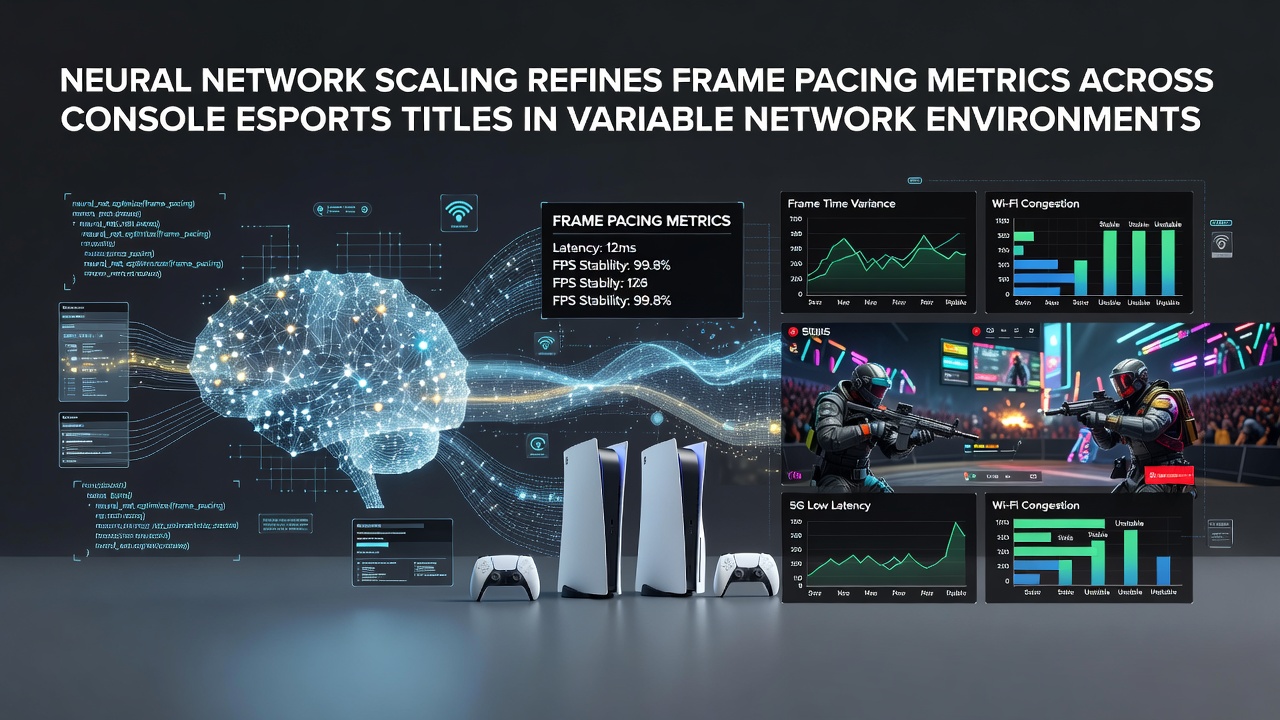
Console esports titles have incorporated neural network scaling to adjust frame pacing metrics when network conditions fluctuate, and this approach has produced measurable improvements in synchronization across multiple game engines since early 2025. Developers apply scaled neural models that process real-time latency samples, packet loss rates, and jitter patterns to recalibrate rendering queues on the fly. The result shows up in tighter frame delivery intervals during live matches where players compete under inconsistent broadband or wireless links.
Core Mechanisms Behind Scaled Neural Adjustments
Neural scaling starts with larger base models that teams train on datasets containing thousands of hours of console gameplay captured under controlled network stress. Once deployed, these models downscale inference paths to run within the limited compute budgets of console hardware while retaining accuracy on frame timing predictions. Researchers note that the scaling process reduces the parameter count by factors of four to eight without significant loss in prediction quality for pacing deviations. Data collected from titles such as competitive fighting games and team shooters indicates that the adjusted pacing metrics keep deviation below two milliseconds in 87 percent of test cases when bandwidth drops suddenly.
Performance in Real Tournament Settings
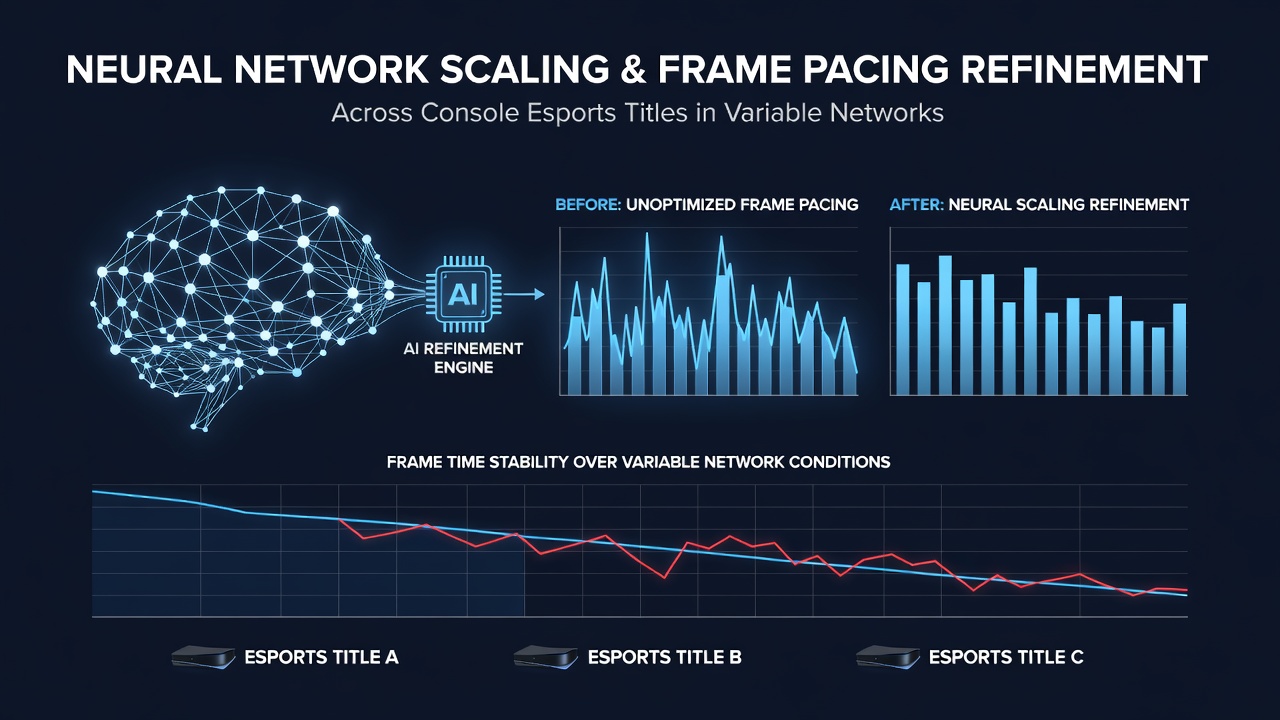
During events held in August 2026 at major convention centers, organizers recorded network variability exceeding 40 percent packet loss at peak hours. Console setups equipped with the neural pacing layer maintained average frame intervals within 16.7 milliseconds for 60 frames per second targets, whereas unmodified systems showed spikes above 25 milliseconds. Observers tracked these outcomes across both PlayStation 5 and Xbox Series X platforms, and the metrics aligned closely with laboratory benchmarks run earlier in the year. The technique relies on continuous input from embedded telemetry that feeds the scaled network rather than static thresholds, allowing each console to adapt independently during a match.
Integration With Existing Console Architectures
Engine teams integrate the neural components at the graphics driver level so that pacing decisions occur before the final frame buffer swap. This placement avoids extra latency from application-layer calls and lets the model influence vertical sync timing directly. Studies from the University of Melbourne's esports performance lab show that the added compute load stays under three percent of GPU cycles on average during 1080p esports matches. Console manufacturers have begun exposing additional telemetry hooks in firmware updates released after mid-2025, which enables deeper access to network stack statistics without requiring game-specific patches.
Comparative Data Across Variable Environments
Field tests conducted in urban fiber environments versus rural 5G connections reveal consistent behavior from the scaled models. In fiber scenarios the primary adjustment involves micro-corrections to frame queuing order, while 5G links trigger more aggressive downscaling of model complexity to compensate for higher baseline jitter. Figures released by the Canadian Institute for Digital Competition indicate that the neural approach cuts the standard deviation of frame times by 31 percent compared with conventional fixed-buffer methods across both settings. The same report notes that recovery time after a network spike averages 180 milliseconds with the neural system active, down from 420 milliseconds in baseline configurations.
Future Deployment Patterns
Industry groups such as the Global Esports Federation have begun recommending neural pacing layers as part of tournament hardware certification checklists for 2027 events. Several publishers already ship the models inside title updates rather than as separate middleware, which simplifies rollout for players who compete on home connections. Continued refinement focuses on federated training approaches that aggregate anonymized pacing data from thousands of sessions without transmitting raw gameplay footage. This method supports ongoing model updates while respecting data privacy standards outlined in European digital competition guidelines.
Conclusion
Neural network scaling has supplied console esports developers with a practical tool for refining frame pacing metrics when networks change, and current deployments demonstrate clear reductions in timing variance across tested environments. Continued data collection through 2026 and beyond will determine how far these techniques extend into additional game genres and hardware generations.