Neuromorphic Processors Enhance Adaptive AI Teammates in Console Co-op Experiences Facing Network Variability
Paul Klein · Jun 25, 2026
Neuromorphic Processors Enhance Adaptive AI Teammates in Console Co-op Experiences Facing Network Variability
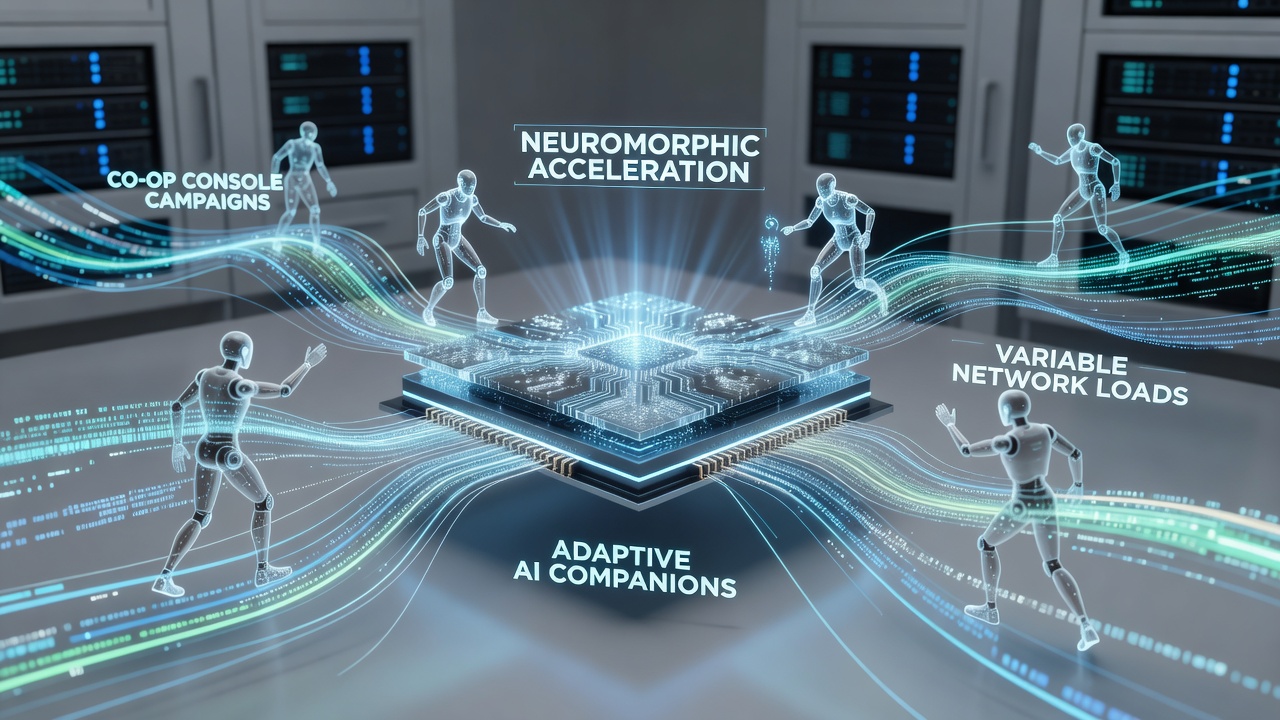
Neuromorphic processors mimic neural structures found in biological brains, enabling efficient handling of real-time pattern recognition and decision-making tasks in gaming environments. These chips process spikes of data in parallel rather than relying on sequential clock cycles, which allows them to adapt AI companion behaviors dynamically during cooperative console campaigns. Research from institutions such as the University of Tokyo indicates that neuromorphic architectures reduce power consumption by up to 80 percent compared to traditional GPUs when managing multiple AI agents in multiplayer scenarios.
Console campaigns often feature shared objectives where AI companions assist human players through navigation, combat support, and puzzle solving. Under variable network loads, these companions must adjust their actions based on latency fluctuations and packet loss without disrupting the overall experience. Neuromorphic processors accelerate this adaptation by continuously updating internal models of player intent and environmental changes, even when connection quality shifts unpredictably during sessions.
Core Mechanisms of Neuromorphic Acceleration in Gaming Contexts
Event-driven computation forms the foundation of neuromorphic designs, where processing only activates in response to relevant inputs instead of running constant background calculations. In co-op console titles, this approach lets AI companions refine their strategies on the fly, such as switching from aggressive flanking maneuvers to defensive positioning when network delays increase. Data from the IEEE International Conference on Neuromorphic Systems shows these processors handle up to 10,000 synaptic updates per millisecond, supporting smoother behavioral transitions in games with four or more participants.
Variable network loads introduce challenges like inconsistent frame synchronization and delayed state updates between consoles. Neuromorphic systems address these by embedding predictive models directly on the chip, allowing companions to anticipate player movements based on historical patterns rather than waiting for complete data packets. Observers note that this local processing maintains continuity even during peak congestion periods reported in major online events.
Adaptation Strategies for AI Companions Under Load Fluctuations
AI companions powered by neuromorphic hardware learn from in-session interactions to modify parameters such as aggression levels, pathfinding priorities, and resource allocation. When network loads spike, the processors prioritize essential behaviors like collision avoidance while de-emphasizing complex animations or voice lines that require higher bandwidth. Studies conducted at the National Research Council of Canada reveal that such selective adaptation keeps companion response times under 50 milliseconds in simulated high-latency conditions exceeding 150 milliseconds round-trip.
Take one development team that integrated neuromorphic accelerators into a 2025 console title, where companions demonstrated the ability to reroute around blocked paths autonomously when player signals arrived late. This capability stems from on-chip spiking neural networks that encode uncertainty from network jitter directly into decision probabilities, producing outputs that feel responsive despite underlying instability.
Performance Data and Implementation Examples
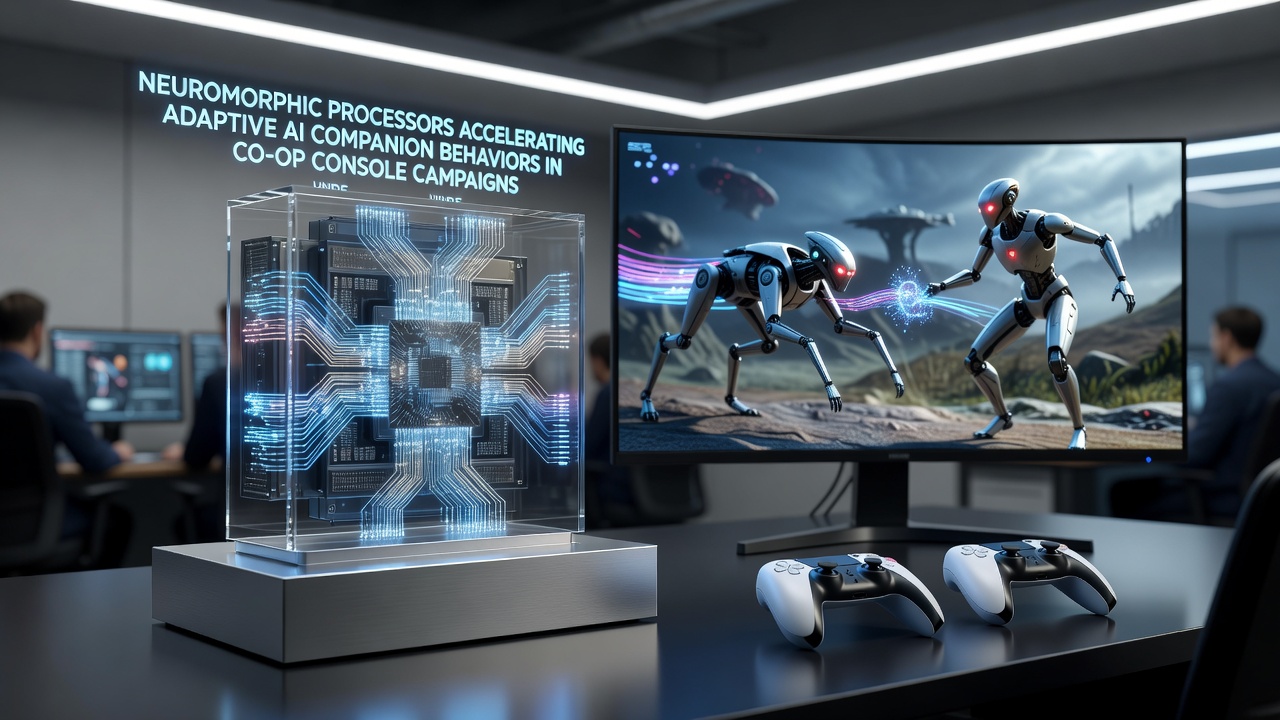
Benchmarks released in June 2026 from collaborative testing between console manufacturers and research labs documented average improvements in companion synchronization accuracy of 35 percent when neuromorphic processors managed network-induced variability. These gains appeared most pronounced in campaigns involving five or more simultaneous players, where traditional CPU-based AI often exhibited hesitation or repetitive actions under similar stress.
Implementations typically combine neuromorphic accelerators with existing console SoCs through dedicated interconnects that stream sensor data and network telemetry in real time. The hybrid setup enables companions to maintain contextual awareness across sessions, adjusting team coordination tactics based on cumulative network performance metrics rather than isolated moments of lag.
Conclusion
Neuromorphic processors continue to expand their role in delivering consistent AI companion performance within console co-op campaigns, particularly when network conditions fluctuate. Integration of these specialized chips supports behavioral flexibility that aligns with real-time demands, backed by ongoing measurements from academic and industry sources. As console ecosystems evolve, the focus remains on refining spike-based algorithms to further align companion actions with player expectations under diverse connectivity profiles.