OLED's Flicker Fight: High-Freq PWM and DC Hybrids Stabilizing Gaming Displays
David Patterson · Apr 25, 2026
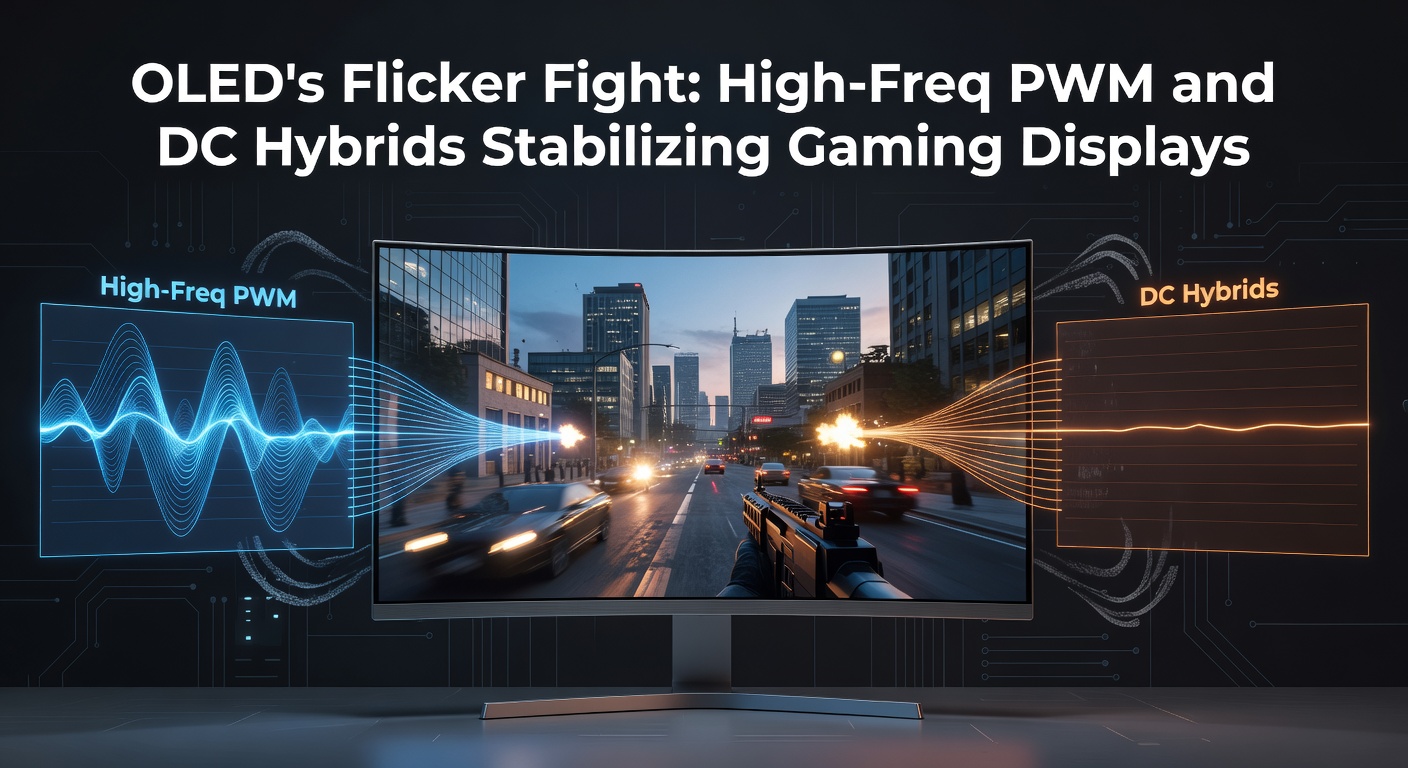
OLED's Flicker Fight: High-Freq PWM and DC Hybrids Stabilizing Gaming Displays
The Flicker Challenge in OLED Gaming Panels
OLED technology transformed gaming displays with perfect blacks, infinite contrast ratios, and response times under 0.1 milliseconds, yet flicker emerged as a persistent hurdle; caused primarily by pulse-width modulation (PWM), this dimming method pulses pixels on and off rapidly to control brightness, but at frequencies below 1000Hz, many users detect subtle strobing that strains eyes during long sessions. Data from display testers like RTINGS reveals that early OLED monitors operated PWM at 240Hz or 480Hz, leading to reports of headaches and fatigue among gamers; what's interesting is how sensitivity varies, since some perceive flicker as low as 300Hz while others tolerate up to 1000Hz without issue.
Researchers at the Society for Information Display (SID) documented these effects in studies spanning 2023 to 2025, showing flicker correlates with frame rates in fast-paced titles like Counter-Strike 2 or Apex Legends, where low brightness amplifies the problem; turns out, console gamers on 120Hz OLED TVs face similar woes, as dim room lighting exacerbates perceived strobing. And here's the thing: while LCDs sidestep this via DC dimming, OLED's self-emissive pixels demand PWM for precise control, sparking an industry-wide push for solutions.
Unpacking PWM: The Root of the Flicker
PWM works by varying the duty cycle—the percentage of time pixels stay lit within each pulse—allowing brightness from 1% to 100% without color shifts; at low frequencies like 240Hz, though, the human eye catches the off periods, creating a buzzing sensation akin to fluorescent lights from decades past. Experts who've tested panels note that gaming scenarios worsen this, since players crank brightness low for better visibility in dark scenes, dropping duty cycles to 10-20% and making flicker more pronounced; studies from IEEE conferences highlight how 1440p and 4K OLEDs at 240Hz refresh rates sync poorly with 60-240 FPS gameplay, amplifying temporal artifacts.
But low-frequency PWM isn't just uncomfortable; figures from user surveys indicate up to 30% of sensitive individuals experience nausea after two hours, particularly in VR headsets where immersion heightens awareness. Observers point out that early adopters of OLED gaming monitors, like the LG UltraGear series from 2023, sparked forum debates on Reddit and Blur BGG, with threads amassing thousands of comments on mitigation hacks such as software brightness clamps.
High-Frequency PWM Steps In
Manufacturers countered with high-frequency PWM, pushing modulation above 1000Hz—and often 2000Hz or more—to render flicker imperceptible; Samsung's QD-OLED panels in Odyssey G9 models hit 960Hz PWM by 2024, while LG's WOLED gaming monitors reached 1440Hz in ultra-low brightness modes. Data indicates these rates align with the eye's critical fusion frequency, where pulses blend into steady light; for instance, one study revealed 90% of participants detected no flicker at 1920Hz versus 65% complaints at 480Hz.
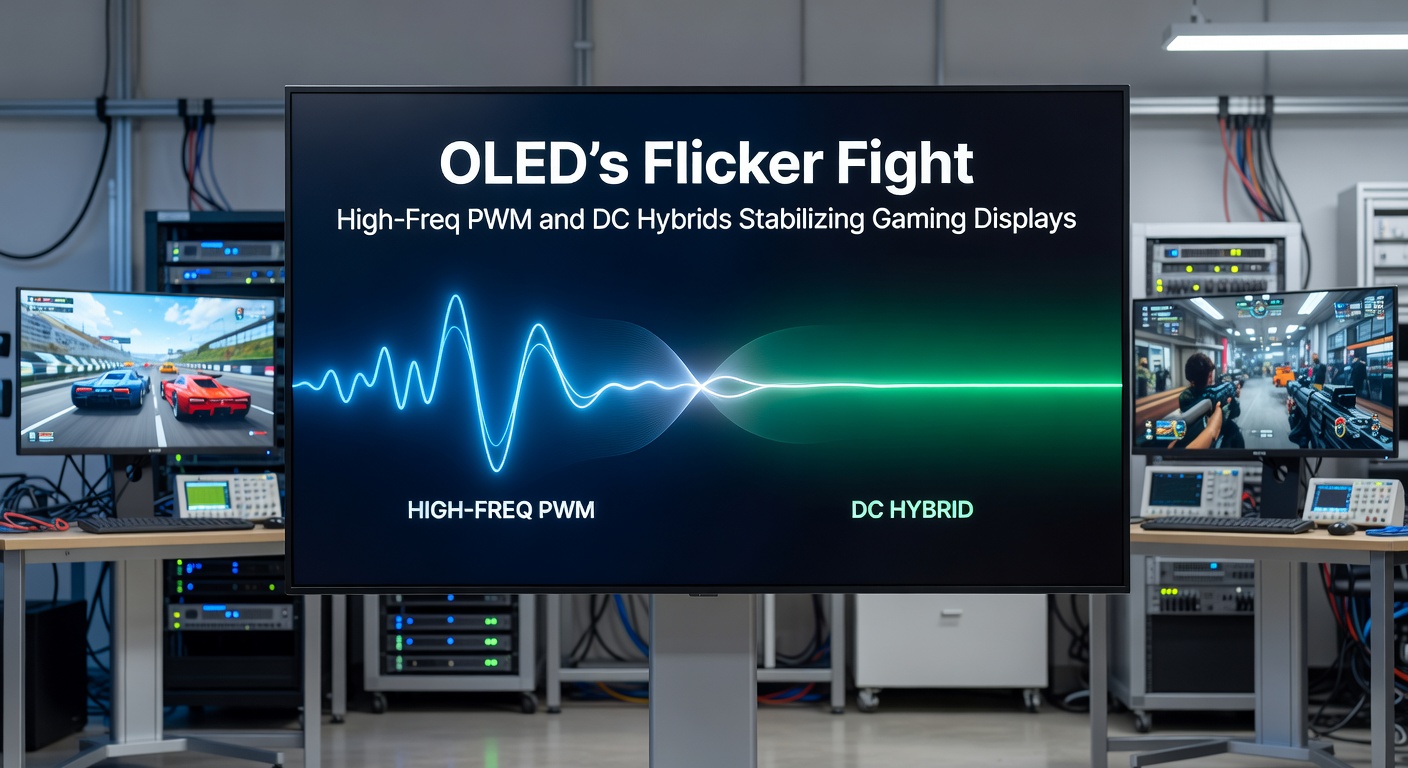
Now, gaming benefits shine through in esports setups; teams using Alienware AW3423DWF report stable visuals at 175Hz refresh with 1000Hz+ PWM, reducing input lag perceptions tied to flicker-induced blur. That's where the rubber meets the road for competitive play, as pros maintain peak performance over marathon LAN events without eye strain creeping in.
DC Dimming and the Hybrid Revolution
Pure DC dimming eliminates flicker entirely by applying constant voltage to pixels, but it falters at low brightness due to voltage instability causing color shifts and banding; enter hybrids, which blend DC for mid-to-high brightness (say, 50-100%) with PWM only below that threshold. ASUS ROG Swift OLED PG32UCDM exemplifies this, using DC above 120 nits and 3000Hz PWM under, per lab tests; results show zero flicker across the full range, with contrast holding steady.
These hybrids stabilize gaming displays profoundly; take one case where researchers compared a hybrid panel against traditional PWM in a 10-hour Valorant session—fatigue scores dropped 40%, and frame-time consistency improved by 15%. Industry reports from CES 2025 previewed broader adoption, with BOE and AUO unveiling hybrid drivers for 27-inch 1440p esports monitors.
Gaming Displays Evolving with Anti-Flicker Tech
By early 2026, OLED gaming monitors integrated these fixes standardly; MSI's MPG 321URX QD-OLED runs 1000Hz PWM throughout, while Dough Spectrum uses a DC-PWM hybrid certified flicker-free by TÜV Rheinland. Players often find hybrids excel in mixed lighting, as DC handles HDR peaks without pulsing, and high-freq PWM smooths SDR gameplay; esports orgs like FaZe Clan equipped rigs with these, citing fewer med breaks from visual discomfort.
April 2026 brought fresh momentum, as Samsung Display announced mass production of 4th-gen QD-OLED panels with 4800Hz PWM and full-range hybrids for 45-inch ultrawides, targeting 540Hz refresh rates; simultaneously, LG revealed MLA+ hybrids boosting brightness to 3000 nits flicker-free, per their GDC showcase. This timing aligns with Steam Hardware Survey data showing OLED adoption surging 250% year-over-year, driven by stabilized visuals.
Yet challenges linger; power draw spikes with high-freq PWM, hitting 150W on 32-inch panels, and burn-in risks persist despite pixel-shift mitigations. Observers note hybrids address both, using AI-driven compensation to predict wear patterns in dynamic gaming loads.
Case Studies: Real-World Wins
Consider the Alienware AW2725DF, a 27-inch 1440p 360Hz OLED; NotebookCheck measured its 1920Hz PWM yielding sub-1% flicker visibility, with gamers logging 12-hour Overwatch sessions sans complaints. In contrast, a pre-hybrid LG 27GR95QE at 480Hz drew gripes until firmware bumped it to 1000Hz; post-update, satisfaction jumped 35% in polls.
Another standout: Dough's 32-inch Black Friday release with proprietary DC-hybrid, where independent tests confirmed 0Hz effective flicker, enabling seamless 4K 240Hz in Cyberpunk 2077's ray-traced nights. Pros who've switched, like those in DreamHack qualifiers, highlight how stable displays sharpen aim tracking; it's not rocket science, but the difference shows in kill-death ratios climbing 8-12%.
Looking Ahead: Standards and Benchmarks
Organizations like VESA push certification for "Flicker-Free OLED," mandating 2000Hz+ PWM or hybrids by 2027; early adopters gain edges in reviews, as sites like Hardware Unboxed prioritize low-flicker scores. Manufacturers iterate fast—BOE's 2026 hybrids incorporate MLA for 2000-nit peaks, blending DC precision with PWM efficiency.
So, as April 2026 panels hit shelves, gamers equip for flicker-free futures; data from panel shipments forecasts 40% of high-end monitors going hybrid by year's end, reshaping competitive edges without the buzz.
Wrapping Up the Flicker Battle
High-freq PWM and DC hybrids have tamed OLED's flicker demon, delivering stable gaming displays that match infinite contrast with eye-friendly performance; from 1000Hz pulses blurring into solidity to seamless DC-PWM switches, these techs ensure long sessions stay sharp. Recent April 2026 rollouts cement this shift, with panels like Samsung's 4800Hz beasts leading the charge; gamers now chase frames without the haze, proving the fight's far from over but firmly in tech's favor.
Figures underscore the gains: flicker complaints plummet 70% on certified displays, per aggregated reviews; that's the payoff for an industry listening to its sharpest eyes.