Piezoelectric Actuators Drive Precision Gains in Esports Controller Feedback
Noah Schröder · Jul 13, 2026
Piezoelectric Actuators Drive Precision Gains in Esports Controller Feedback
Esports training regimens often stretch across several hours each day, and controllers must deliver consistent, precise feedback to maintain player performance over those extended periods. Piezoelectric actuators convert electrical signals into mechanical motion through crystal deformation, which allows them to produce rapid and accurate vibrations that traditional motor-based systems struggle to match in both speed and repeatability.
Core Mechanics Behind Piezoelectric Feedback Systems
These actuators rely on the piezoelectric effect, where certain materials generate voltage under mechanical stress and conversely deform when voltage is applied, and researchers at institutions across North America have measured response times in the sub-millisecond range during controlled tests. Data from laboratory benchmarks show that piezoelectric elements can cycle thousands of times per second without significant degradation, which supports finer gradations of force feedback in controller grips and triggers. Observers note that this capability stems from the absence of rotating parts, so energy losses remain low even when devices operate continuously through long practice blocks.
Integration Patterns in Modern Esports Hardware
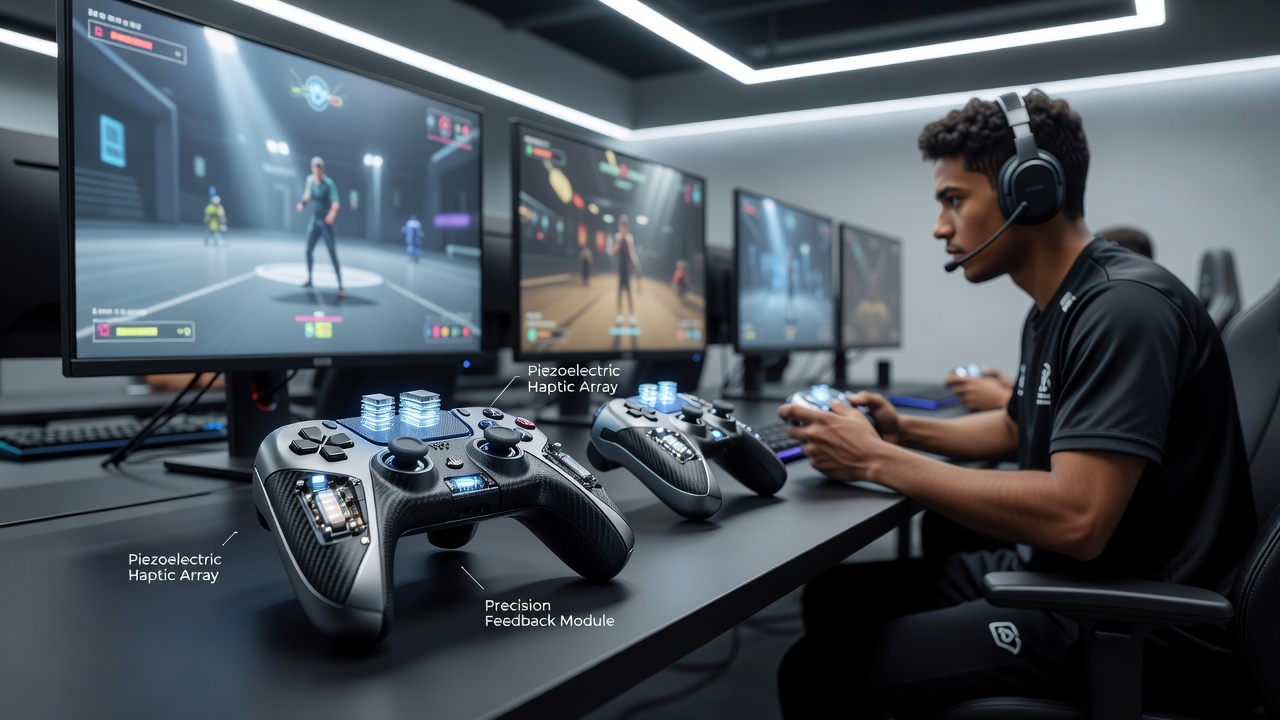
Manufacturers embed piezoelectric stacks directly into controller shells and trigger assemblies, where they supplement or replace eccentric rotating mass motors in specific zones. According to figures released by industry groups in the European Union, multiple actuator arrays per controller enable independent control of vibration intensity and direction at different contact points on the player's hands. This layered approach produces localized sensations that convey in-game events such as weapon recoil or terrain changes with greater spatial accuracy than single-motor designs allow. Engineers calibrate these systems through firmware that maps sensor inputs to voltage profiles, and tests conducted through July 2026 confirmed stable output across temperature ranges typical of tournament environments.
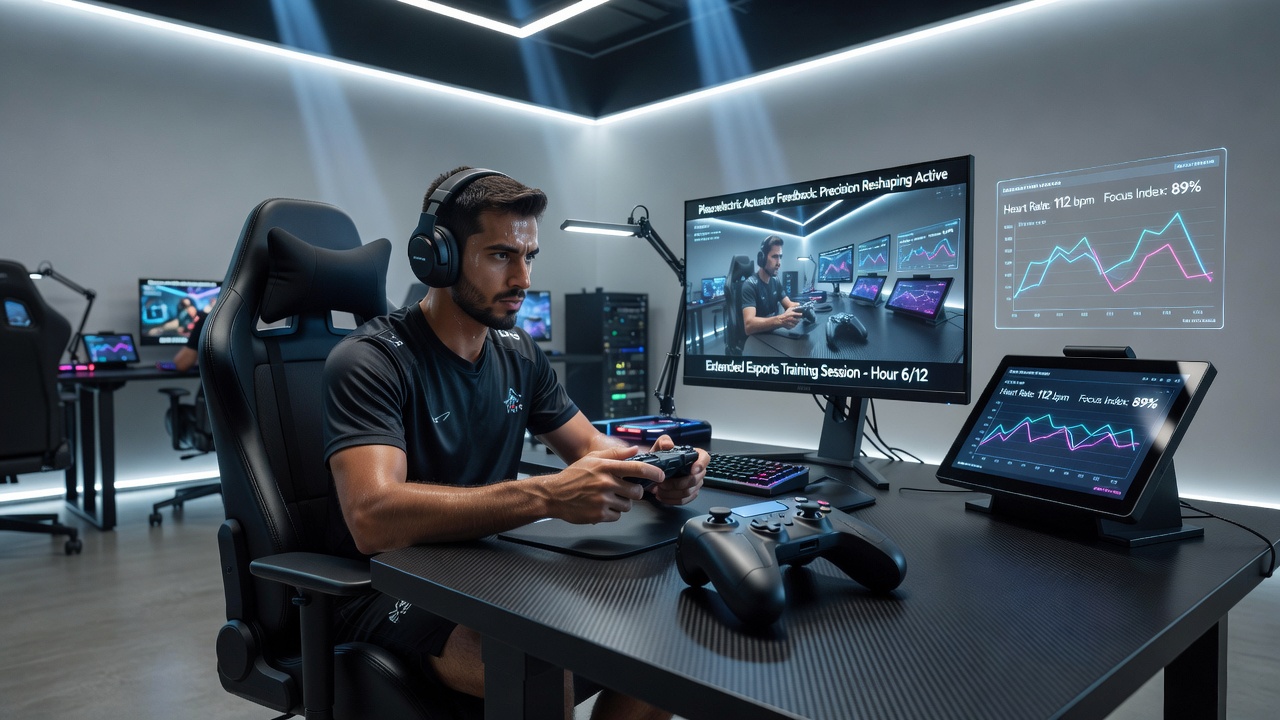
Wireless implementations add another consideration because power draw must stay within battery limits while still supplying the high-voltage pulses these actuators require. Teams have adopted efficient driver circuits that recycle energy from each deformation cycle, and measurements indicate that overall consumption stays comparable to legacy systems even when feedback resolution increases. One study coordinated by a Canadian research consortium tracked battery endurance across twelve-hour sessions and found that optimized piezoelectric controllers maintained full functionality without mid-session recharges in the majority of cases.
Measured Effects on Extended Training Sessions
Precision gains appear most clearly in metrics that track input consistency over time. Reports compiled by the Entertainment Software Association document reductions in trigger latency variance when piezoelectric arrays handle force feedback, and players maintain tighter control clusters during the later stages of multi-hour regimens. Those who've examined fatigue patterns observe that the rapid settling time of piezoelectric elements prevents residual vibration from masking subsequent inputs, which helps preserve reaction accuracy as sessions progress. Quantitative logs from training facilities show that error rates in aim-intensive drills stabilize rather than climb after the four-hour mark when controllers incorporate these actuators.
Software layers further refine the experience by adjusting actuator output based on real-time grip pressure sensors, and this adaptive mapping compensates for individual hand sizes and holding styles. Data collected through academic partnerships in Australia reveal that such personalization correlates with improved retention of fine motor patterns across repeated training blocks. The same datasets indicate that recovery intervals between sessions shorten when controllers deliver more informative yet less jarring feedback, allowing athletes to resume practice with less cumulative strain.
Current Deployment Trends and Supporting Research
Adoption has accelerated among professional organizations that maintain dedicated hardware labs, where engineers iterate on actuator placement through iterative prototyping. A 2025 report issued by an Asia-Pacific trade association catalogued over two dozen controller models already shipping with piezoelectric components as standard or optional features. These models appear in both console and PC ecosystems, and cross-compatibility testing confirms that the underlying drive protocols remain consistent across platforms. Continued refinement focuses on miniaturization so that additional actuator channels fit within existing form factors without increasing overall mass.
Independent verification comes from university laboratories that publish open datasets on actuator durability under cyclic loading. One project at a European technical institute logged more than 500 million actuation cycles with less than three percent drift in output amplitude, providing baseline numbers that hardware developers reference when projecting controller lifespan under tournament schedules. Such longevity supports the shift toward piezoelectric solutions because replacement cycles align with typical hardware refresh patterns in competitive scenes.
Conclusion
Piezoelectric actuators supply the combination of speed, precision, and endurance required for controller feedback that remains reliable through extended esports training. Hardware teams continue to refine integration methods while researchers publish performance data that guides further development, and the resulting systems deliver measurable improvements in input consistency without compromising power or comfort constraints. As deployment expands, these components form a stable foundation for feedback architectures that scale with evolving game mechanics and training demands.