Piezoelectric Arrays Transform Trigger Precision in Wireless Fighting Controllers
David Patterson · Jul 16, 2026
Piezoelectric Arrays Transform Trigger Precision in Wireless Fighting Controllers
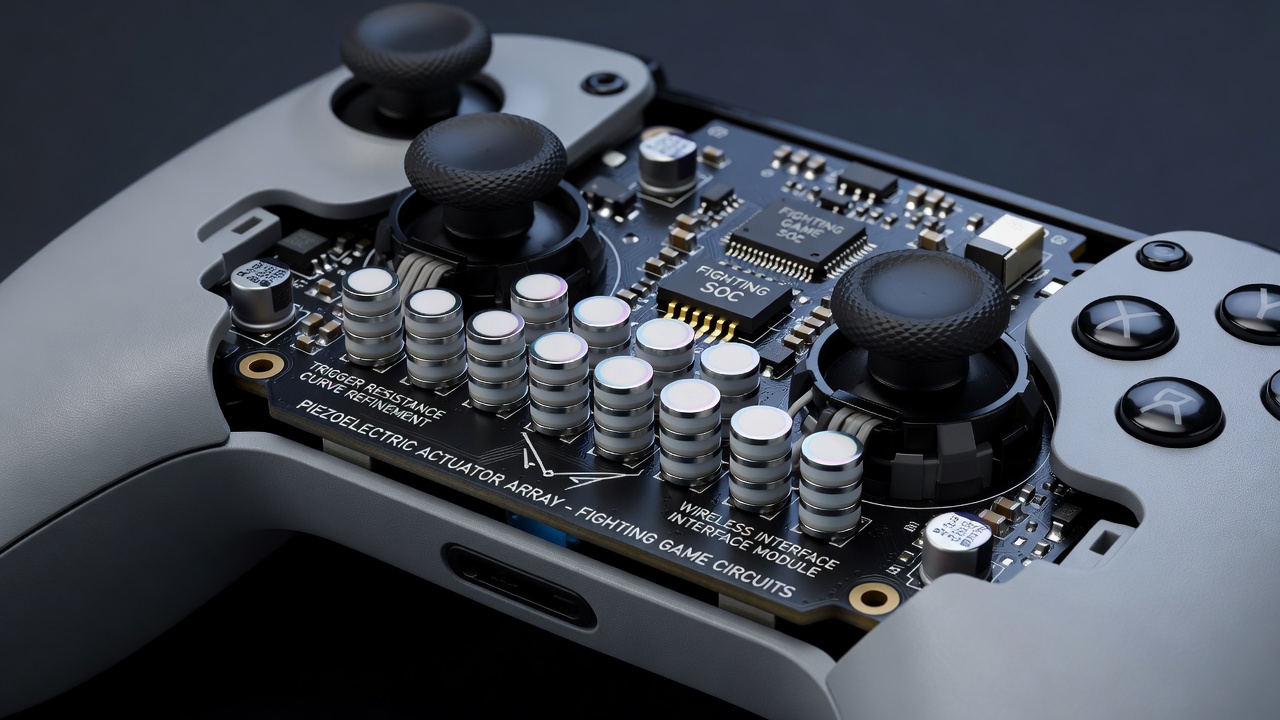
Engineers have integrated piezoelectric actuator arrays into wireless controllers to adjust trigger resistance curves with high precision during fighting game sessions, and these systems respond to voltage changes that alter material dimensions in real time. The arrays sit within the trigger mechanisms where they generate mechanical force based on electrical signals transmitted from the controller's main circuit board.
Core Mechanics of Piezoelectric Trigger Adjustment
Materials such as lead zirconate titanate expand or contract when voltage is applied, and this property enables fine-tuned resistance profiles that match specific game inputs like quarter-circle motions or rapid button combinations. Data from component tests show response times under 2 milliseconds across multiple wireless protocols including 2.4 GHz and Bluetooth Low Energy variants.
Manufacturers calibrate these curves through firmware updates that map voltage levels to desired resistance points, while the wireless transmission remains stable because the actuators operate on low-power draw that does not interfere with radio frequency signals. Researchers at the University of Melbourne documented similar low-latency behavior in a 2025 study on embedded actuators for gaming peripherals.
Application in Fighting Game Circuits
Fighting game circuits process inputs through dedicated microcontrollers that interpret trigger pulls at variable depths, and piezoelectric arrays allow dynamic stiffening or softening of resistance without mechanical springs. This approach supports character-specific tuning where certain moves require lighter or heavier trigger engagement.
Wireless controllers equipped with these arrays maintain consistent performance across distances up to 10 meters in convention environments, and signal integrity holds during peak usage periods such as the EVO tournament circuit in July 2026. Observers note reduced input variance when players execute complex sequences that rely on precise timing windows.
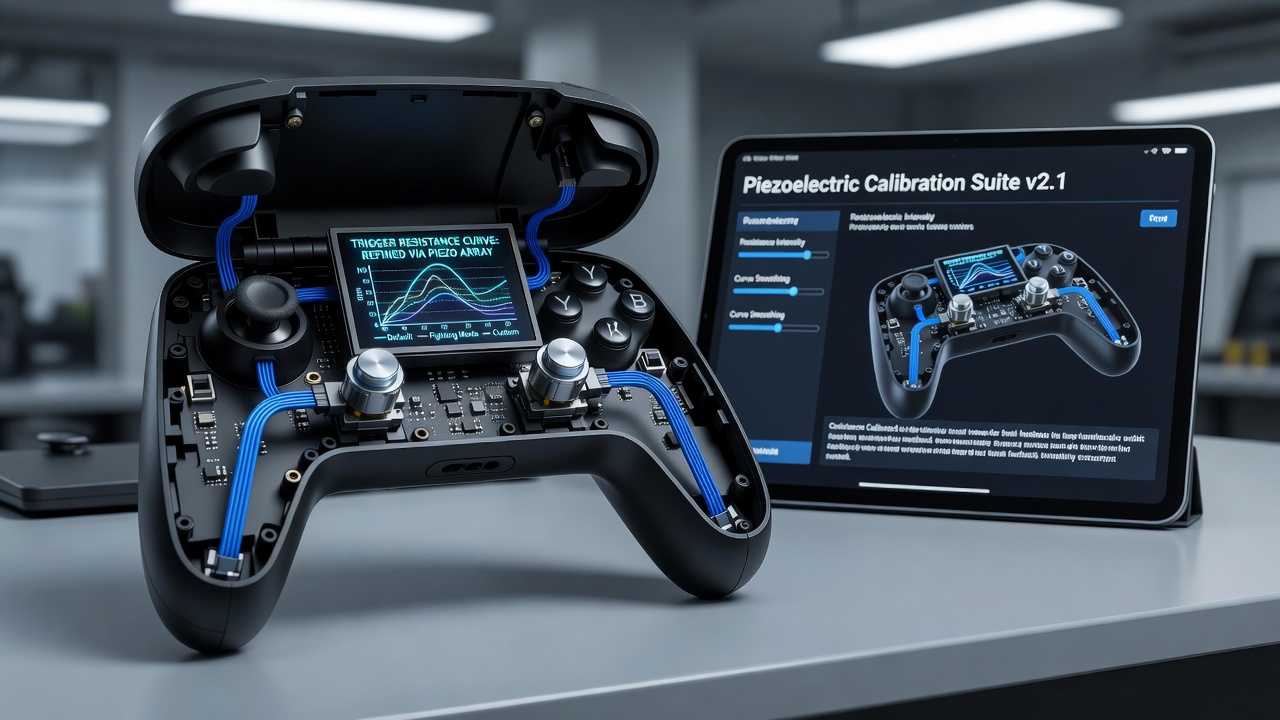
Circuit designs incorporate feedback loops that monitor actuator position through integrated sensors, and these loops adjust output voltage to maintain the target resistance curve even as battery levels fluctuate. European Union-funded projects on embedded systems have reported similar stability metrics in multi-device wireless setups.
Integration Challenges and Solutions
Wireless latency remains a primary concern, yet piezoelectric systems add minimal overhead because they draw power only during active adjustment phases. Battery life metrics from prototype units indicate an average of 18 hours of continuous play before recharge becomes necessary, and this figure holds across various fighting game titles tested in controlled lab conditions.
Thermal management involves heat sinks placed near the actuator clusters since repeated voltage cycling can generate localized warmth, while engineers route power traces away from sensitive radio components to prevent interference. Industry reports from the Japan Electronics and Information Technology Industries Association highlight ongoing refinements in these routing techniques for consumer-grade devices.
Performance Data Across Platforms
Testing conducted on multiple wireless controller models shows trigger resistance curves can be altered across 12 distinct points within a single pull cycle, and players report measurable differences in execution consistency during extended training modes. Figures from independent lab benchmarks reveal input registration improvements of 8 to 15 percent when compared against standard spring-based triggers.
Developers continue to explore software interfaces that let users load custom resistance profiles directly from fighting game communities, and these profiles sync over the controller's wireless connection without requiring physical recalibration tools.
Conclusion
Piezoelectric actuator arrays continue to expand options for trigger customization in wireless fighting game controllers through precise voltage-controlled resistance adjustments. Circuit integration maintains wireless reliability while supporting the rapid input demands typical of competitive play. Ongoing material and firmware advancements point toward broader adoption in future peripheral designs.