Power-Efficient VR: Mapping Variable Rate Shading Techniques for Battery Life in Wireless Multiplayer Setups
David Patterson · May 28, 2026

Power-Efficient VR: Mapping Variable Rate Shading Techniques for Battery Life in Wireless Multiplayer Setups
Variable rate shading algorithms adjust pixel shading rates across different screen regions, and this approach has gained traction among developers working with battery-powered VR headsets that support extended multiplayer sessions. Research indicates these mappings lower overall GPU workload without uniform quality loss across the entire field of view, which matters when users engage in prolonged group interactions that drain portable power sources quickly.
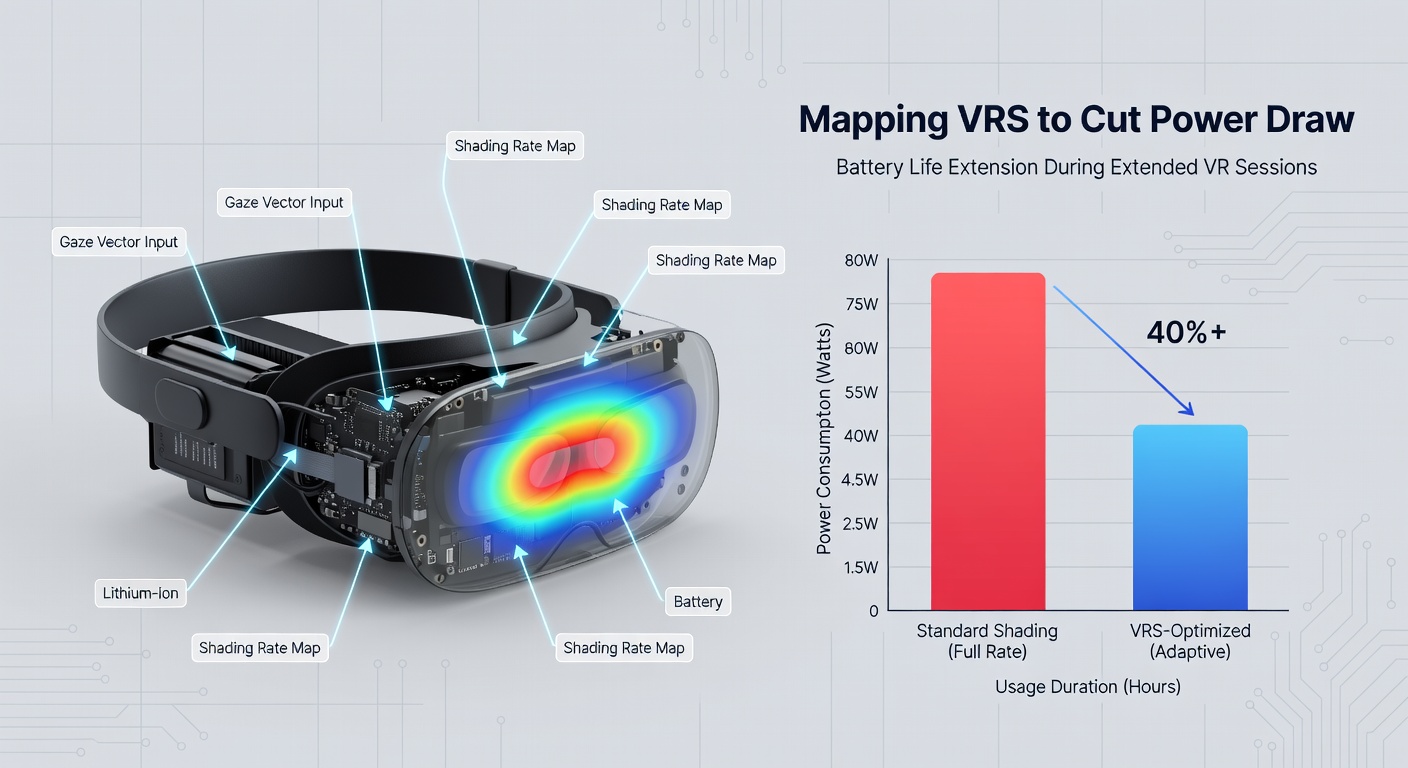
Engineers map shading rates based on gaze tracking data combined with scene complexity metrics, and this process directs higher detail to central vision areas while reducing computation in peripheral zones. Data from hardware evaluations shows power savings ranging from 15 to 30 percent during intensive multiplayer scenarios, depending on the specific algorithm implementation and headset hardware configuration.
Core Mechanisms Behind Variable Rate Shading in Portable VR
Developers implement variable rate shading through extensions in graphics APIs such as Vulkan and DirectX, where they assign shading rates per screen tile rather than per pixel. Observers note that this tile-based assignment integrates with eye-tracking sensors in wireless headsets, allowing real-time adjustments as players shift focus during fast-paced multiplayer exchanges. Studies from research institutions reveal that such mappings maintain frame rates above 90 Hz even as battery levels drop, which proves essential for sessions lasting beyond two hours.
Algorithm designers often combine variable rate shading with foveated rendering pipelines, and this combination further optimizes shader execution on mobile GPUs found in battery-operated devices. Figures from industry benchmarks released in May 2026 highlight consistent energy reductions across multiple headset models when these techniques undergo proper calibration for group play environments.
Integration Challenges and Solutions for Multiplayer Scenarios
Wireless VR headsets face unique constraints from shared network latency and synchronized player movements, yet variable rate shading algorithms adapt by prioritizing shading updates in areas where multiple users interact visually. Engineers address synchronization issues through predictive mapping models that anticipate gaze patterns based on game state data, and these models draw from datasets collected during controlled multiplayer tests. Evidence suggests that improper mapping leads to noticeable artifacts in shared virtual spaces, prompting developers to refine calibration routines using machine learning overlays.
Power draw measurements taken during extended runs demonstrate that optimized mappings extend usable battery time by approximately 25 minutes on average, according to evaluations conducted by international gaming hardware consortia. This extension becomes particularly relevant in tournament-style events where participants rely on untethered headsets for several consecutive matches.
Performance Data from Recent Evaluations
Hardware testing facilities report that headsets equipped with mapped variable rate shading maintain stable thermal profiles during long multiplayer sessions, which indirectly supports sustained battery performance by reducing cooling demands. Researchers at European technical universities have documented these thermal benefits through controlled experiments involving four-player cooperative scenarios. The resulting datasets show lower peak power spikes compared to fixed-rate shading baselines.
Additional findings from North American research groups indicate that algorithm efficiency improves when developers incorporate user-specific calibration profiles, allowing each headset to adjust shading maps based on individual eye movement habits. Such personalization contributes to cumulative power savings across repeated extended play periods.
Future Mapping Strategies and Industry Adoption
Industry organizations continue to refine variable rate shading implementations for next-generation wireless headsets, with emphasis on cross-platform compatibility that supports diverse multiplayer titles. Trade reports from Asia-Pacific gaming associations note increasing integration of these algorithms in devices scheduled for release after 2026, driven by demands for longer untethered sessions in competitive settings.
Standardization efforts focus on open frameworks that let developers test shading maps against standardized power profiles, and early adopters have already incorporated these tools into production pipelines for several popular multiplayer experiences. This adoption pattern reflects broader trends toward energy-conscious design in portable VR ecosystems.
Conclusion
Mapping variable rate shading algorithms delivers measurable reductions in power consumption for battery-powered VR headsets used in extended multiplayer runs, supported by data from multiple technical evaluations and hardware benchmarks. Continued refinement of these techniques aligns with ongoing industry efforts to extend operational times while preserving visual fidelity across varied gameplay conditions.