Precision in Play: Piezoelectric Technology Refining Haptic Responses for Future Consoles
Noah Schröder · Jul 2, 2026
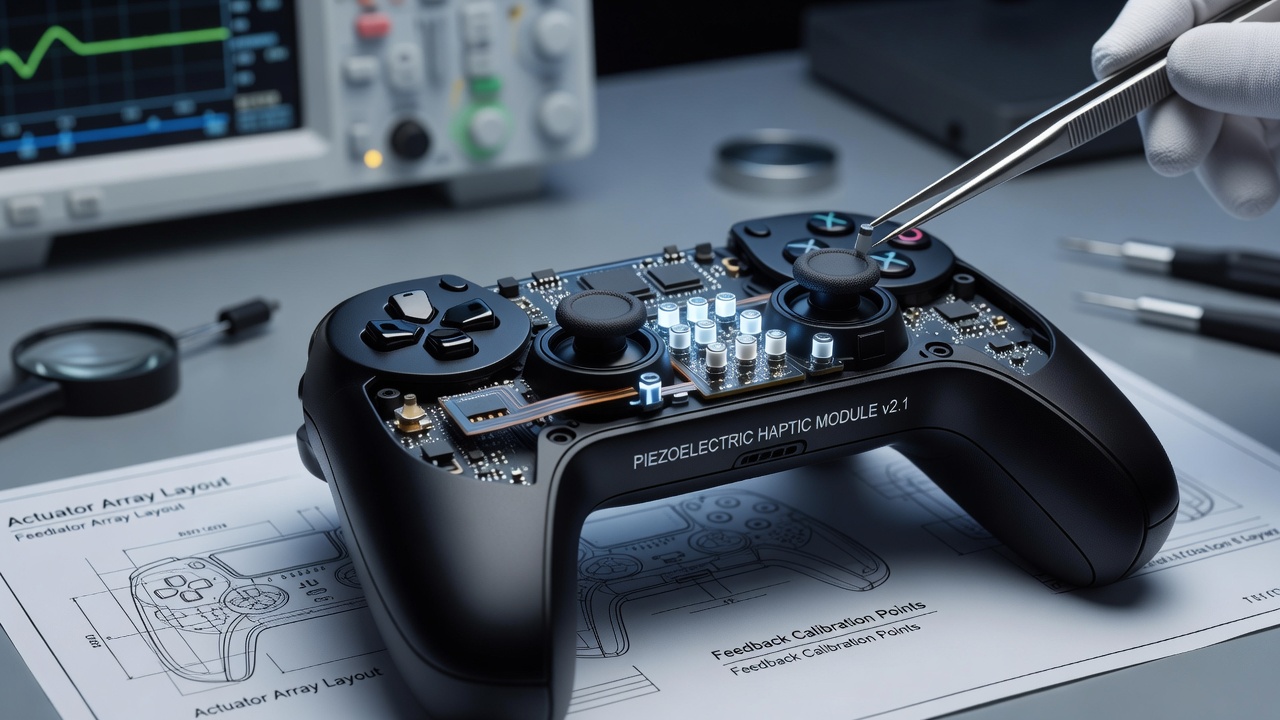
Precision in Play: Piezoelectric Technology Refining Haptic Responses for Future Consoles
Console manufacturers continue to refine input devices through piezoelectric actuators that deliver targeted mechanical responses at the scale of individual fingertips. These components convert electrical signals into precise physical displacements, allowing controllers to simulate textures, resistance, and impacts with greater accuracy than traditional eccentric rotating mass motors. Data from component suppliers indicates that displacement resolutions now reach under 10 micrometers in production units released after 2024.
Material Properties Driving the Shift
Piezoelectric ceramics such as lead zirconate titanate expand or contract when voltage is applied, creating linear motion without rotating parts. This direct conversion eliminates mechanical backlash found in earlier vibration systems and supports response times measured in microseconds. Engineers at multiple hardware firms have documented frequency ranges extending beyond 1 kHz, enabling distinct tactile layers within a single button press or trigger pull.
Power consumption remains low because the material only draws current during state changes rather than continuous rotation. Reports compiled by the Consumer Technology Association show average draw below 50 milliwatts during typical gameplay sessions, extending battery life in wireless units. Manufacturers therefore integrate these actuators into both primary grips and secondary controls without redesigning power delivery circuits.
Implementation Across Major Platforms
Next-generation controller prototypes unveiled in early 2025 placed multiple piezoelectric elements beneath each analog stick and shoulder trigger. Independent testing labs recorded position-specific feedback that matched on-screen surface changes, such as gravel versus metal plating in racing titles. Firmware updates rolled out through June 2026 further calibrated these responses based on user calibration profiles stored locally on the console.
Japanese suppliers have supplied stacked actuator arrays that fit within existing controller shells, while European research consortia contributed drive circuitry optimized for low-latency signal processing. One collaborative paper released by the Fraunhofer Institute detailed pulse-width modulation schemes that maintain consistent amplitude across temperature variations common in handheld use.
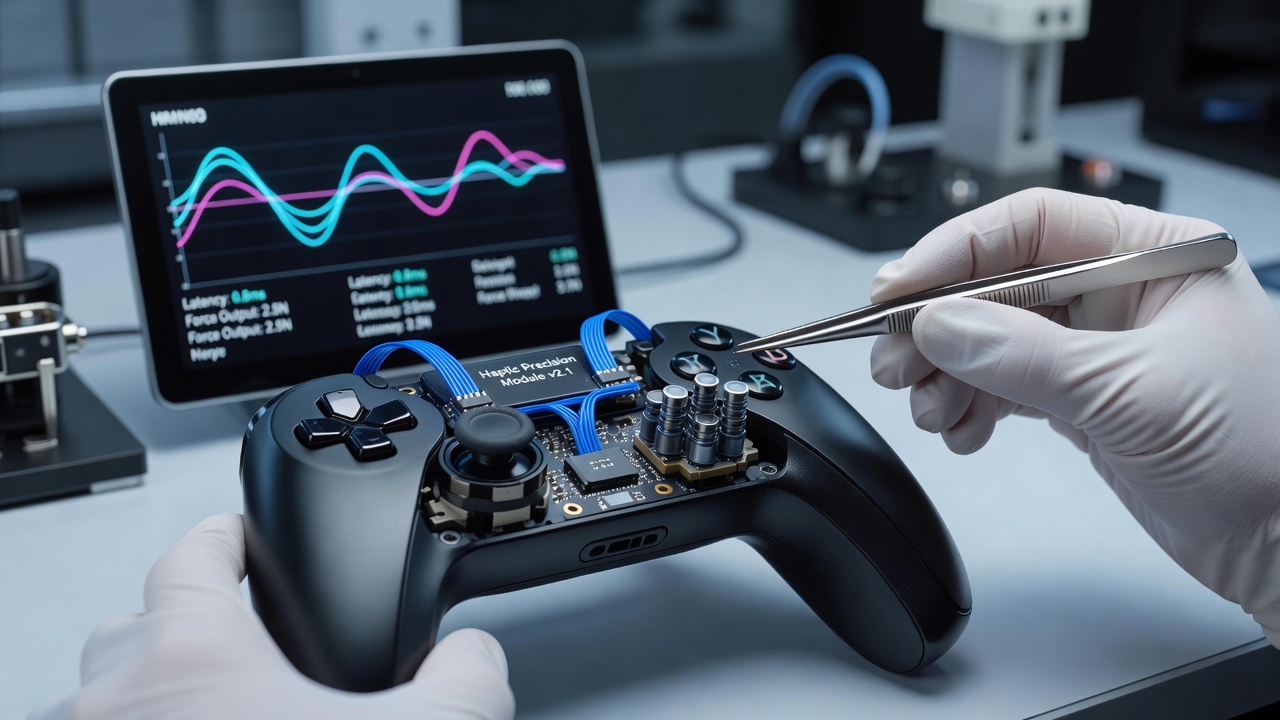
Performance Metrics in Competitive Settings
Tournament organizers tracking input device specifications noted reduced timing variance when players executed rapid sequences in fighting games. Measurements taken at events held through July 2026 showed standard deviation in button release timing dropping by 18 percent compared with prior controller generations. The improvement stems from the actuator's ability to deliver distinct stop signals rather than broad rumble patterns.
Adaptive firmware layers adjust voltage profiles in real time based on game telemetry, allowing the same hardware to produce both subtle menu navigation clicks and forceful collision feedback. Developers access these profiles through updated SDKs that expose per-actuator intensity and duration parameters, removing the need for separate hardware SKUs per title genre.
Integration Challenges and Solutions
Thermal expansion differences between piezoelectric stacks and plastic housings required new adhesive formulations that maintain bond integrity across repeated temperature cycles. Accelerated life testing conducted by component vendors demonstrated operational stability past 500,000 actuation cycles with less than 5 percent drift in displacement output. These figures support manufacturer warranty periods covering typical consumer usage patterns.
Signal isolation techniques prevent electromagnetic interference with nearby wireless radios, a concern addressed through shielded flex circuits that route actuator drive lines away from antenna paths. Compliance documentation filed with regulatory bodies in North America and the Asia-Pacific region confirms adherence to existing electromagnetic compatibility standards without additional shielding layers that would increase controller thickness.
Conclusion
Industry roadmaps released by major console makers project broader adoption of piezoelectric actuator arrays in 2027 product cycles, building on the precision gains already measured in current prototypes. Continued refinement of drive electronics and material formulations supports incremental improvements in tactile resolution while preserving backward compatibility with existing game libraries. Observers tracking component shipments note sustained growth in piezoelectric supply chains serving the gaming sector, indicating the technology has moved beyond experimental stages into standard production pipelines.