Signal Stability Boosted by Error Correction Codes in HDMI 2.1 Interfaces
Paul Klein · May 30, 2026
Signal Stability Boosted by Error Correction Codes in HDMI 2.1 Interfaces
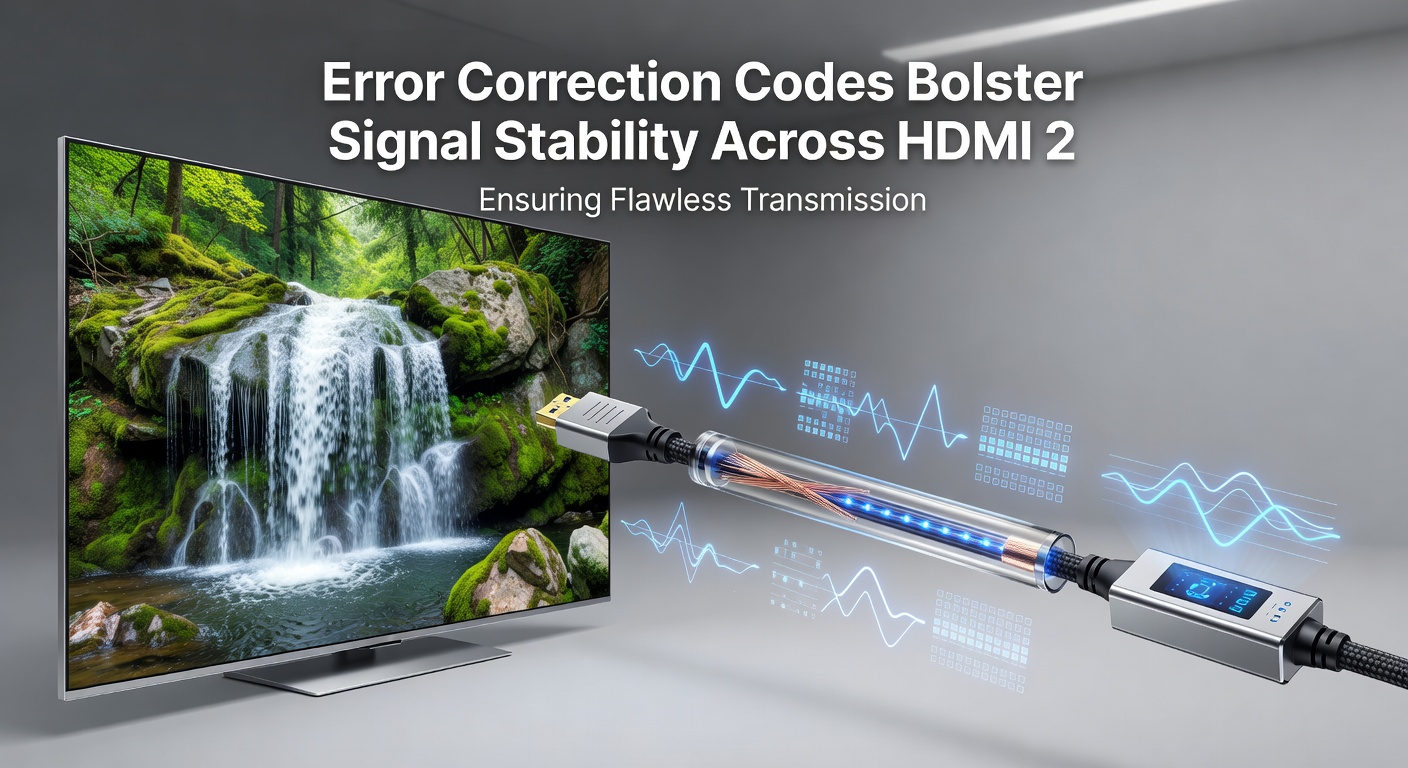
High-speed data transmission across HDMI 2.1 connections relies on advanced error correction codes to maintain signal integrity when pushing resolutions up to 8K and refresh rates beyond 120Hz, and manufacturers have integrated forward error correction mechanisms directly into the protocol stack since the specification's release. These codes detect and repair bit errors that arise from cable length, electromagnetic interference, or signal attenuation without requiring retransmission, which keeps latency low in gaming and professional display environments.
Technical Foundations of Error Correction in HDMI 2.1
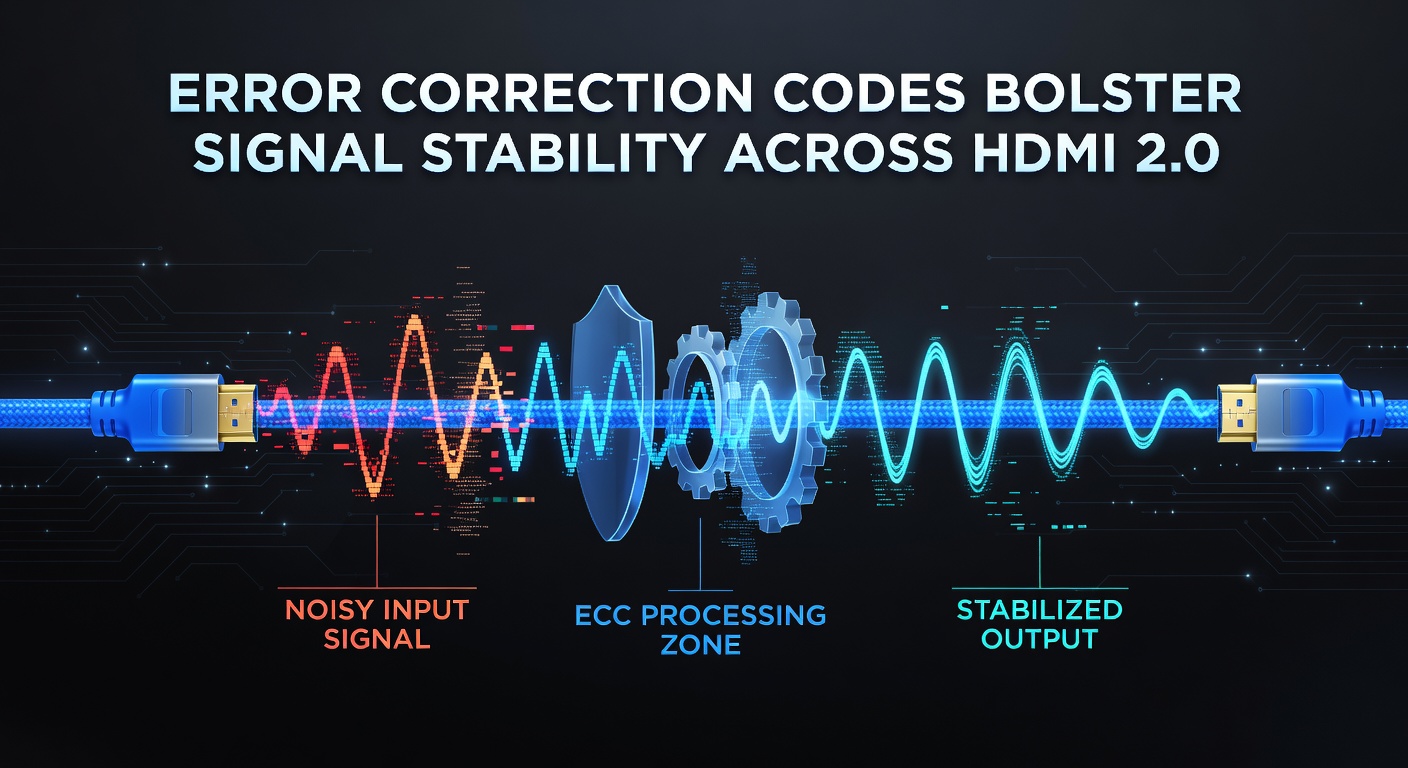
HDMI 2.1 operates at bandwidths reaching 48 Gbps through the transition-minimized differential signaling scheme, yet the higher data rates increase susceptibility to noise, so the specification incorporates Reed-Solomon based forward error correction alongside scrambling to spread errors across frames. Engineers at silicon vendors embed these algorithms in the transmitter and receiver chipsets, allowing the system to correct multiple symbol errors per data block while the link maintains continuous operation. Observers note that this approach differs from earlier HDMI versions, where simple parity checks handled lower-speed links, because the current method scales with the increased throughput demanded by variable refresh rate and dynamic HDR features.
Data from component suppliers shows that error rates drop significantly when forward error correction activates at 4K 144Hz or 8K 60Hz settings, and the correction operates transparently to the end user. The process begins with the transmitter appending redundant symbols calculated from the original data payload, then the receiver reconstructs corrupted bits using those symbols before passing clean video and audio streams to the display controller.
Performance Gains Across Gaming and Professional Setups
Gaming monitors and graphics cards released through 2025 and into 2026 demonstrate measurable improvements in frame delivery consistency when paired with HDMI 2.1 cables that support the full error correction feature set. Research conducted at display testing facilities indicates that uncorrected links experience occasional macro-blocking or audio dropouts under heavy interference, whereas corrected links sustain stable output even across 10-meter cable runs in electrically noisy environments such as trade show floors or multi-device entertainment centers.
Manufacturers report that systems equipped with these codes maintain compliance with HDMI Compliance Test Specification requirements while supporting features like Auto Low Latency Mode and Quick Frame Transport. One study conducted by a Japanese research institution found that forward error correction reduced effective bit error rates by orders of magnitude during prolonged stress tests that simulated household electromagnetic sources including wireless routers and power supplies.
Adoption Trends Observed in Mid-2026
By May 2026, multiple graphics card and television product lines have standardized on HDMI 2.1 chipsets that activate error correction by default, and industry associations have updated certification programs to verify correction performance under varied cable and environmental conditions. Regulatory bodies in the European Union and Australia have referenced these capabilities when establishing guidelines for high-resolution broadcast and consumer electronics interoperability, encouraging broader implementation across both consumer and professional markets.
Those who track supply chain data note increased shipments of certified HDMI 2.1 cables that explicitly list support for the enhanced error handling features, and this trend aligns with growing demand for 8K content delivery in home theater installations. Academic papers presented at signal processing conferences during the first half of 2026 highlight refinements to the Reed-Solomon parameters that further optimize correction capacity without raising power consumption on mobile or embedded devices.
Integration Challenges and Solutions
Implementing robust error correction requires precise synchronization between transmitter and receiver clock domains, and chipset designers address this through dedicated training sequences that calibrate the correction engines during link establishment. Figures released by semiconductor firms reveal that the overhead introduced by redundant symbols remains under two percent of total bandwidth, preserving headroom for uncompressed video and multi-channel audio streams. Engineers continue to refine interleaving techniques that distribute errors more evenly, reducing the likelihood that burst noise overwhelms the correction capacity during extended gaming sessions or live production broadcasts.
Case examples from display calibration labs show that older cables lacking proper shielding often trigger higher correction activity, yet the system compensates without visible artifacts once the link negotiates the appropriate error correction mode. Industry organizations such as the HDMI Forum continue to publish updated test procedures that validate correction performance across temperature ranges and cable flex cycles.
Conclusion
Error correction codes have become a foundational element of reliable HDMI 2.1 operation, enabling the specification to deliver high-bandwidth content without compromising stability in real-world conditions. Continued refinements by hardware developers and verification by independent testing bodies ensure that future devices maintain these gains as resolutions and refresh rates advance further. The combination of forward error correction wth existing scrambling and equalization methods provides a resilient transmission layer that supports evolving display ecosystems across gaming, professional, and consumer applications.