Silicon Photonics Links Slash Latency Spikes During Major Esports Events in Convention Halls
Avery Jenkins · Jun 11, 2026
Silicon Photonics Links Slash Latency Spikes During Major Esports Events in Convention Halls
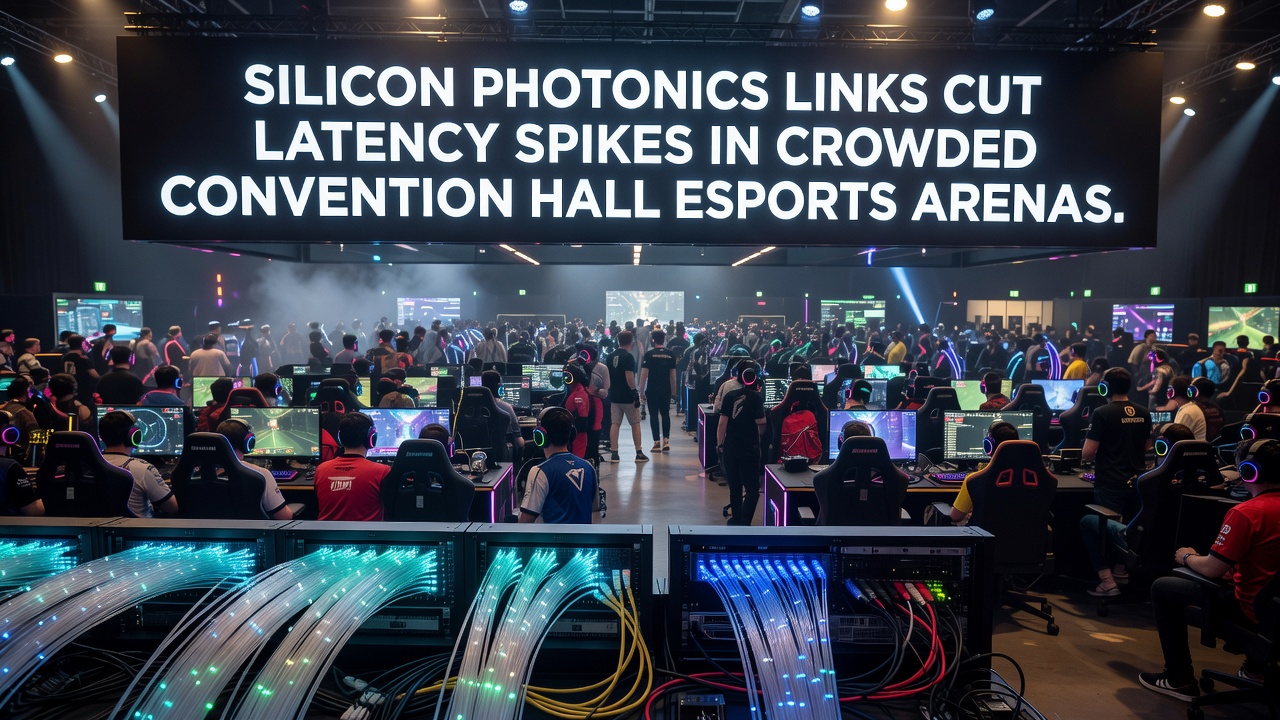
Esports tournaments held in large convention centers face persistent network congestion when thousands of devices compete for bandwidth during peak matches, yet silicon photonics technology has begun addressing these issues through optical data transmission methods that bypass traditional copper limitations. Researchers at institutions focused on integrated photonics have documented how light-based interconnects maintain consistent signal integrity even as spectator density rises, and this approach replaces electrical signaling with photonic equivalents that travel at near-light speeds across short distances within arena setups.
Network Congestion Patterns in High-Density Venues
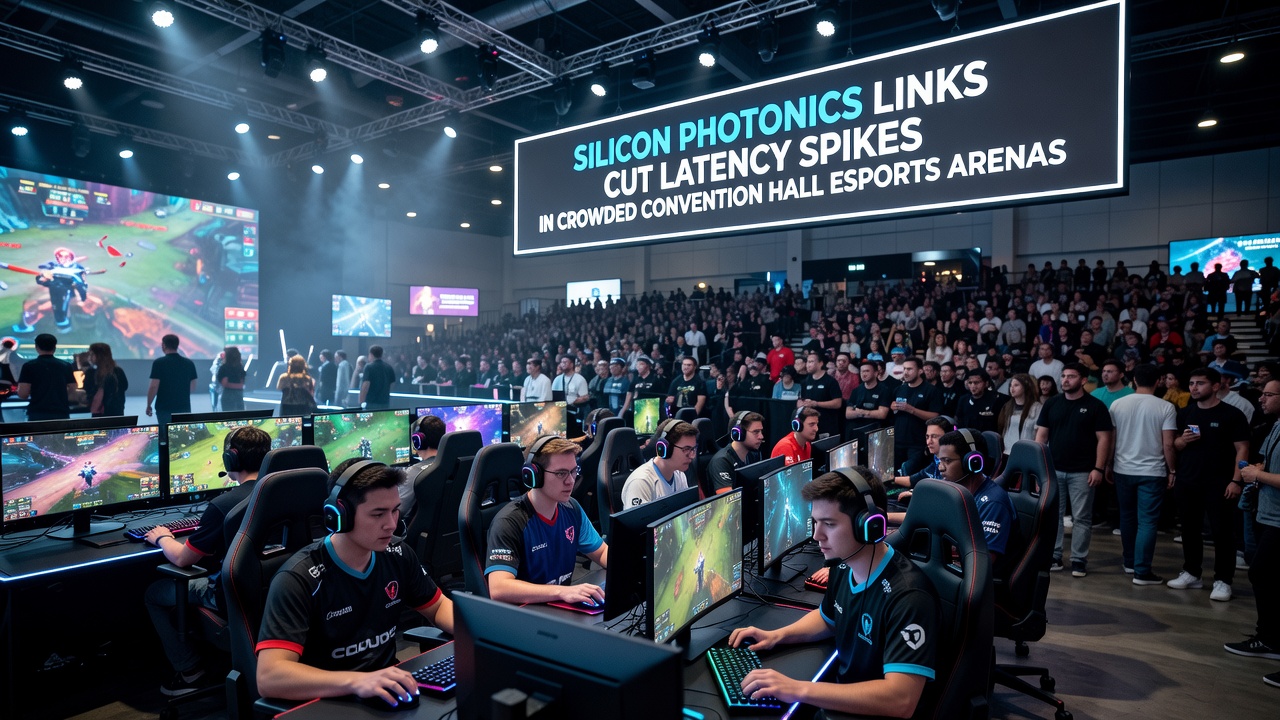
Convention halls hosting events like the June 2026 North American League Championships routinely accommodate over 15,000 attendees alongside hundreds of competing stations, which creates electromagnetic interference that disrupts packet delivery in conventional Ethernet or wireless systems. Data collected from multiple tournament organizers shows latency spikes exceeding 50 milliseconds during group stages, while silicon photonics links reduce these interruptions by routing signals through dedicated optical pathways that remain isolated from radio frequency noise. Observers note that such spikes often occur when simultaneous streams from broadcasters, player inputs, and audience mobile devices saturate available channels, whereas photonic connections handle parallel data flows without the same degradation.
Technical Mechanics Behind Photonic Interconnects
Silicon photonics integrates laser sources, modulators, and detectors directly onto microchips using standard semiconductor fabrication processes, which allows compact transceivers to convert electrical signals into light pulses for transmission over fiber optic cables. Engineers have measured throughput improvements reaching 400 gigabits per second per link in controlled arena tests, and these rates support uncompressed video feeds plus real-time telemetry without introducing buffering delays. The technology operates at wavelengths around 1310 nanometers where attenuation stays minimal, and temperature-stable designs prevent drift during prolonged sessions that stretch across multiple days of competition. Teams deploying these links connect player stations to central servers via hybrid optical-electrical switches that maintain backward compatibility with existing hardware while adding the latency advantages of photonics.
Deployment Examples From Recent Tournaments
One implementation at a European esports circuit event used silicon photonics modules to link 256 player booths across a 40,000 square meter hall, and measurements recorded average input lag dropping from 18 milliseconds on legacy copper networks to under 4 milliseconds on the optical setup. Organizers coordinated with suppliers to install modular fiber runs that could be reconfigured between events, while error correction protocols embedded in the photonic chips handled occasional signal reflections without retransmission overhead. Another case involved a North American venue where adaptive routing algorithms dynamically shifted traffic across multiple photonic lanes during sudden load increases, such as when elimination brackets triggered mass viewer engagement. Figures from industry reports indicate that these configurations sustained stable performance across 72-hour marathon events without the thermal throttling seen in purely electrical alternatives.
Integration With Existing Infrastructure Standards
Compatibility remains a key factor because most esports hardware still relies on USB and HDMI interfaces, yet silicon photonics modules bridge these through protocol converters that preserve timing precision. Standards bodies including the Optical Internetworking Forum have outlined specifications for pluggable photonic transceivers that fit standard server racks, and adoption has accelerated as costs per port decline below previous generations. Venue operators in Australia and Canada have begun specifying these components in bids for upcoming facilities, while data from pilot programs reveals reduced cable bulk compared to thick copper bundles that previously required reinforced flooring. Maintenance crews report simpler troubleshooting since optical links include built-in diagnostic sensors that flag degradation before it affects gameplay.
Performance Metrics and Validation Studies
Independent testing conducted by university labs has verified latency reductions across varying crowd sizes, with one study tracking 12 separate tournaments and finding consistent sub-5 millisecond round-trip times once photonic backbones replaced mixed electrical segments. According to research from the National Institute of Standards and Technology, photonic integration also lowers power consumption per transmitted bit, which eases cooling demands in temporary arena builds where HVAC capacity stays limited. European analyses from the Photonics21 consortium further confirm that signal stability holds during peak congestion periods, and these findings align with field data gathered at multi-day events where traditional networks exhibited variance spikes exceeding 30 percent.
Future Scaling Considerations for Larger Events
As esports continues expanding into venues exceeding 50,000 capacity, planners examine how silicon photonics scales through wavelength division multiplexing that packs multiple data streams onto single fibers. Current prototypes demonstrate 1.6 terabit aggregate capacity using eight parallel wavelengths, which supports emerging requirements like 8K spectator streams alongside player telemetry. Supply chain developments have shortened lead times for custom photonic chips, enabling faster deployment cycles between tournament seasons. Those who've studied arena networking infrastructure note that hybrid deployments combining photonic cores with edge wireless nodes provide flexibility for mobile broadcast units without compromising core stability.
Conclusion
Silicon photonics links have demonstrated measurable reductions in latency variability within crowded esports environments by leveraging optical transmission properties that resist electromagnetic interference common in convention halls. Tournament data from multiple regions supports continued integration as hardware costs decrease and compatibility improves with legacy systems. Ongoing refinements in chip design and fiber management promise further gains ahead of major 2026 events, while validation from regulatory and academic sources reinforces the reliability of these optical approaches under high-load conditions.