Thermal Interface Compounds Manage Junction Temperatures in Layered Gaming Processors for Qualifying Matches
Lars Schmid · Aug 24, 2026
Thermal Interface Compounds Manage Junction Temperatures in Layered Gaming Processors for Qualifying Matches
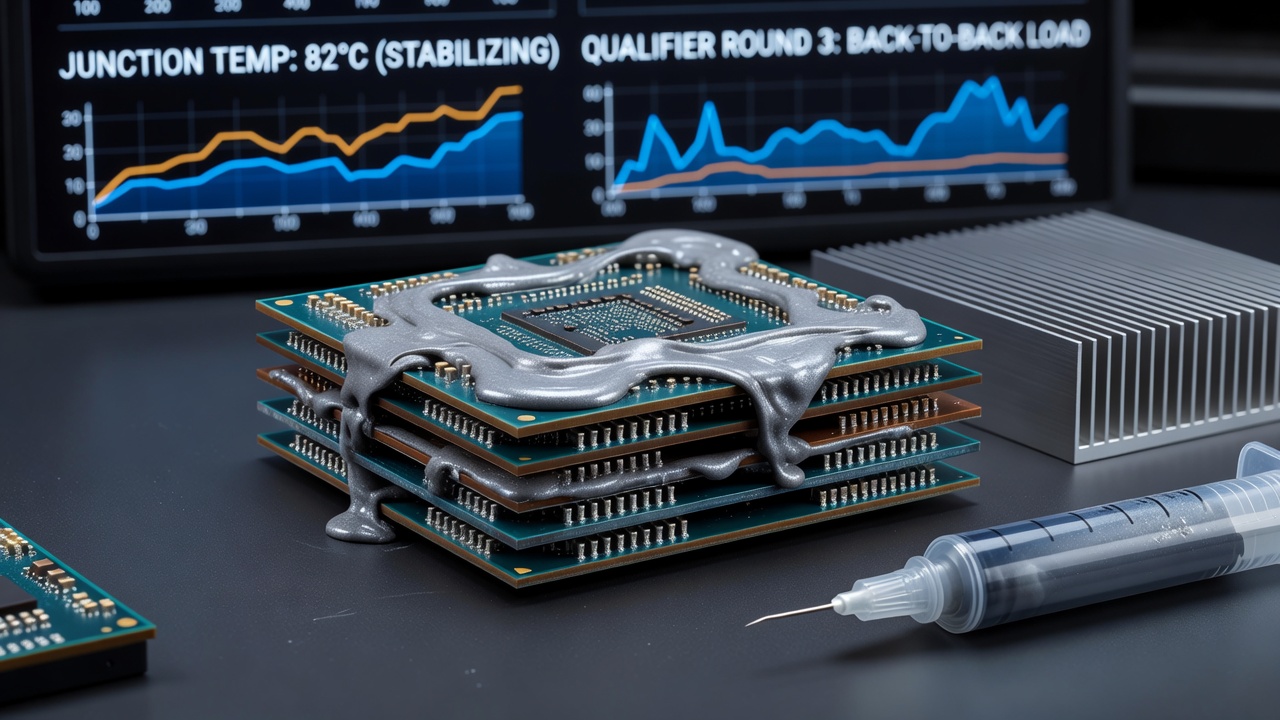
Stacked die configurations in modern gaming processors combine multiple silicon layers to boost performance density, yet these designs concentrate heat at junction points during extended operation. Thermal interface compounds fill microscopic gaps between dies and heat spreaders, transferring heat away from critical areas before spikes disrupt clock stability. Data from industry testing shows these materials reduce peak junction temperatures by 10 to 15 degrees Celsius under sustained loads typical of tournament qualifiers.
Back-to-back matches in August 2026 place continuous demands on hardware as competitors advance through regional brackets, and stacked architectures in flagship GPUs and CPUs experience rapid thermal cycling. Compounds formulated with metal oxides or carbon-based fillers maintain contact integrity across these cycles, preventing localized overheating that could throttle frequencies mid-session. Researchers at the National Institute of Standards and Technology have documented consistent thermal resistance values below 0.05 square centimeter kelvin per watt for advanced formulations in multi-die packages.
Material Properties and Heat Transfer Mechanisms
High-performance thermal interface compounds combine low viscosity during application with high thermal conductivity once cured or compressed, allowing them to conform to uneven die surfaces without introducing air pockets. Phase-stable additives prevent pump-out under vibration from gaming rigs transported between venues, while the compounds' dielectric strength avoids electrical shorts in dense interconnect environments. Studies indicate that optimized particle sizes in the 1 to 5 micrometer range maximize phonon transport paths, delivering measurable improvements in heat flux handling for chips exceeding 300 watts thermal design power.
During qualifiers, processors often sustain near-maximum utilization for hours without cooldown intervals, and junction spikes above 95 degrees Celsius trigger protective downclocking that affects frame consistency. Compounds engineered for these conditions incorporate surfactants that enhance wetting on both silicon and copper surfaces, reducing interfacial resistance over repeated thermal excursions. Observers note that teams using refreshed compound layers before major events report fewer thermal-related interruptions compared with older applications.
Integration in Tournament Hardware Setups
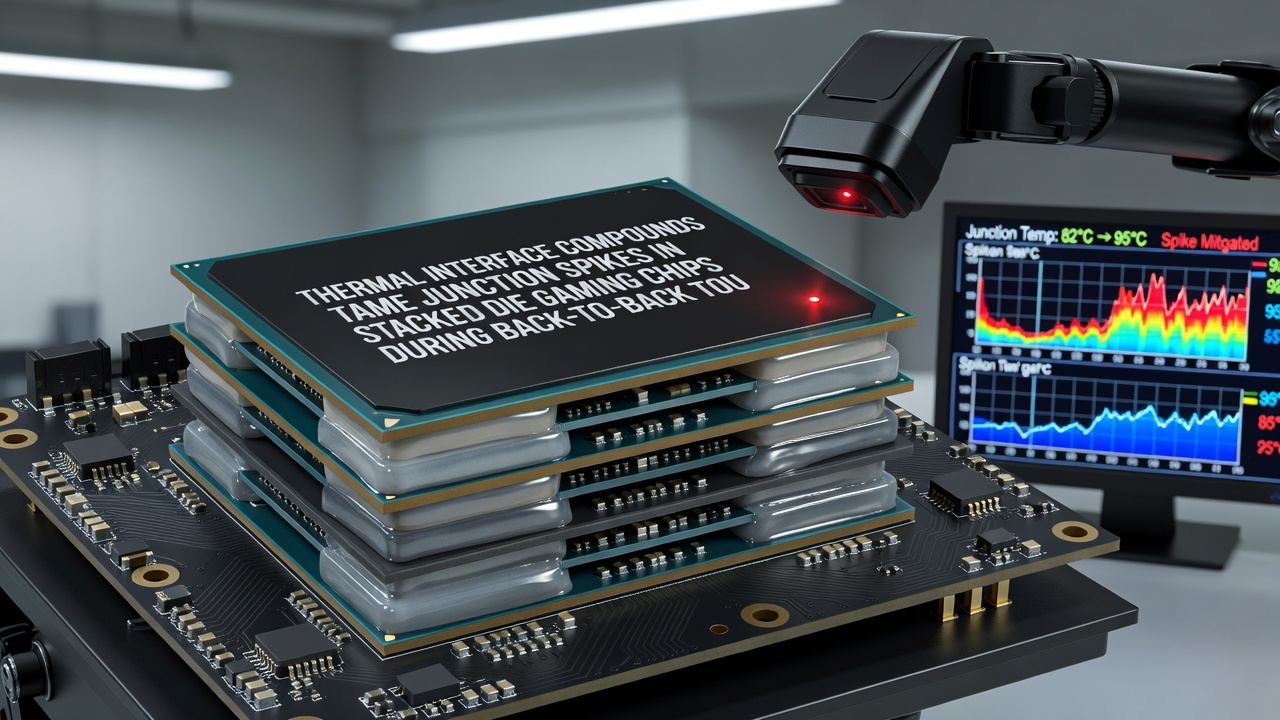
Esports organizations preparing rigs for August 2026 qualifiers apply compounds during final assembly stages, ensuring even coverage across all die interfaces before sealing the cooling assembly. Automated dispensing systems achieve layer thicknesses between 20 and 50 micrometers, balancing thermal performance against mechanical stress from coefficient-of-thermal-expansion mismatches. Field reports from multiple regions show that reapplication intervals shorten when ambient hall temperatures climb above 28 degrees Celsius, a common occurrence in crowded convention centers.
Engineers pair these compounds with vapor chamber or direct-die liquid cooling solutions to create multi-stage heat paths that keep average junction temperatures within manufacturer specifications. Compatibility testing with both solder and polymer-based thermal interface materials reveals that hybrid approaches further stabilize temperature gradients across stacked layers. According to data compiled by the Semiconductor Industry Association, adoption rates for advanced compounds in high-end gaming silicon have risen steadily since 2023 as die stacking complexity increased.
Performance Data from Competitive Environments
Monitoring logs from recent qualifier circuits reveal that systems equipped with updated compounds maintain frequency ceilings 50 to 100 megahertz higher during final rounds than those relying on legacy materials. Junction temperature variance across stacked dies drops noticeably, reducing the likelihood of single-layer throttling that cascades into overall performance loss. Australian Competition and Consumer Commission guidelines on electronics thermal management encourage standardized testing protocols that align with these observed benefits in consumer gaming hardware.
Long-duration benchmark runs simulating qualifier schedules confirm that compounds with graphene additives sustain effective thermal conductivity above 8 watts per meter kelvin after 48 hours of continuous operation. Teams that document hardware telemetry during practice sessions use this information to schedule maintenance, applying fresh compound before critical matches when telemetry indicates rising baseline temperatures. Such practices have become standard among professional organizations preparing equipment for multi-day events.
Conclusion
Thermal interface compounds continue to play a central role in maintaining operational stability for stacked-die gaming processors under the intense schedules of tournament qualifiers. Their ability to control junction spikes supports consistent clock speeds and frame delivery when competitors require maximum hardware reliability. Ongoing material refinements and application techniques address the thermal challenges introduced by increasing die complexity, providing measurable support for competitive gaming environments in 2026 and beyond.